Spatial awareness Normal Worksheets for Ages 5-7 - Page 2
25 filtered results
-
From - To
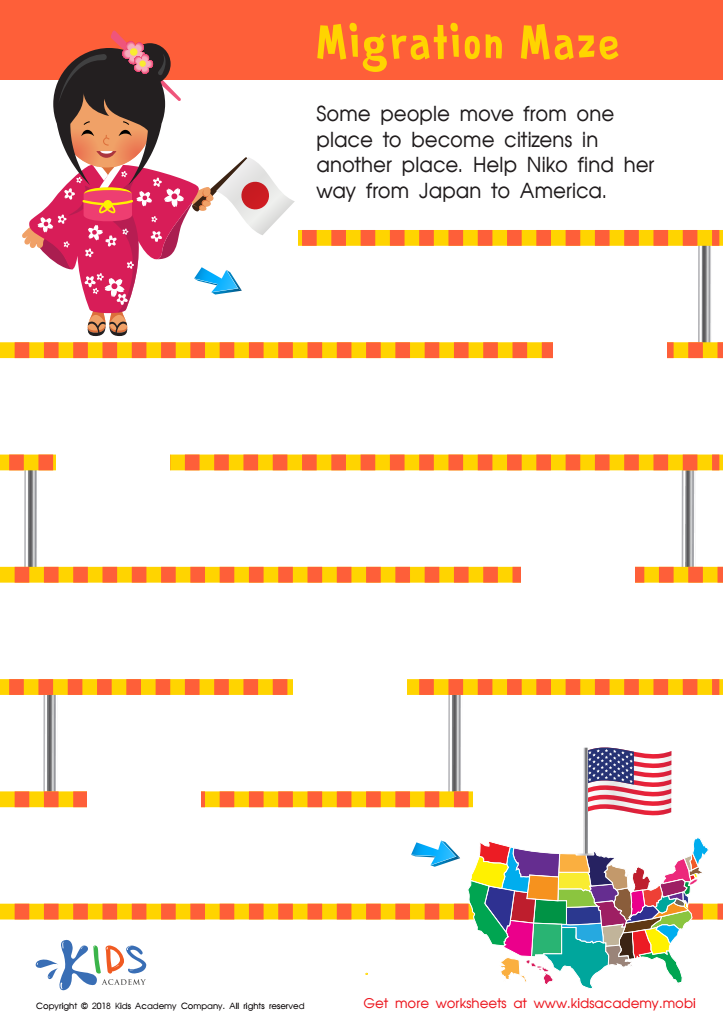
Migration Maze Worksheet
 Assign to My Students



%20(1).jpg)




Spatial awareness is a critical developmental skill for children aged 5-7, influencing their ability to navigate the world around them effectively. Understanding and engaging with spatial relationships enables children to interpret where objects are placed in relation to one another, which is essential for activities ranging from basic tasks like navigating through a room to more complex problem-solving situations.
For parents and teachers, fostering spatial awareness can lead to significant academic benefits. Children with strong spatial skills are often more adept at subjects like math and science, where visualization and spatial reasoning are crucial. Moreover, these skills are foundational for future learning in geometry and technology.
Furthermore, spatial awareness facilitates motor skills development. Engaging in activities such as drawing, building with blocks, or playing team sports enhances children's depth perception and coordination.
Lastly, nurturing spatial awareness impacts a child’s confidence and independence. When children accurately perceive space and distance, they feel more capable of exploring their environments safely and participating in group activities.
In summary, parents and teachers should prioritize spatial awareness in young children, as it plays a vital role in their cognitive and physical development, supports academic success, and fosters confidence in their everyday activities.








