Understanding photosynthesis Normal Worksheets for Ages 5-7
3 filtered results
-
From - To
Explore our "Understanding Photosynthesis Normal Worksheets" designed for children aged 5-7. These engaging worksheets introduce young learners to the fundamental concept of photosynthesis in a fun and interactive way. Through colorful illustrations and simple language, kids will discover how plants use sunlight, water, and air to grow and produce food. Our carefully crafted activities encourage critical thinking while fostering an appreciation for nature. Ideal for home or classroom use, these worksheets align with educational standards and make learning about plant life cycles enjoyable. Discover the joy of learning with our colorful and informative resources today!
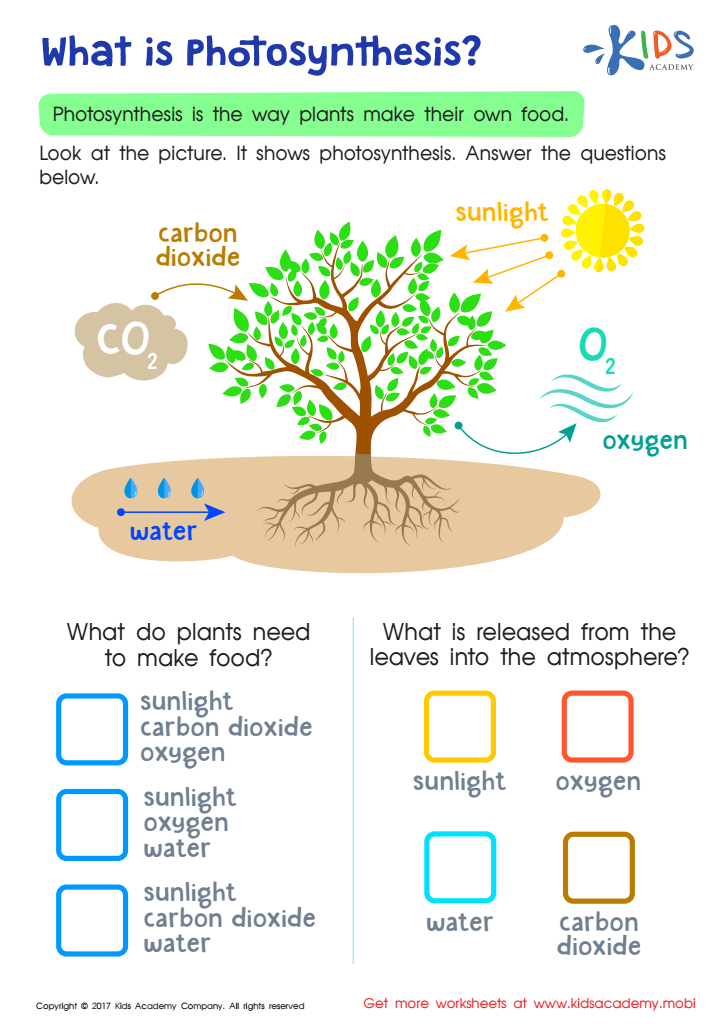
What is Photosynthesis Printable
 Assign to My Students
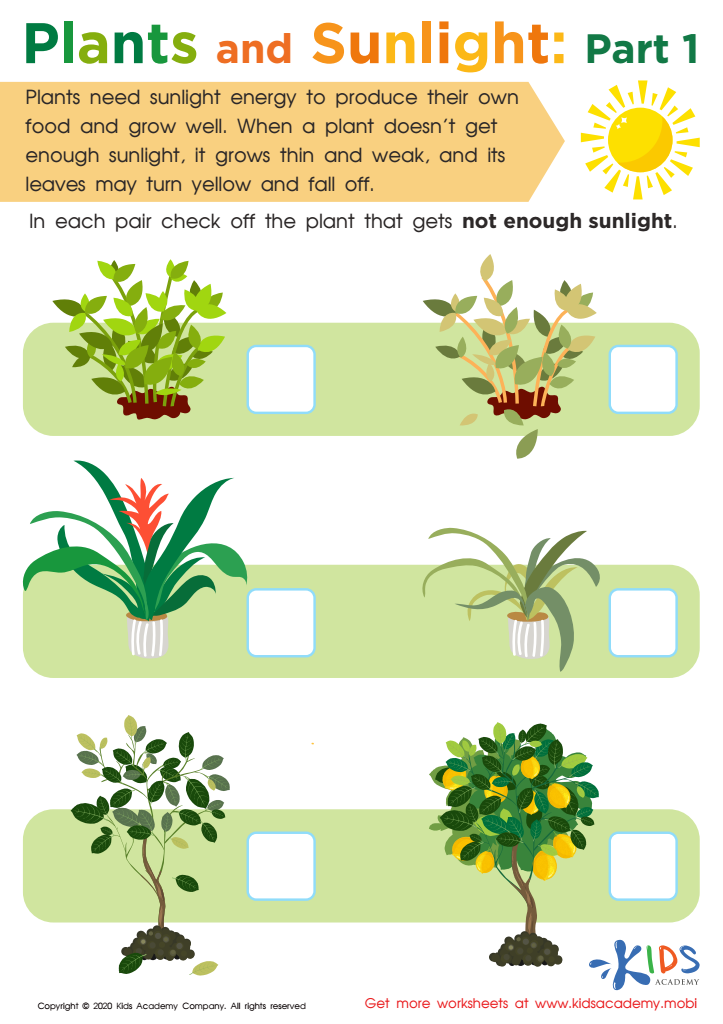
Plants and Sunlight: Part 1 Worksheet
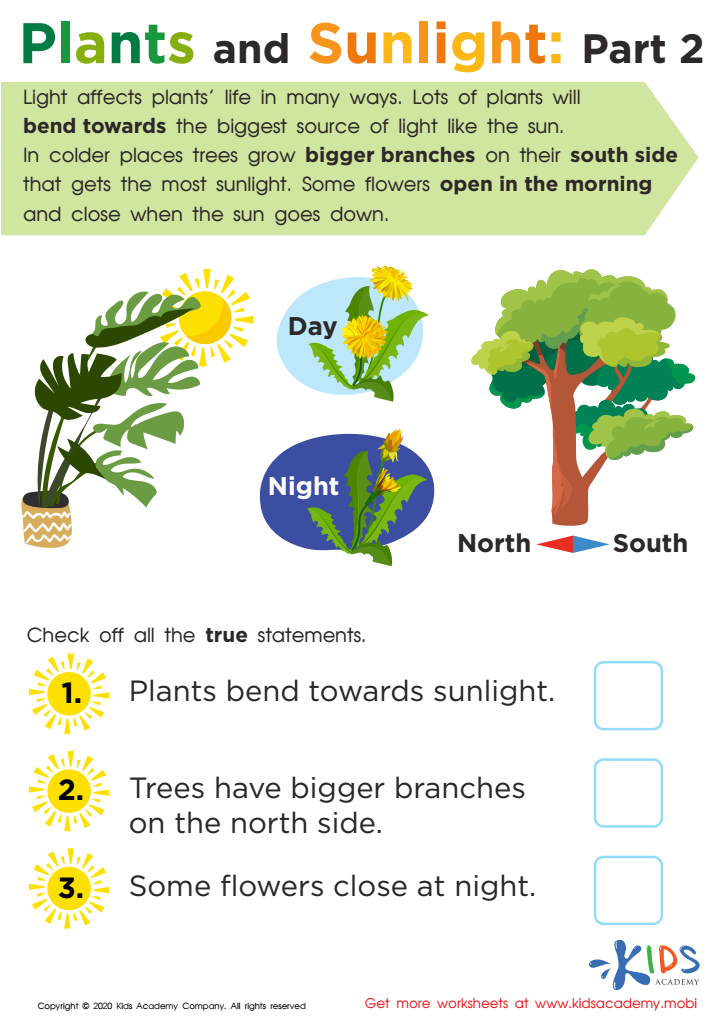
Plants and Sunlight: Part 2 Worksheet








Parents and teachers should care about understanding photosynthesis, especially for children aged 5-7, because it lays the foundation for their appreciation of nature and science. Photosynthesis is the process by which plants make their own food using sunlight, water, and carbon dioxide. Teaching young children about this essential process helps them grasp how living things grow and thrive.
Understanding photosynthesis introduces kids to the concept of interconnectedness within ecosystems. They learn that plants are vital for life on Earth because they produce oxygen, which we breathe. This knowledge fosters a sense of responsibility for the environment, encouraging young learners to care for plants and nature.
Moreover, discussion around photosynthesis can spark curiosity and critical thinking. Kids may want to explore questions like, "How do plants produce food?" or "Why are plants important?" Such inquiries engage their natural curiosity and encourage further exploration of science.
Additionally, incorporating hands-on activities about photosynthesis can strengthen learning through play. By making these connections early in life, parents and teachers can inspire a lifelong interest in science, promoting problem-solving skills and nurturing a new generation of environmentally conscious individuals. Understanding photosynthesis is a step toward helping children appreciate the beauty of our world.








