
Understanding Quantities Normal Worksheets for Ages 5-7
3 filtered results
Difficulty Level
Grade
Age
-
From - To
Subject
Activity
Standards
Unlock the world of numbers with our "Understanding Quantities Normal Worksheets" designed for children aged 5-7. These engaging worksheets aim to enhance your child’s comprehension of quantities through fun activities and essential math concepts. With visual aids and interactive exercises, kids will practice counting, comparing, and grouping objects effectively. Tailored to fit early learners, our resources foster essential skills, boost confidence, and encourage a love for math. Perfect for homeschoolers or supplemental learning, these worksheets provide a solid foundation for numerical understanding that will benefit your child's future academic journey. Start exploring the joy of math today!
Favorites
With answer key
Interactive
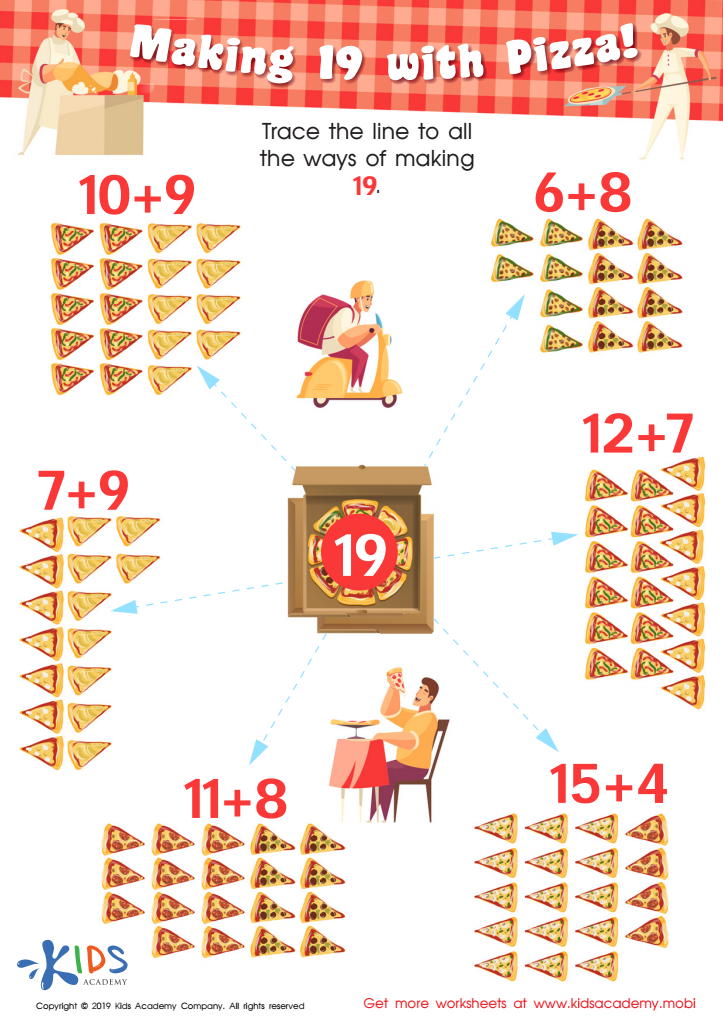
Making 19 with Pizza! Worksheet
Who loves pizza? Your kids do! Next time you need to teach them math, make it fun by combining it with something they enjoy. This worksheet uses a pizza-themed problem to help them practice solving equations. Have them trace the line to figure out how to make 19. It's a great way to make learning math fun!
 Assign to My Students
Making 19 with Pizza! Worksheet
Worksheet
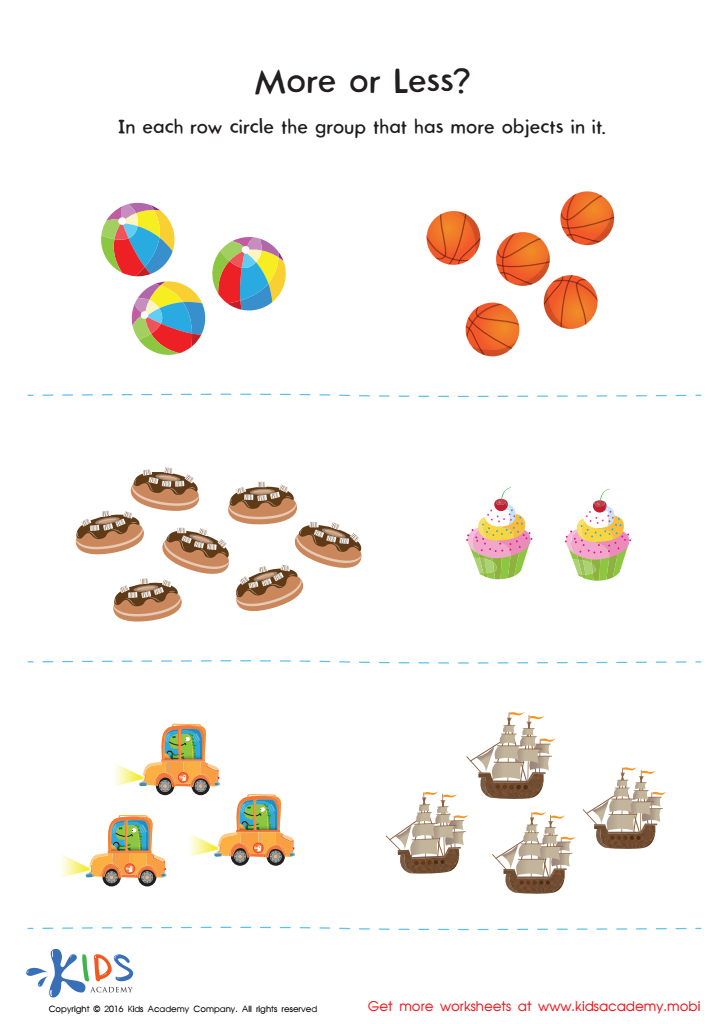
More or Less Size Worksheet
Worksheet
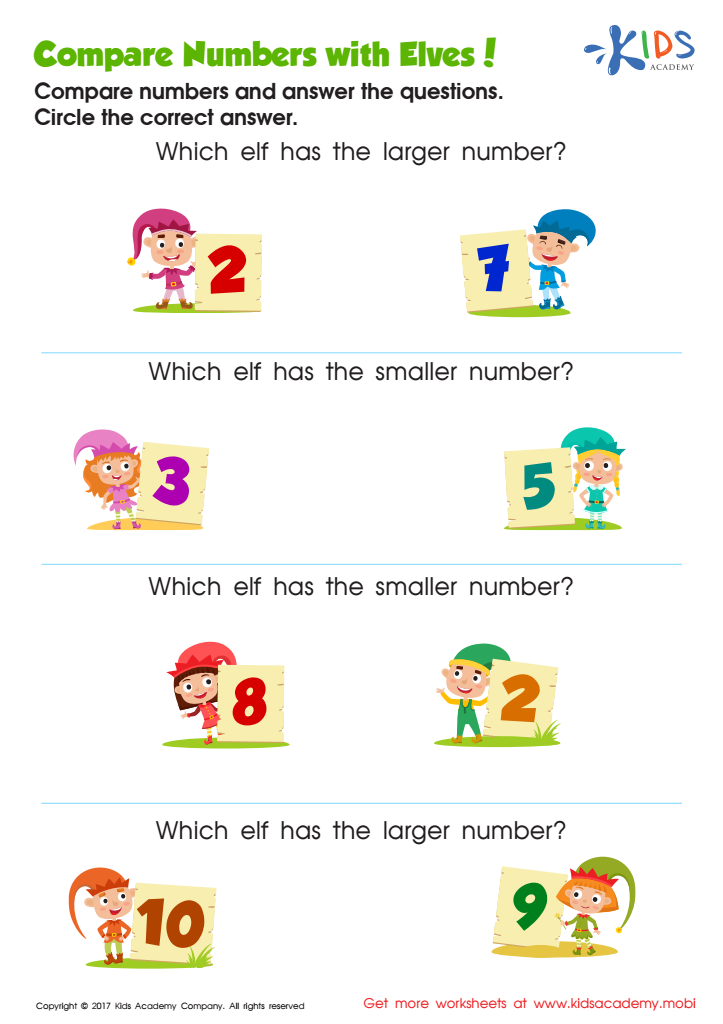
Comparing Numbers Worksheet for Kindergarten
Your child will love helping Santa's elves compare numbers with this fun worksheet for kindergarten! They must determine which number is bigger or smaller then circle the answer. It's a great activity for Christmas or any time!
Comparing Numbers Worksheet for Kindergarten
Worksheet
Join Kids Academy for Free
Who is primarily going to use this learning content?







Understanding quantities is a foundational skill for young learners aged 5-7, and it plays a critical role in their overall development. This concept encompasses not just the ability to count, but also to recognize, compare, and manipulate different quantities. For parents and teachers, nurturing this understanding is crucial for several reasons.
Firstly, quantities are central to early mathematics and lay the groundwork for later mathematical concepts. When children grasp the idea of quantities, they become more adept at understanding addition, subtraction, and even basic problem-solving skills. This foundational knowledge promotes a positive attitude towards math, setting the stage for confidence in later academic pursuits.
Secondly, understanding quantities supports cognitive development. Children learn to visualize and conceptualize numbers, which enhances their critical thinking and reasoning abilities. It also fosters language skills as children learn to describe sizes, amounts, and differences.
Moreover, in an increasingly data-driven world, early numeracy skills prepare children for future success in academics and everyday life. As parents and teachers engage with children on this topic, they equip them with essential tools that are vital not only for math but for understanding the world around them. A solid foundation in understanding quantities offers long-term benefits in a child's development.








