Comparison Skills Normal Math Worksheets for Ages 5-7
3 filtered results
-
From - To
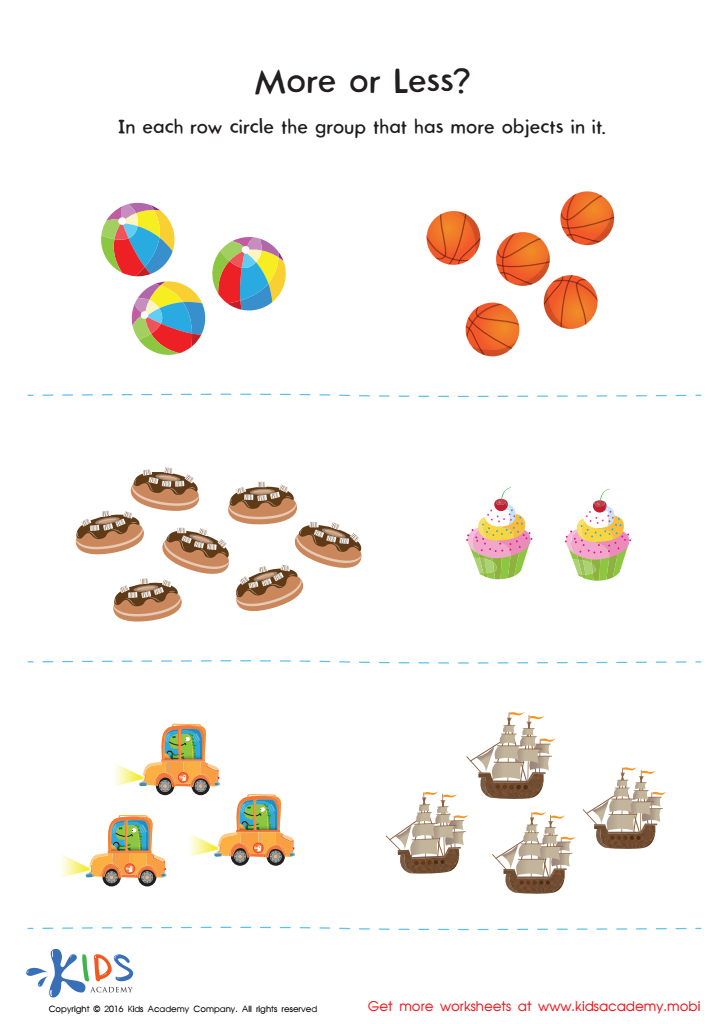
Discover our engaging "Comparison Skills Normal Math Worksheets" designed for children ages 5-7. These worksheets help young learners develop essential comparison skills through fun activities that focus on identifying differences in size, quantity, and more! Each worksheet is tailored to create a friendly learning environment, promoting critical thinking and problem-solving. With colorful illustrations and interactive exercises, your child will enjoy honing their math skills while building confidence. Ideal for parents and educators, our worksheets align with educational standards to ensure meaningful progress. Explore our collection today and make learning comparisons a delightful adventure for your child!
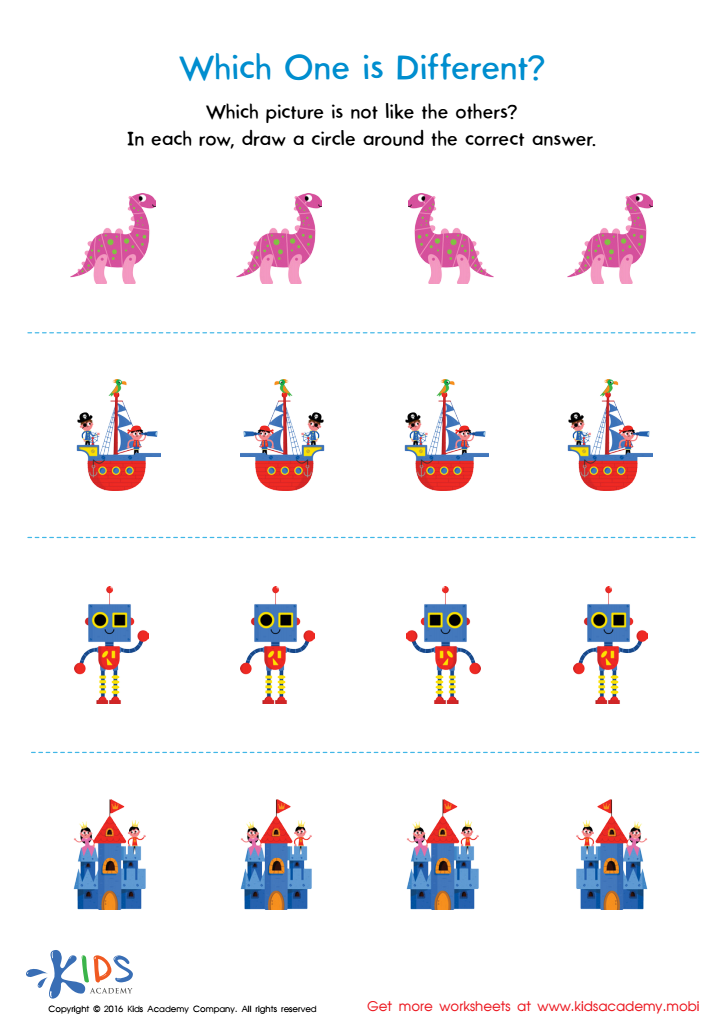
Which One Is Different Worksheet
 Assign to My Students
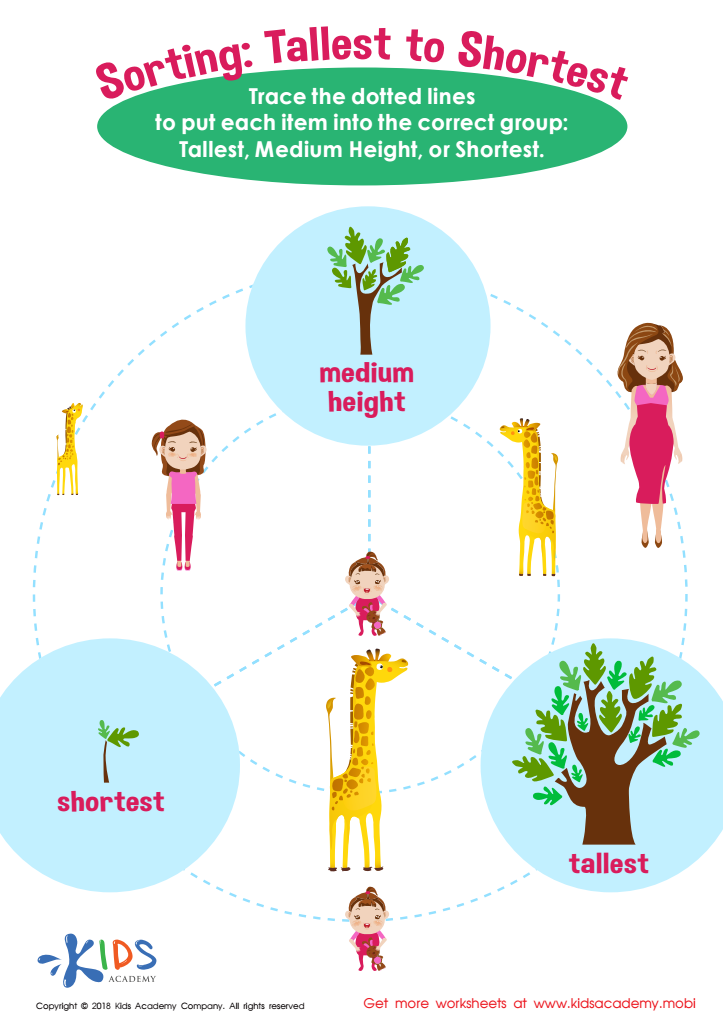
Sorting: Tallest to Shortest Worksheet








Comparison skills are fundamental for young learners, particularly in Mathematics for ages 5-7. At this developmental stage, children are building their foundational understanding of numbers, shapes, and concepts that will serve them throughout their academic journey. Learning to compare quantities, such as more and less or bigger and smaller, provides critical cognitive skills that promote problem-solving abilities and logical reasoning.
Parents and teachers should pay attention to comparison skills because they lay the groundwork for later mathematical concepts, such as addition and subtraction. By engaging children in activities that involve comparing objects or quantities, adults can help enhance their observational and analytical skills. These activities encourage students to think critically, as they evaluate differences and similarities, which are essential for making logical conclusions in both math and other subjects.
Moreover, fostering these skills at a young age can boost children's confidence in their ability to tackle complex mathematical problems as they progress in school. Comparisons are not only applicable in math but also in everyday life situations, enhancing decision-making and critical thinking. Thus, nurturing comparison skills is vital for setting a solid foundation that supports broader academic growth and life skills.








