
Shape identification Normal Math Worksheets for Ages 5-7
6 filtered results
Difficulty Level
Grade
Age
-
From - To
Subject
Activity
Standards
Explore our engaging Shape Identification Normal Math Worksheets designed specifically for children aged 5-7. These worksheets help young learners recognize and categorize various shapes while building essential math skills in a fun and interactive way. With a variety of exercises, children will practice identifying shapes like circles, squares, triangles, and more in different contexts. Each worksheet is tailored to enhance cognitive development, boost confidence, and support early math learning. Perfect for classroom use or at-home learning, our resources are printable, making it easy for parents and teachers to incorporate them into their lesson plans. Encourage your child's love for learning today!
Favorites
With answer key
Interactive
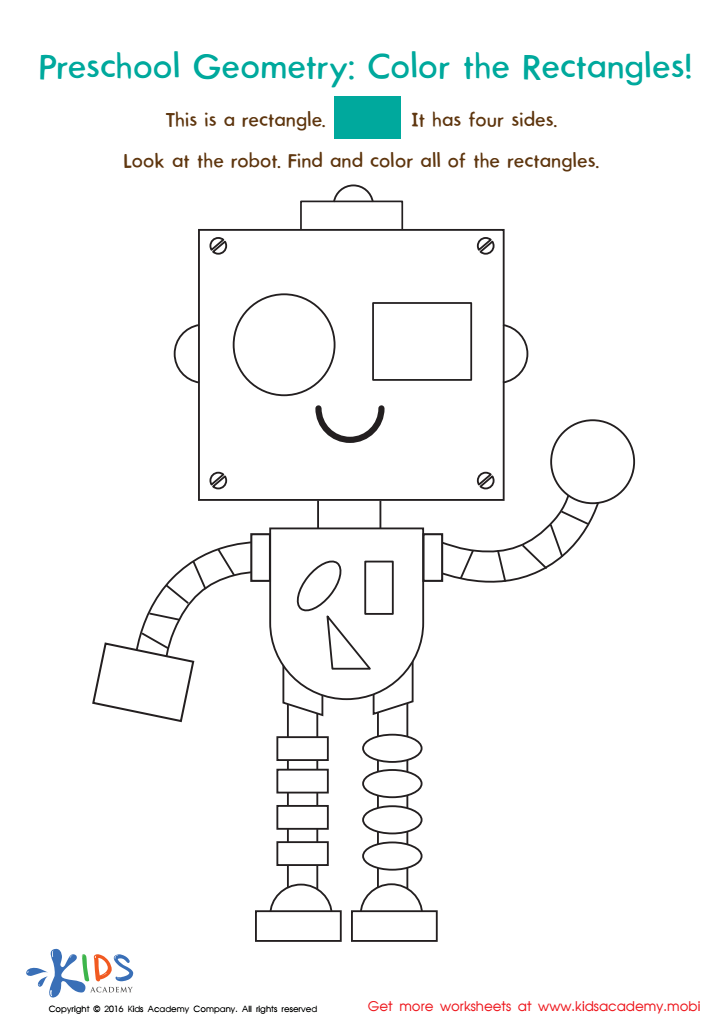
Geometry Worksheet
Geometry can be fun for kids! They explore shapes that create their favorite pics and objects. This preschool worksheet explains that rectangles have four sides, then kids color rectangles on a funny robot!
 Assign to My Students
Geometry Worksheet
Worksheet
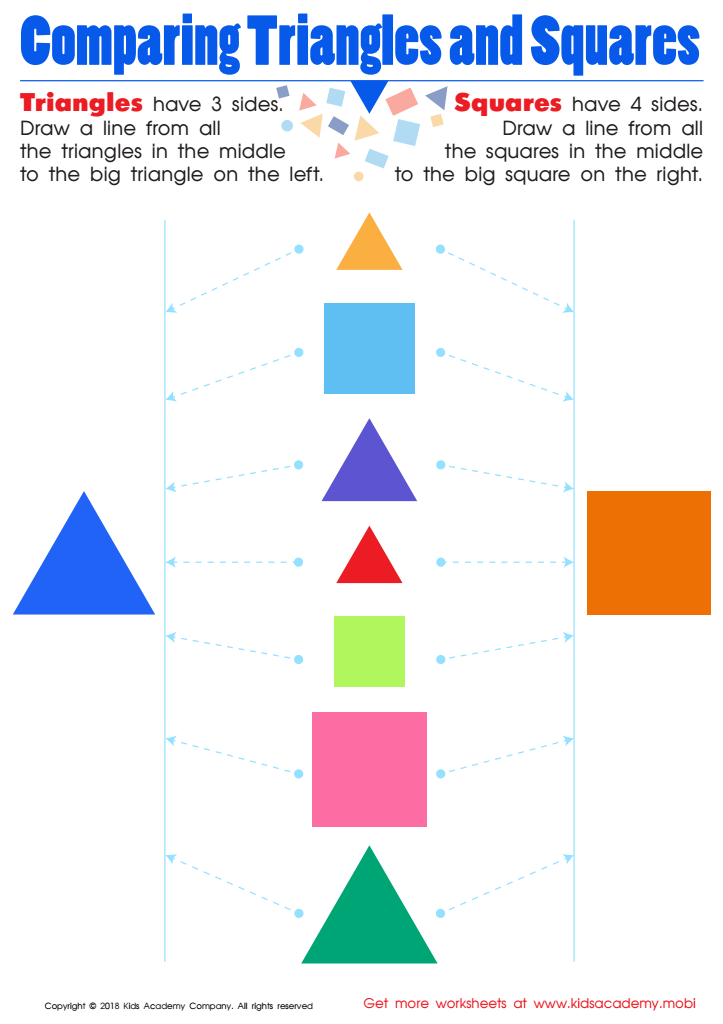
Comparing Triangles Squares Worksheet
Squares and triangles are different in the number of sides they have. Challenge kids to compare them with this fun worksheet! Read the descriptions at the top, then use the left and right shapes to match up the middle ones. Go down the page, joining the middle shapes to the side using the dotted lines!
Comparing Triangles Squares Worksheet
Worksheet
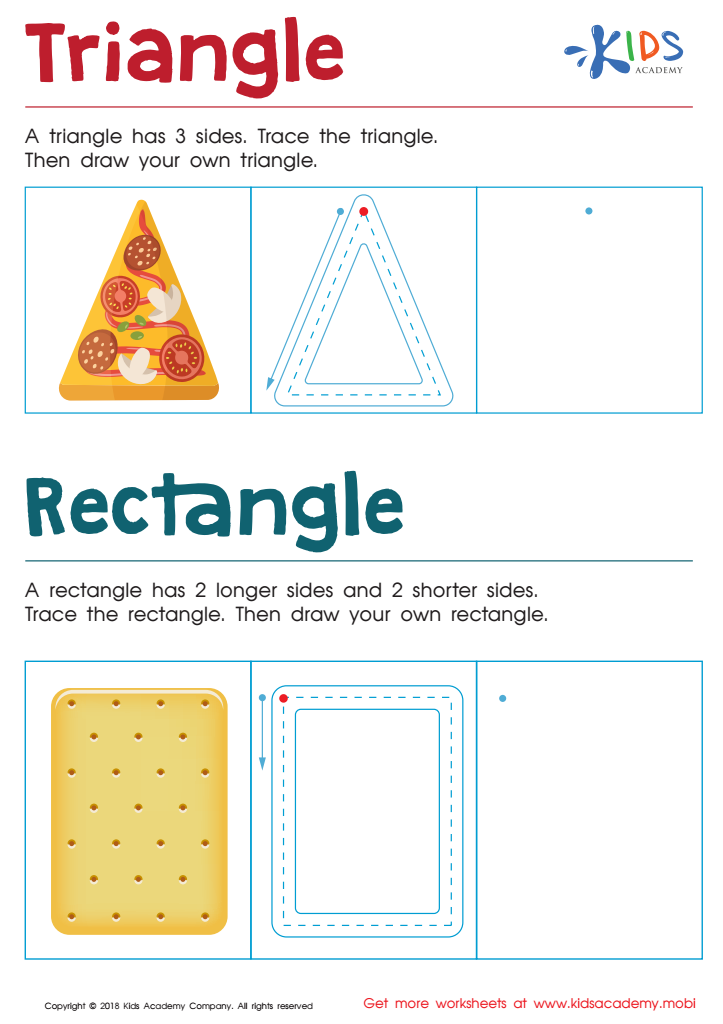
Triangle Rectangle Worksheet
This printable worksheet helps kids draw rectangles and triangles. Have your child trace the pizza and cracker shapes to become familiar, then try their own. Perfect for second graders! Coloring and creativity make this fun and educational.
Triangle Rectangle Worksheet
Worksheet
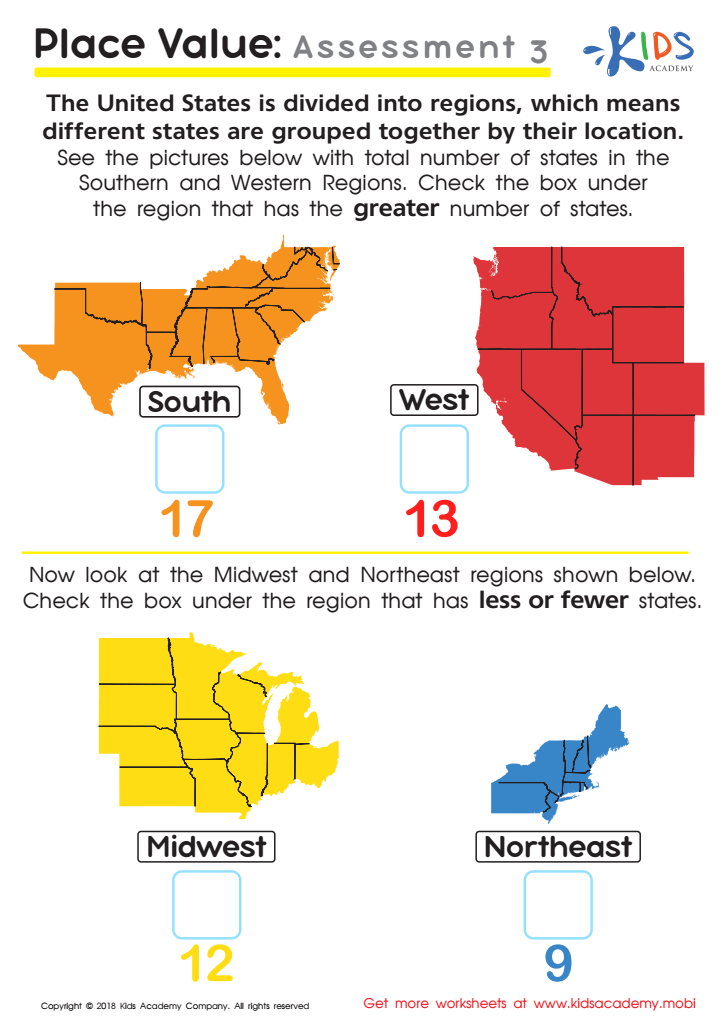
Place Value: Assessment 3 Worksheet
Test your child's math skills without them realizing it! This fun worksheet looks at the states and regions of the U.S. and your child can compare numbers greater or lesser than the other. It's the perfect way to assess your child's number sense without them knowing.
Place Value: Assessment 3 Worksheet
Worksheet
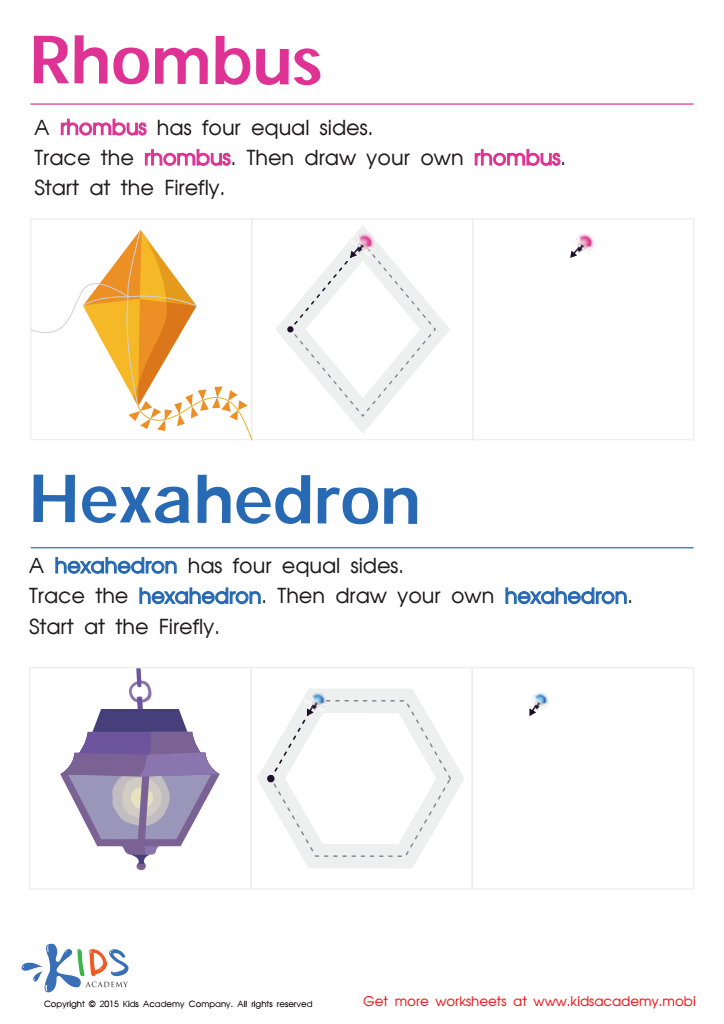
Draw a Rhombus And a Hexahedron Printable
Trace, draw and recognize shapes like rhombus, hexahedron and more! Start with the firefly to trace a rhombus, then use the yellow kite to remember the shape. Use the light to trace and draw a hexahedron. Learn with the best!
Draw a Rhombus And a Hexahedron Printable
Worksheet
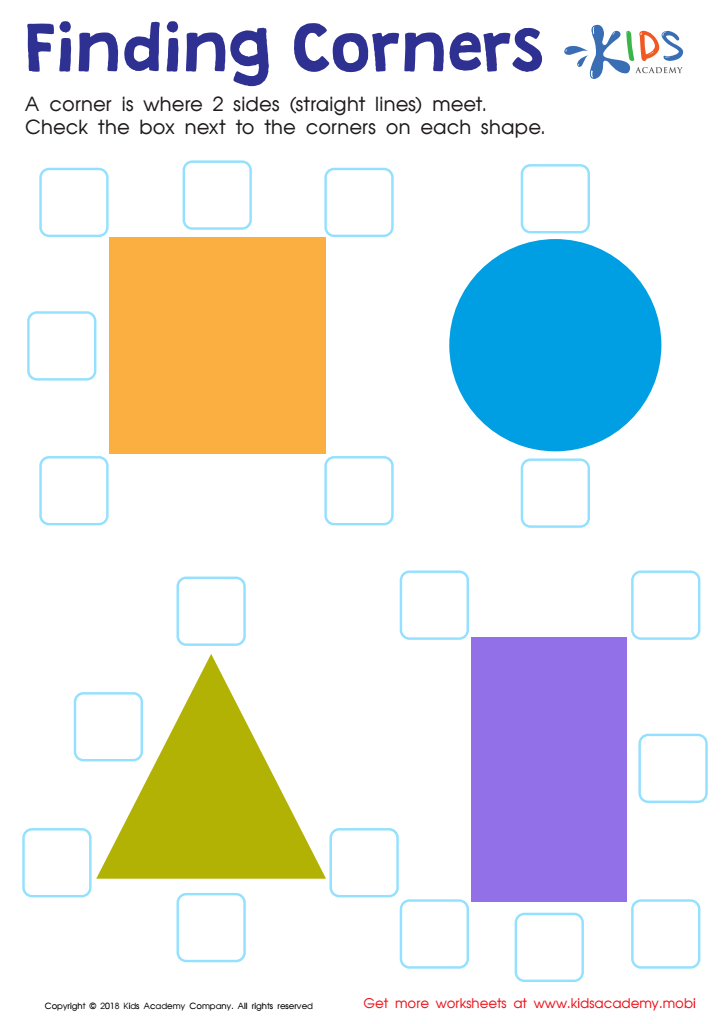
Finding Corners Worksheet
This vibrant worksheet introduces young learners to the fundamentals of geometric shapes. Through the downloadable PDF, they'll develop an understanding of corners - the intersection of two line segments - and how to identify them on different shapes. Fun colors and boxes let them label corners, helping them master this concept for future geometric reasoning.
Finding Corners Worksheet
Worksheet
Join Kids Academy for Free
Who is primarily going to use this learning content?






Shape identification is a fundamental aspect of early mathematics education for children aged 5-7, and both parents and teachers should prioritize it for several reasons. Firstly, understanding shapes lays the groundwork for spatial reasoning—an essential skill in various academic fields, particularly in mathematics, science, and geometry. Recognizing and naming shapes helps children develop critical thinking as they observe and categorize their environment.
Secondly, shape identification enhances fine motor skills when children engage in activities such as drawing shapes, cutting out shapes, or using shape-related toys. These activities also promote hand-eye coordination, an important developmental milestone.
Moreover, learning about shapes integrates with other concepts like patterns and measurements, fostering a holistic understanding of mathematics. This foundational knowledge is not just about mere recognition; it also aids in problem-solving, allowing children to apply what they have learned in practical situations.
Lastly, encouraging shape identification at an early age builds confidence and lays a strong mathematical foundation for future learning. When children feel competent in recognizing and understanding shapes, they are more likely to enjoy and engage with mathematical concepts as they progress in their education. Parents and teachers, therefore, play a crucial role in nurturing these skills through supportive activities and instructional methods.








