
Vocabulary development Normal Math Worksheets for Ages 5-7
5 filtered results
Difficulty Level
Grade
Age
-
From - To
Subject
Activity
Standards
Enhance your child's vocabulary skills with our engaging Normal Math Worksheets, specially designed for ages 5-7! Our collection focuses on integrating math with vocabulary development, promoting both language and mathematical understanding. These worksheets feature fun activities that nurture critical thinking and enrich your child's word bank through math-related terminology. By interacting with numbers and words, kids will strengthen their comprehension and communication skills. Ideal for homeschooling or classroom settings, our resources combine learning with play, making education enjoyable. Help your little learners thrive in math and language with our thoughtfully crafted worksheets today! Explore our variety and watch their confidence grow!
Favorites
With answer key
Interactive
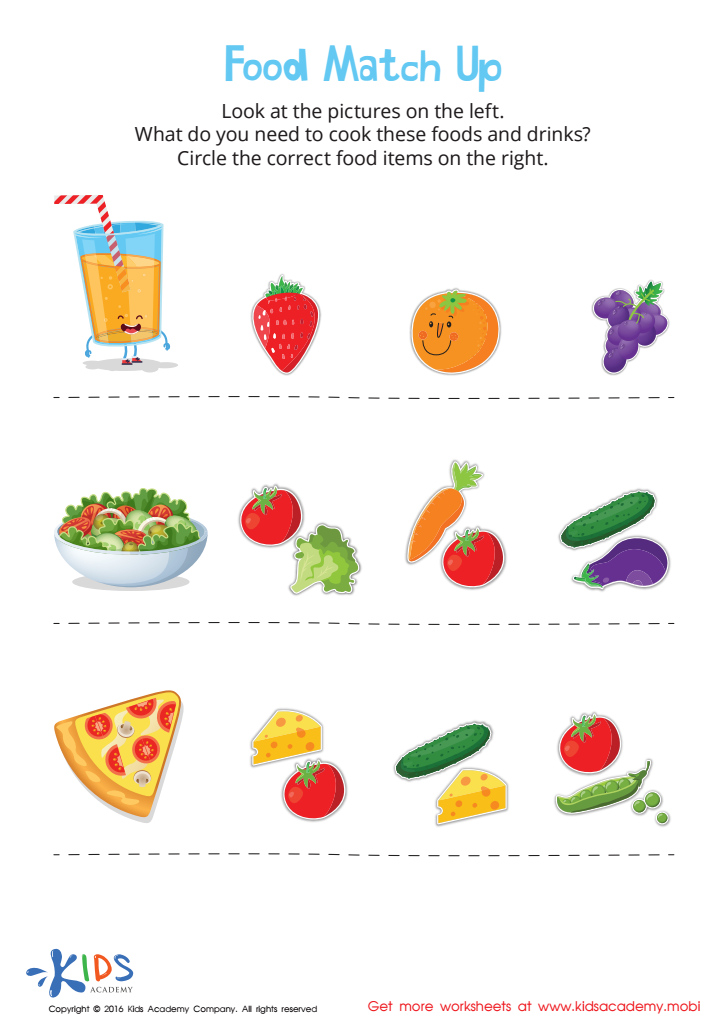
Food Match Up Worksheet
This worksheet will help your preschooler develop early math and cognitive skills. It challenges them to pay attention to details, understand how smaller parts make a whole, and increase important matching skills. Use it to give them a hands-on learning experience in the kitchen, and watch them understand how ingredients come together to make something delicious!
 Assign to My Students
Food Match Up Worksheet
Worksheet
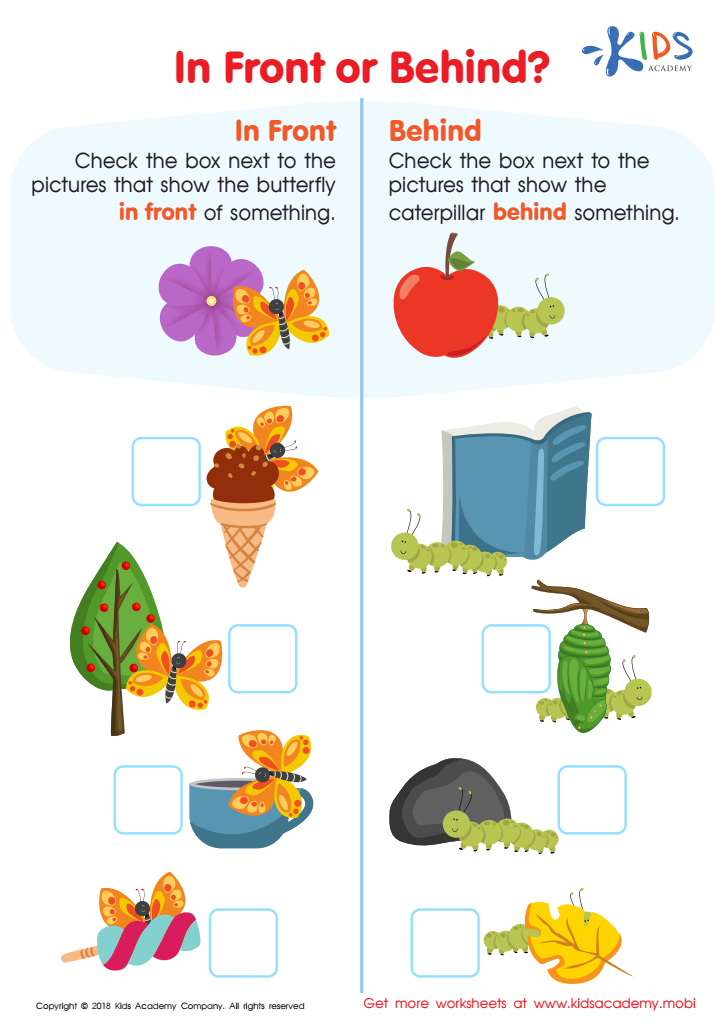
In Front or Behind Worksheet
Hone your child's spatial skills with 'in front' and 'behind'! This knowledge is essential for communication and study. Get them started with this free PDF worksheet - check off the pictures that show the butterfly in front and caterpillar behind!
In Front or Behind Worksheet
Worksheet
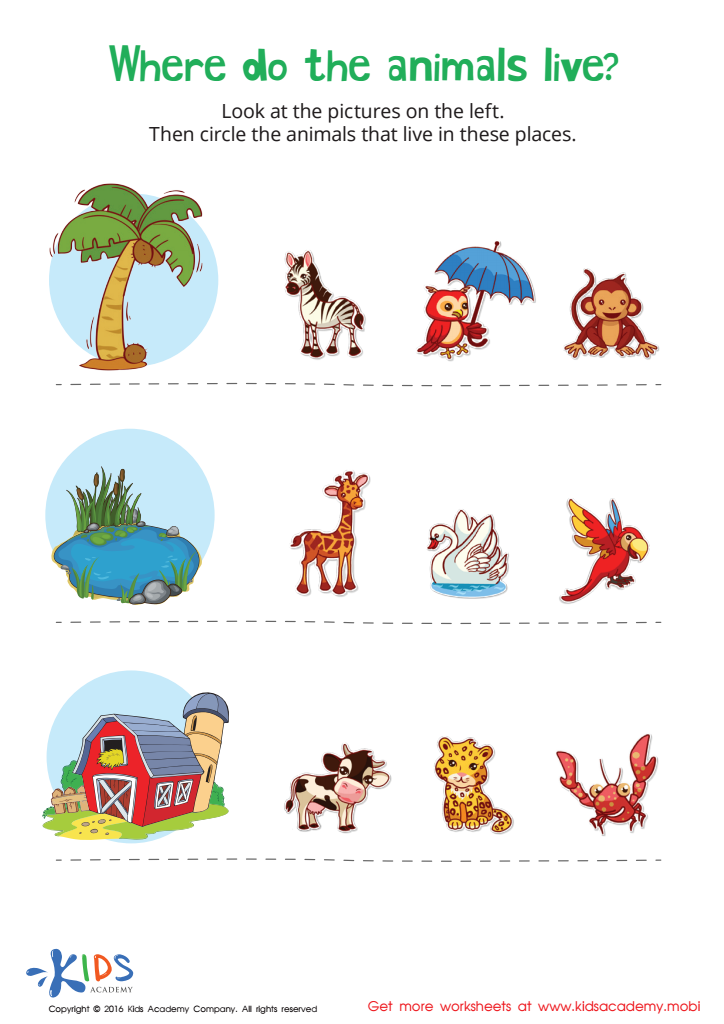
Where Animals Live Worksheet
Teaching early reading and math skills is important, but don't forget about science. With the Where Animals Live PDF worksheet, kids can identify their favorite animals and the environments they live in. Ask them what type of environment the animals like and introduce them to geography. It's great for logical reasoning and classification skills. Your kid will practice with their favorite animals and love the trip to the zoo afterwards!
Where Animals Live Worksheet
Worksheet
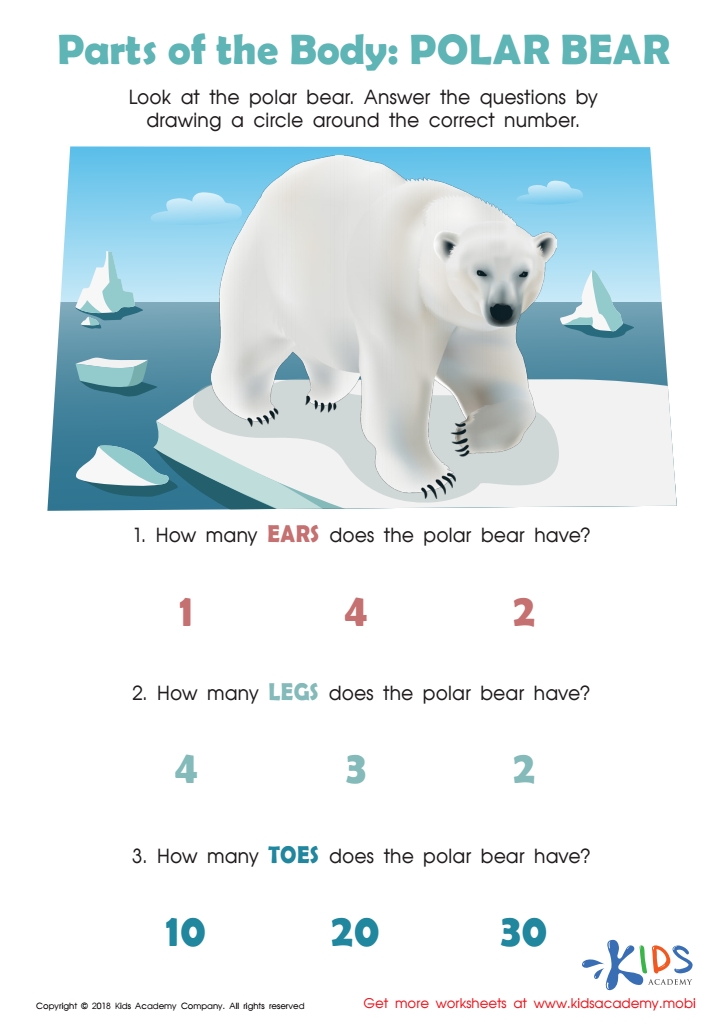
Parts of the Body: Polar Body Worksheet
Start by showing your kid a picture of a Polar Bear. Explain that it's a member of the bear family with white fur and a large size. Use this worksheet to teach them more about the animal. Go through the questions together and have them draw a circle around the correct number for each one.
Parts of the Body: Polar Body Worksheet
Worksheet
Join Kids Academy for Free
Who is primarily going to use this learning content?








Vocabulary development in early childhood, particularly in math for ages 5-7, is crucial for several reasons. First, a strong vocabulary provides the foundational language skills that enhance a child's ability to comprehend mathematical concepts. For instance, understanding terms such as “more than,” “less than,” or “equal to” enables children to grasp essential operations like addition and subtraction effectively.
Moreover, vocabulary in math helps children articulate their thought processes and reasoning. When they can describe how they arrived at an answer, they not only reinforce their own understanding but also engage in discussions that deepen their learning. This verbalization fosters critical thinking skills, enhancing problem-solving abilities and encouraging a growth mindset.
Furthermore, vocabulary development supports overall literacy. Many math problems are embedded in story problems that require reading comprehension. Thus, a robust math vocabulary directly influences a child’s ability to tackle these types of questions successfully.
For parents and teachers, nurturing vocabulary in math can lead to improved academic outcomes and confidence in both math and literacy, laying the groundwork for future learning. It also promotes a positive attitude toward math, shifting the perception from a challenging subject to an engaging and accessible one.








