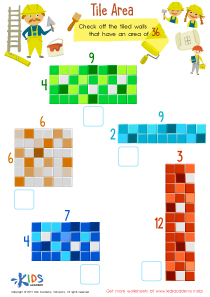
Counting skills Normal Matching Worksheets for Ages 5-7
6 filtered results
-
From - To
Enhance your child’s counting skills with our engaging Normal Matching Worksheets for ages 5-7! These printable worksheets are designed to make learning fun and effective, helping young learners to develop essential counting abilities. Each activity encourages children to match numbers and objects, reinforcing their understanding of quantities in an interactive way. Ideal for classroom use or at-home learning, these worksheets promote cognitive development through hands-on practice. Perfect for preschool and early grade educators, they offer an easy way to track progress while fostering a love for math. Explore our collection and watch your child’s counting confidence grow!
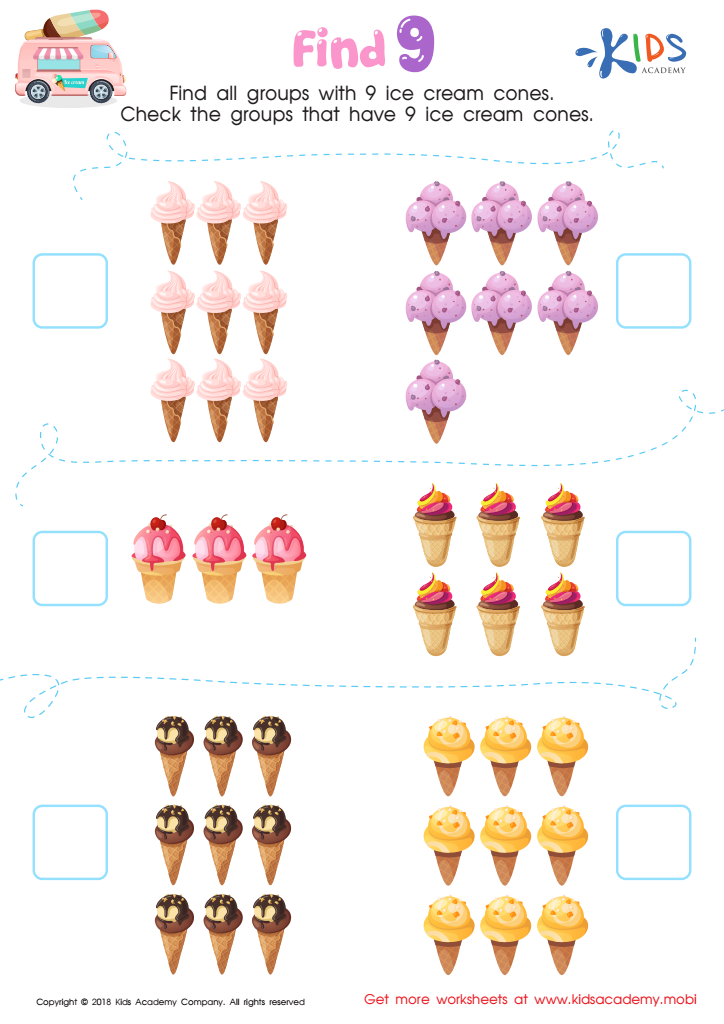
Find 9 Worksheet
 Assign to My Students
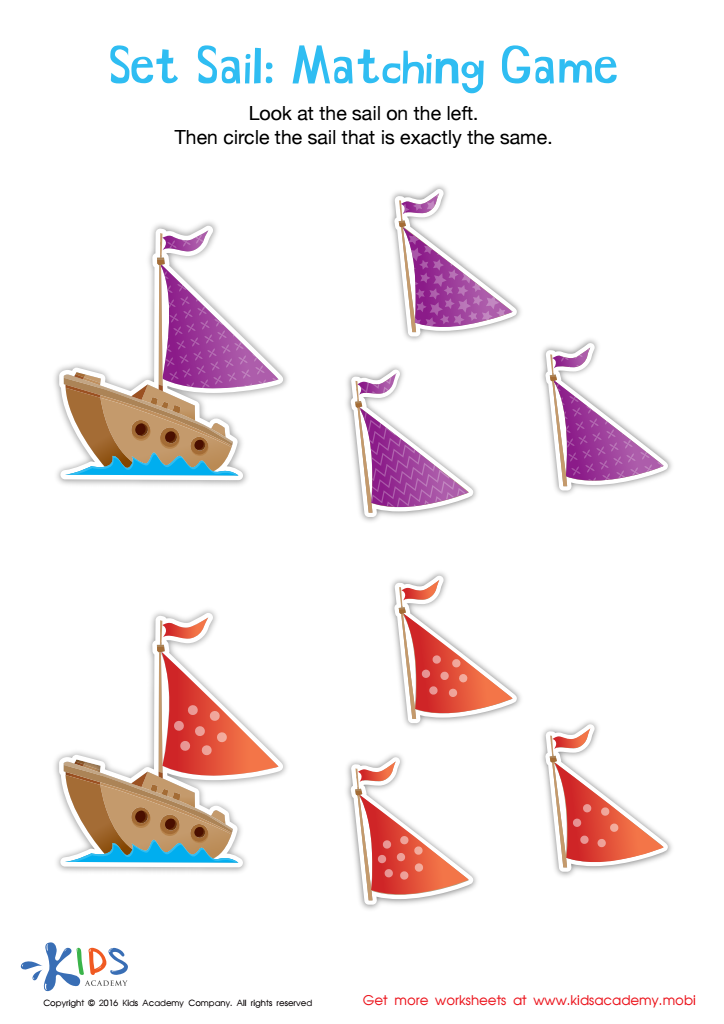
Set Sail Worksheet
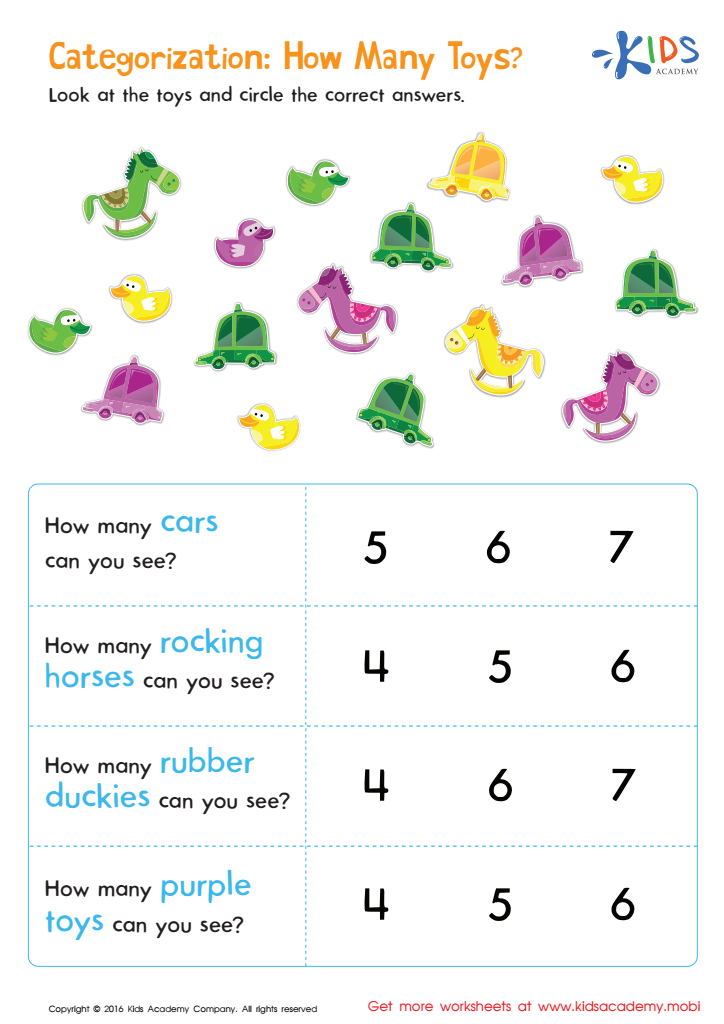
Classifying Toys by Type and Color Sorting Worksheet
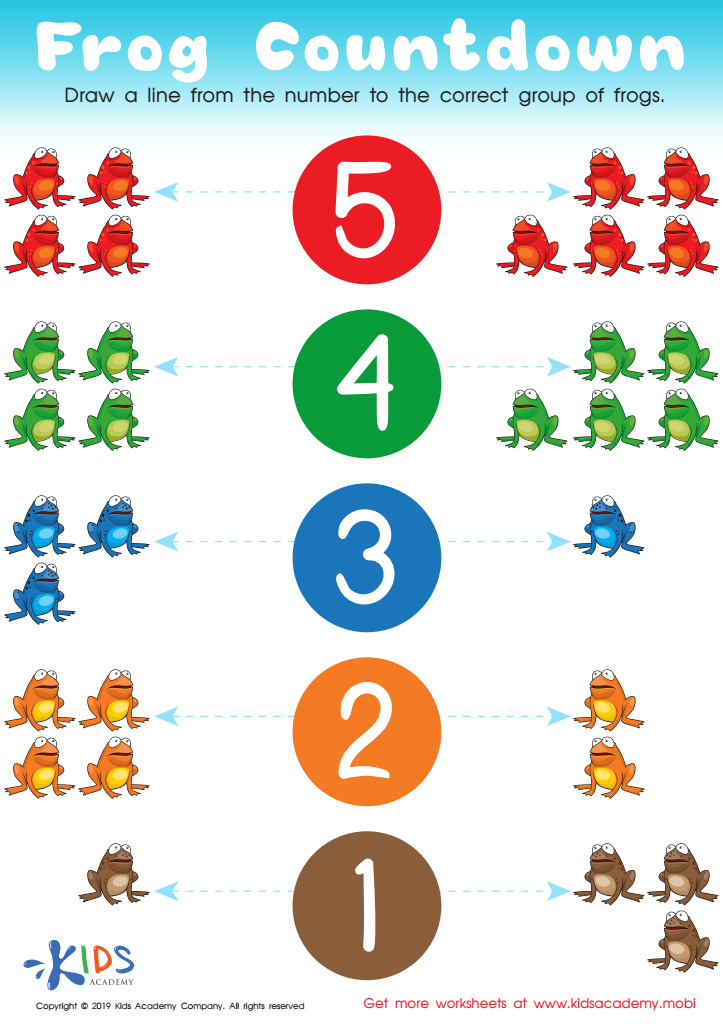
Frog Countdown Worksheet

Ten in the Bed Worksheet
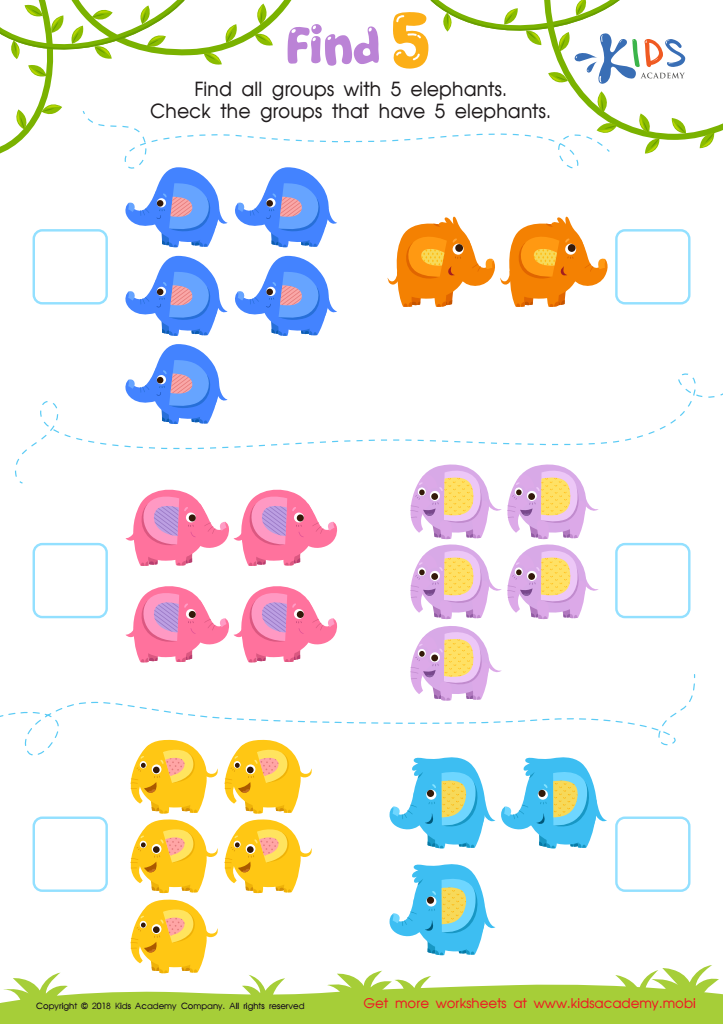
Find 5 Worksheet








Counting skills and normal matching are crucial developmental milestones for children aged 5-7. During this formative period, children are not only learning fundamental mathematical concepts but also honing their cognitive and analytical skills. Mastering counting lays the groundwork for future mathematical understanding, enabling children to grasp addition, subtraction, and more complex operations later on.
Teachers and parents should prioritize these skills because they equip children with the ability to recognize quantities, understand quantities in everyday situations, and develop critical thinking. Through engaging activities like counting objects or matching numbers to quantities, children use hands-on experiences that make learning enjoyable and effective.
Moreover, normal matching skills enhance children's ability to categorize and compare objects, which are essential skills in not just math but also in scientific reasoning and problem-solving. Children also gain social skills by interacting with peers during these activities, fostering cooperation and communication.
In this digital age, where many children are engrossed in screens, nurturing fundamental counting and matching skills encourages real-world interaction and tactile learning. Ultimately, early mastery of these skills not only supports academic success but also builds confidence and self-efficacy in young learners, preparing them for future challenges.