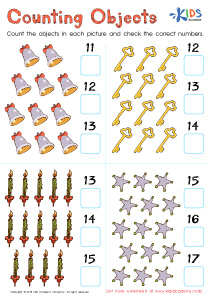
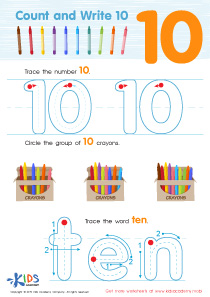
Fine Motor Skills Normal Numbers up to 100 Worksheets for Ages 5-7
3 filtered results
Difficulty Level
Grade
Age
-
From - To
Subject
Activity
Standards
Enhance your child's fine motor skills with our "Normal Numbers up to 100" worksheets, tailored for ages 5-7. These engaging, age-appropriate activities combine number recognition with fun exercises that promote hand-eye coordination and dexterity. Your child will practice writing numbers, tracing shapes, and completing fun puzzles, all while reinforcing their math skills. Our worksheets encourage creativity and critical thinking, making learning both effective and enjoyable. Perfect for homeschooling or supplementary practice, these resources help set a strong foundation in numeracy. Explore our varied worksheets and support your child's development with essential fine motor skills today!
Favorites
With answer key
Interactive
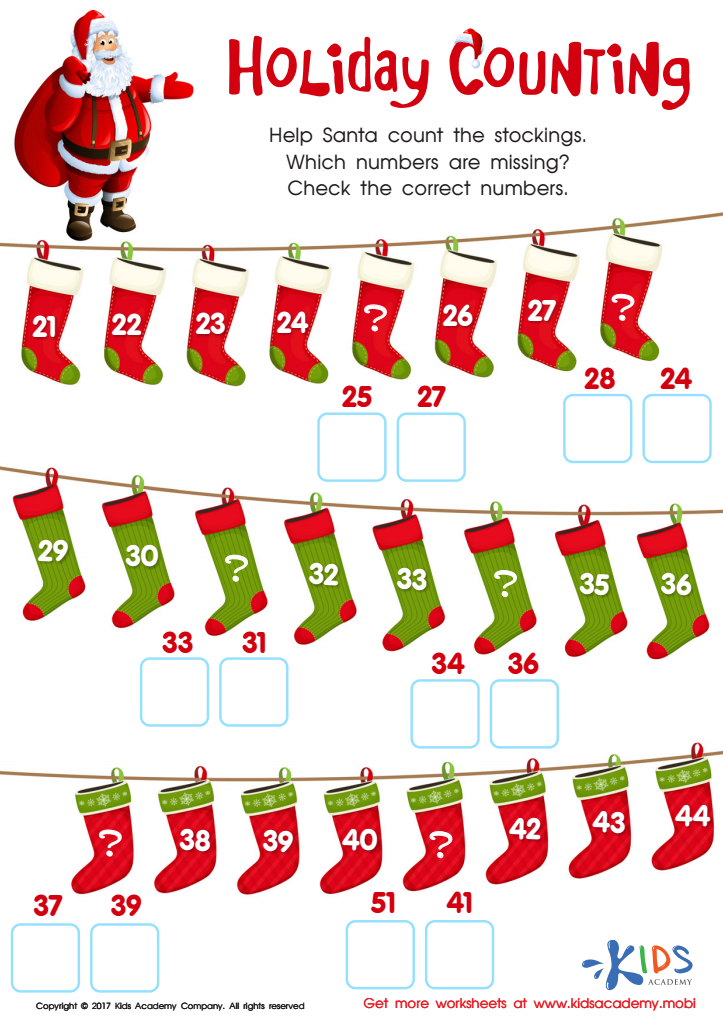
Holiday Counting Worksheet
Let's spread some holiday cheer! Santa needs help counting stockings hung up for gifts - can your little one lend a hand? Find the missing numbers on the worksheet and have them check the boxes for the correct answers. Time to get counting!
 Assign to My Students
Holiday Counting Worksheet
Worksheet
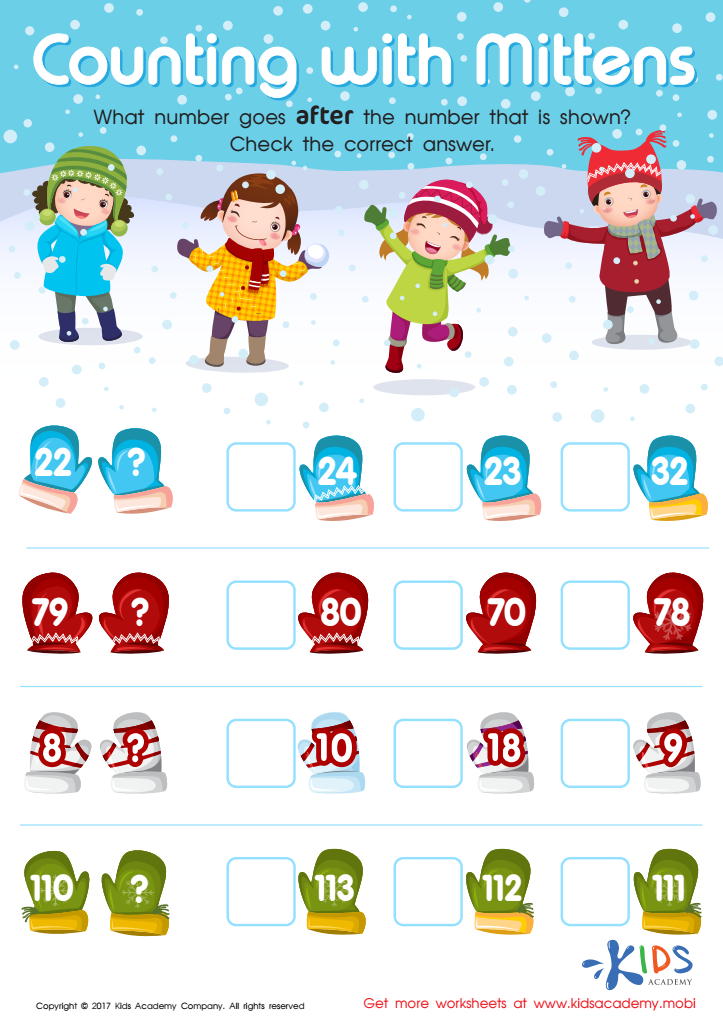
Counting with Mittens Worksheet
Let your kid have fun with this counting worksheet! It encourages them to count numbers and figure out which come next in the picture. Check the box with the correct answer - it's already provided. No more groaning and tears - this is a great way to learn!
Counting with Mittens Worksheet
Worksheet
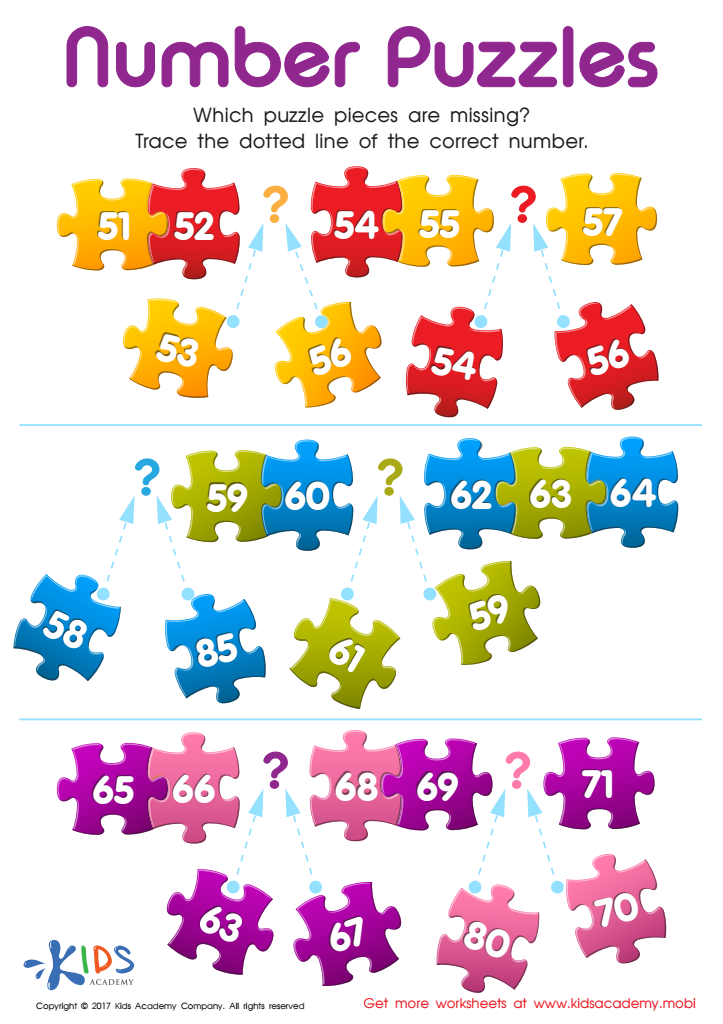
Number Puzzles Worksheet
In this tracing paper, your child must identify the missing numbers in the puzzle. Guide them as they trace the line for the correct number to complete the worksheet. This activity will help boost their problem-solving skills.
Number Puzzles Worksheet
Worksheet
Join Kids Academy for Free
Who is primarily going to use this learning content?








Fine motor skills are essential for children aged 5-7 as they directly impact their ability to engage in various academic and everyday tasks. These skills involve the coordination of small muscles, particularly in the hands and fingers, enabling children to perform tasks such as writing, cutting, and buttoning. As children learn to write numbers and letters, having well-developed fine motor skills aids in their handwriting and overall academic performance.
Understanding normal developmental milestones in fine motor skills can help both parents and teachers identify when children may need additional support or practice. Since students are expected to recognize and manipulate numbers up to 100 at this age, strong fine motor skills encourage confidence and independence in mathematical tasks, such as counting, sorting, and simple addition or subtraction.
Additionally, activities that promote fine motor skills—like drawing, crafting, and puzzles—stimulate cognitive development and enhance creativity. Encouraging these skills not only supports academic success but also fosters social interactions, as children learn to share tools and collaborate in tasks. Ultimately, nurturing fine motor skills sets the foundation for lifelong skills in learning, self-help, and even sports or arts, making it critical for parents and teachers to actively engage in this aspect of development.