Logical Reasoning Normal Two-step Word Problems Worksheets for Ages 5-7
3 filtered results
-
From - To
Boost your child's logical reasoning skills with our engaging Two-step Word Problems Worksheets, designed for ages 5-7. These printable resources provide an exciting way for young learners to practice critical thinking and problem-solving through relatable scenarios. Each worksheet presents a series of fun, age-appropriate word problems that require students to apply their reasoning abilities to find solutions. Perfect for reinforcing math concepts and encouraging analytical skills, our worksheets also support curriculum goals for early education. Help your child gain confidence in their abilities while exploring the fascinating world of mathematics through these easy-to-use and interactive activities!
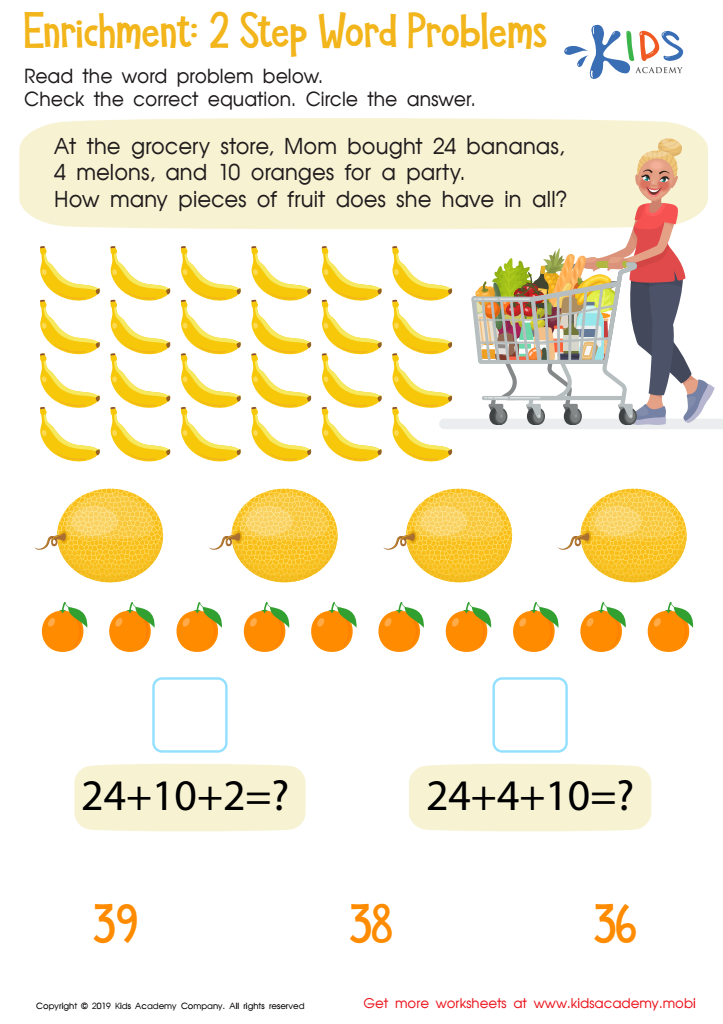
Enrichment -2 Step Word Problems Worksheet
 Assign to My Students
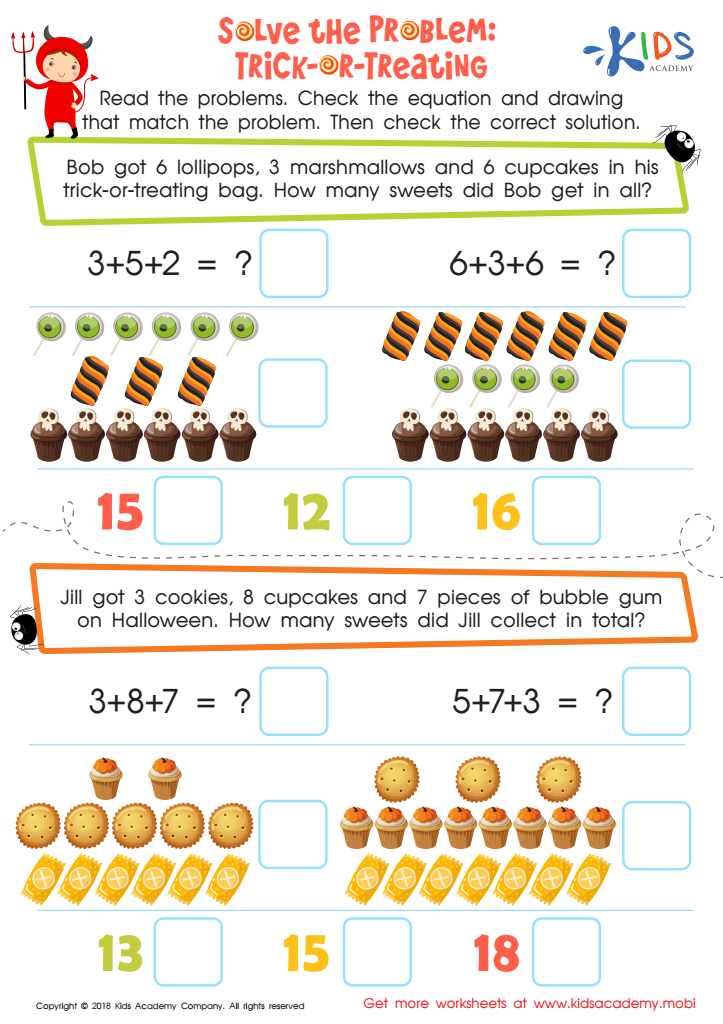
Solve the Problem: Trick–or–treating Worksheet
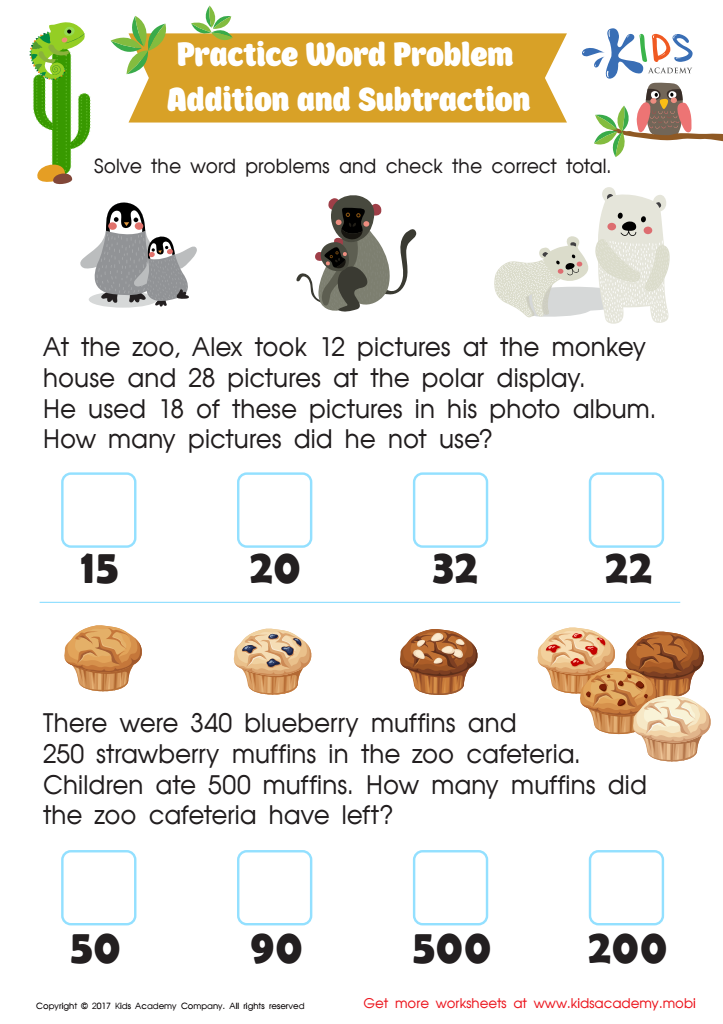
Addition and Subtraction: Word Problems Worksheet



Logical reasoning skills are essential for children as they help them process information, solve problems, and make informed decisions. For children aged 5-7, two-step word problems serve as a crucial foundation in developing these skills. When parents or teachers focus on logical reasoning through these problems, they are nurturing critical cognitive abilities that extend beyond math.
Two-step word problems require children to first understand the context and identify the necessary operations involved. This process encourages children to think critically about how they relate different pieces of information, fostering an understanding of relationships among quantities. Additionally, breaking down a problem into manageable steps helps improve their attention span and promotes perseverance as they work through challenges.
Moreover, logical reasoning enhances communication skills as children articulate their thought processes and reasoning behind their answers. It prepares them for more advanced subjects while boosting their confidence in tackling complex problems. Ultimately, focusing on logical reasoning two-step word problems lays the groundwork for future academic success and equips children with problem-solving skills that are invaluable throughout life. Thus, both parents and teachers play a pivotal role in recognizing and promoting these skills in young learners.