Moral lesson understanding Normal Reading Worksheets for Ages 5-7
3 filtered results
-
From - To
Discover engaging Normal Reading Worksheets designed for ages 5-7 focused on understanding moral lessons. These thoughtfully crafted resources from Kids Academy help children grasp essential values such as honesty, kindness, and empathy through fun and relatable stories. Each worksheet presents vivid scenarios followed by interactive questions that encourage young readers to reflect on characters' actions and the consequences. By connecting literature to real-life morals, these printables not only boost reading skills but also foster emotional growth and ethical understanding. Ideal for parents and educators seeking to enhance a child’s learning in an enjoyable, meaningful way. Start nurturing compassionate young minds today!
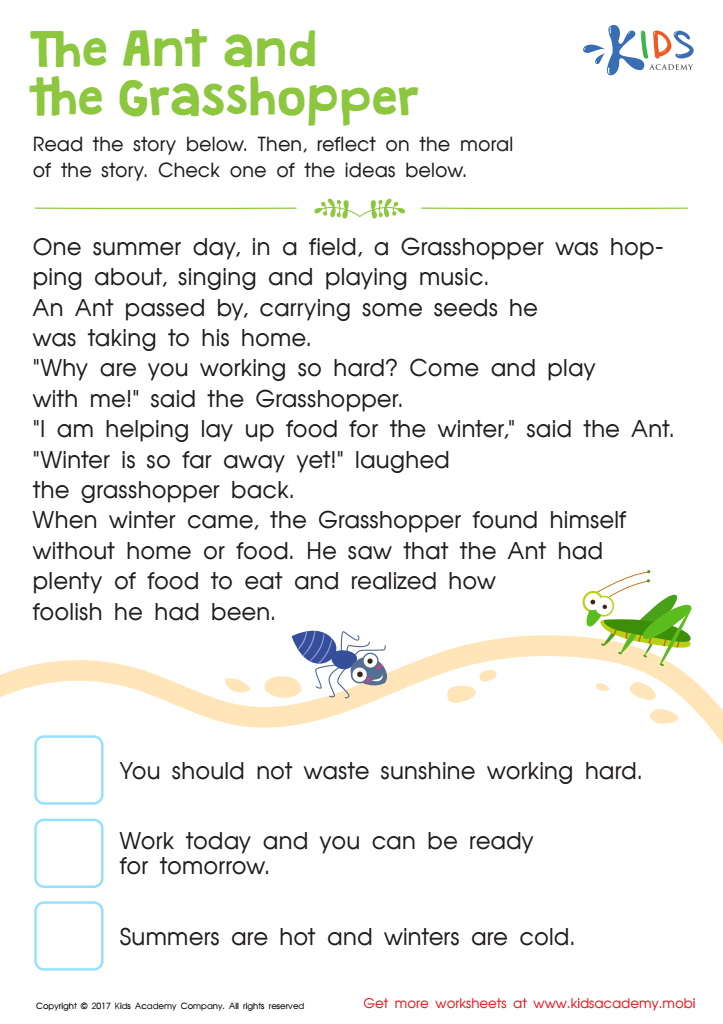
The Ant and The Grasshopper Printable
 Assign to My Students
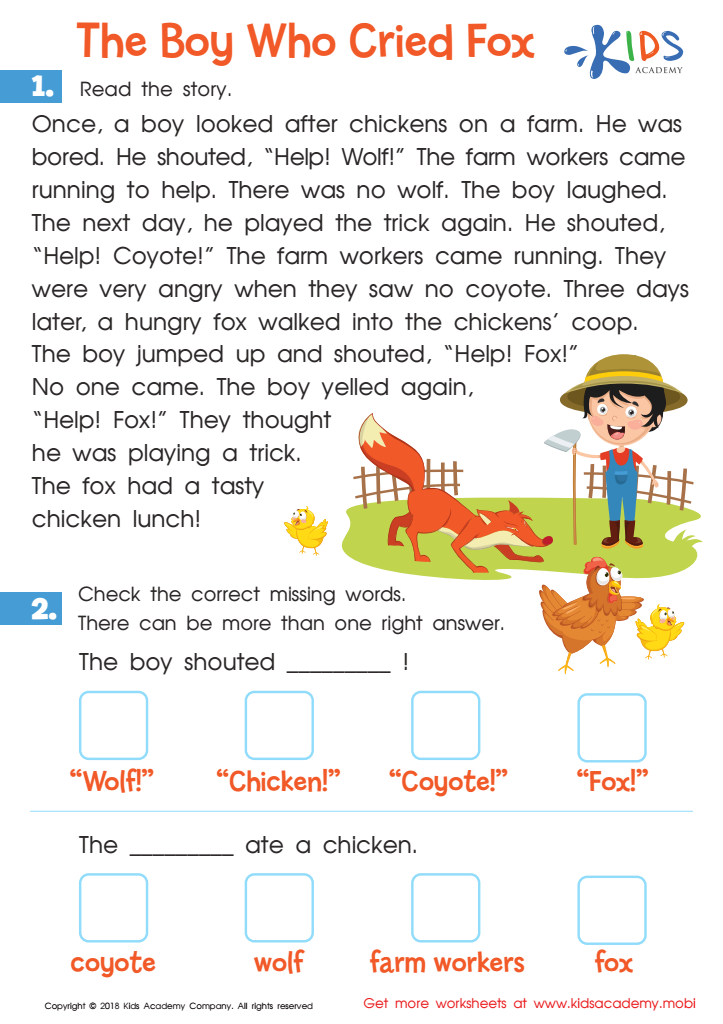
The Boy Who Cried Fox Worksheet
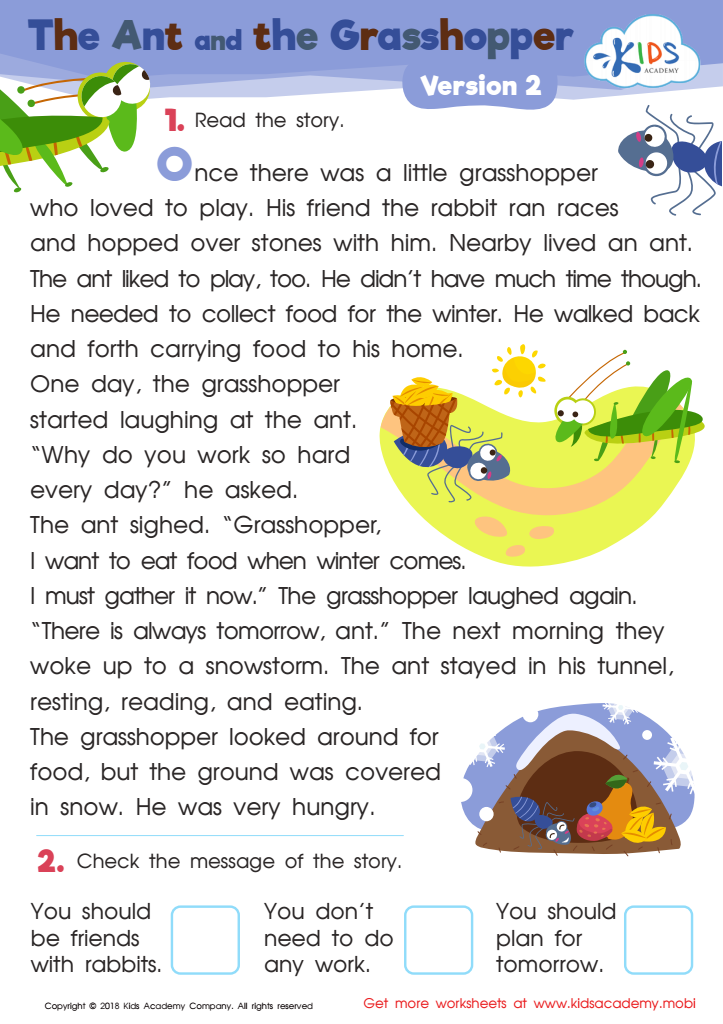
The Ant and The Grasshopper Version 2 Worksheet







Moral lesson understanding during the normal reading process for children aged 5-7 is crucial for several foundational reasons. Firstly, this age range marks a significant period in shaping a child's character and values. When parents or teachers incorporate moral lessons into reading, they help children grasp concepts of right and wrong, empathy, respect, and fairness. These values guide children's behavior both in and outside of the classroom, influencing how they interact with their peers and contributing to a positive learning environment.
Additionally, stories with moral lessons often feature situations and characters that can capture a young child's imagination, making these lessons both relatable and memorable. For emerging readers, the combination of moral understanding with reading practice can enrich their cognitive development. As they follow narratives, solve problems, and face challenges alongside characters, they also develop critical thinking and comprehension skills.
Furthermore, integrating moral lessons with reading can open dialogues between children and adults about ethically complex scenarios, enhancing communication skills and building a deeper understanding of societal norms. This dual focus on literacy and moral value nurtures well-rounded individuals who are intellectually and emotionally prepared for future learning and ethical decision-making. Therefore, emphasizing this at a young age sets the groundwork for both academic success and responsible citizenship.








