Moral understanding Normal Reading Worksheets for Ages 5-7
4 filtered results
-
From - To
Enhance your child's moral understanding with our specially designed Normal Reading Worksheets for ages 5-7. These engaging printable resources aim to cultivate empathy, honesty, and kindness through relatable stories and interactive activities. Ideal for early grade teachers and parents, the worksheets not only improve reading comprehension but also encourage discussions about right and wrong, helping children navigate social situations. Each worksheet features age-appropriate text and thought-provoking questions that inspire critical thinking and reinforce values. Foster a well-rounded education and nurture your child's moral compass with our fun and educational worksheets that seamlessly combine learning with character development!
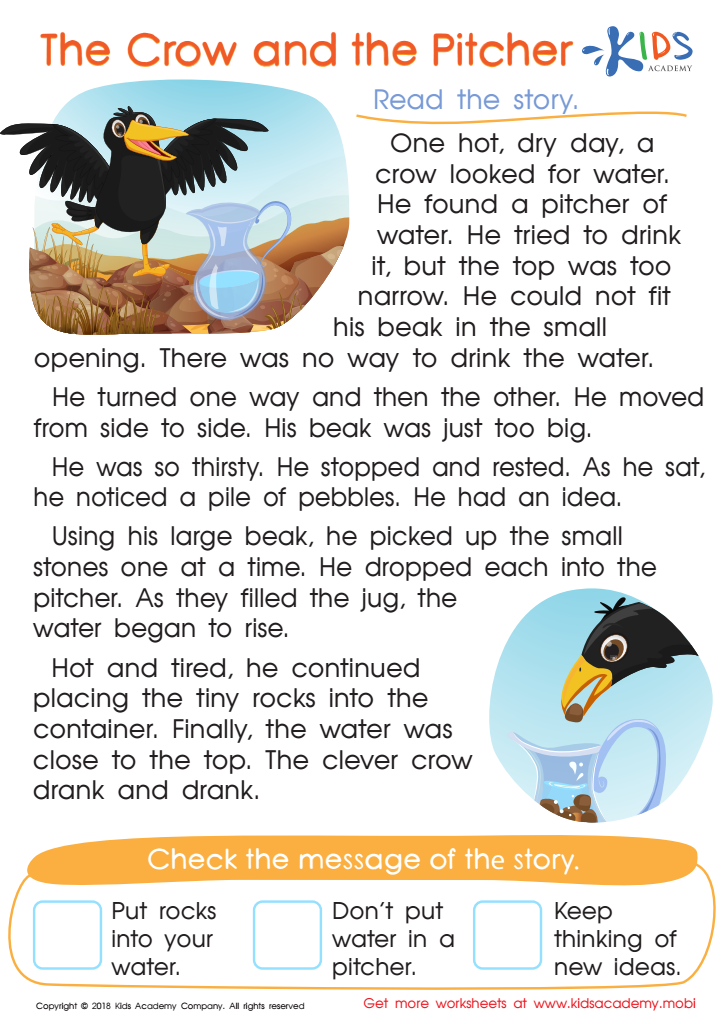
The Crow and the Pitcher Worksheet
 Assign to My Students
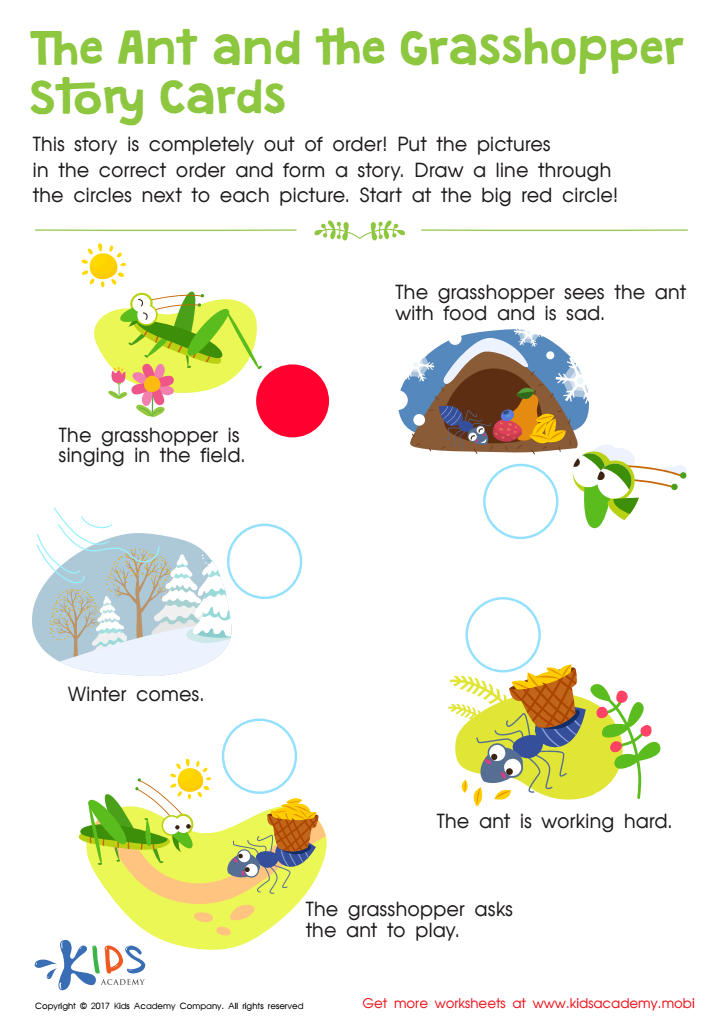
The Ant and The Grasshopper Worksheet
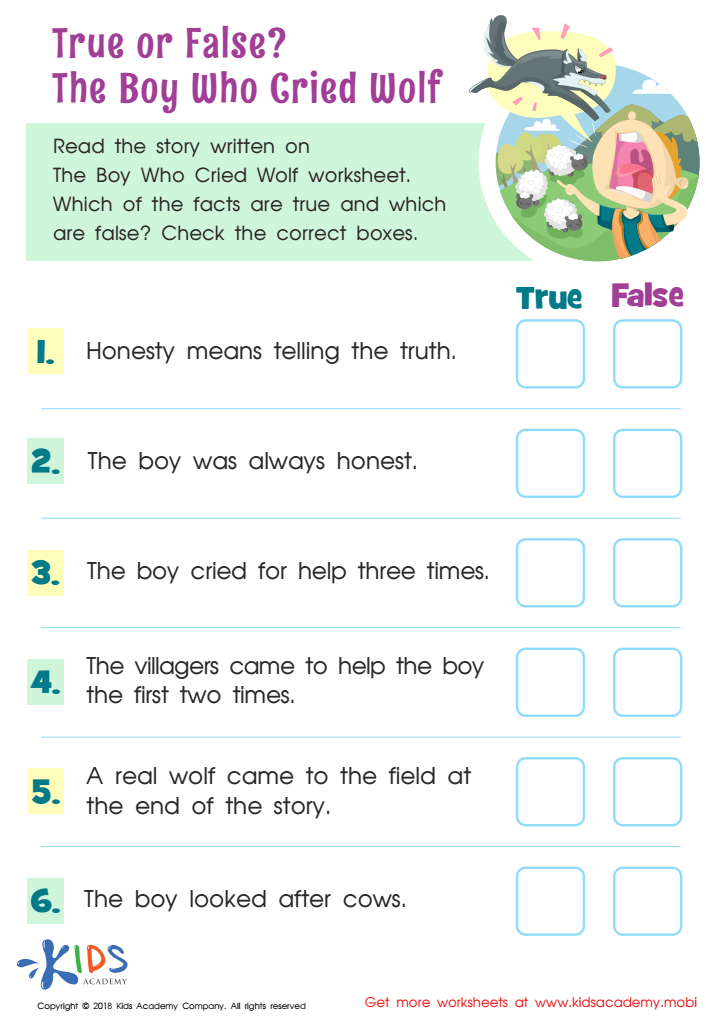
True or False? The Boy Who Cried Wolf Worksheet
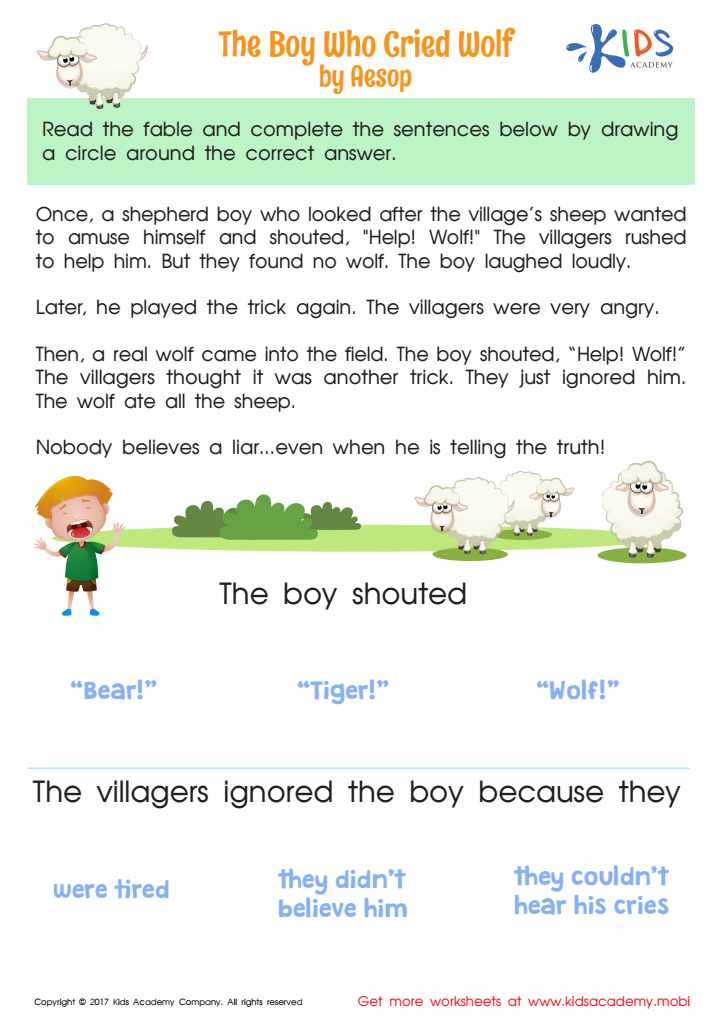
The Boy Who Cried Wolf Worksheet







Moral understanding is a vital component of child development, particularly for ages 5-7, when children begin to navigate social interactions and form their values. During these formative years, children are highly impressionable and start to grasp concepts of right and wrong, empathy, and fairness. Parents and teachers play crucial roles in nurturing this understanding, influencing how children relate to their peers and the world.
Fostering moral understanding helps children develop critical social skills, enabling them to resolve conflicts and build positive relationships. When adults model ethical behavior and engage children in discussions about moral dilemmas, it encourages them to think critically about their own choices and the consequences that follow. This guidance instills a sense of responsibility and compassion, key traits that shape their character as they grow.
Moreover, integrating moral lessons into reading activities makes learning enjoyable and relatable. Stories with moral themes allow children to explore different perspectives and reflect on their actions in a safe environment. Ultimately, investing time in moral education is crucial for fostering a generation of conscientious, empathetic individuals who contribute positively to society. By caring about moral understanding in reading, adults lay the foundation for a caring and equitable world.








