
Spatial awareness Normal Reading Worksheets for Ages 5-7
3 filtered results
Difficulty Level
Grade
Age
-
From - To
Subject
Activity
Standards
Discover our engaging Spatial Awareness Normal Reading Worksheets designed for children ages 5-7. These worksheets help young learners develop essential spatial skills crucial for early reading success. With fun, age-appropriate exercises, kids will enhance their ability to recognize shapes, understand directions, and improve hand-eye coordination. Perfect for classroom use or at-home practice, our worksheets make learning enjoyable and effective. Foster your child's reading abilities and spatial awareness through interactive activities crafted by educational experts. Start your child's journey toward academic excellence today with our expertly designed educational resources!
Favorites
With answer key
Interactive
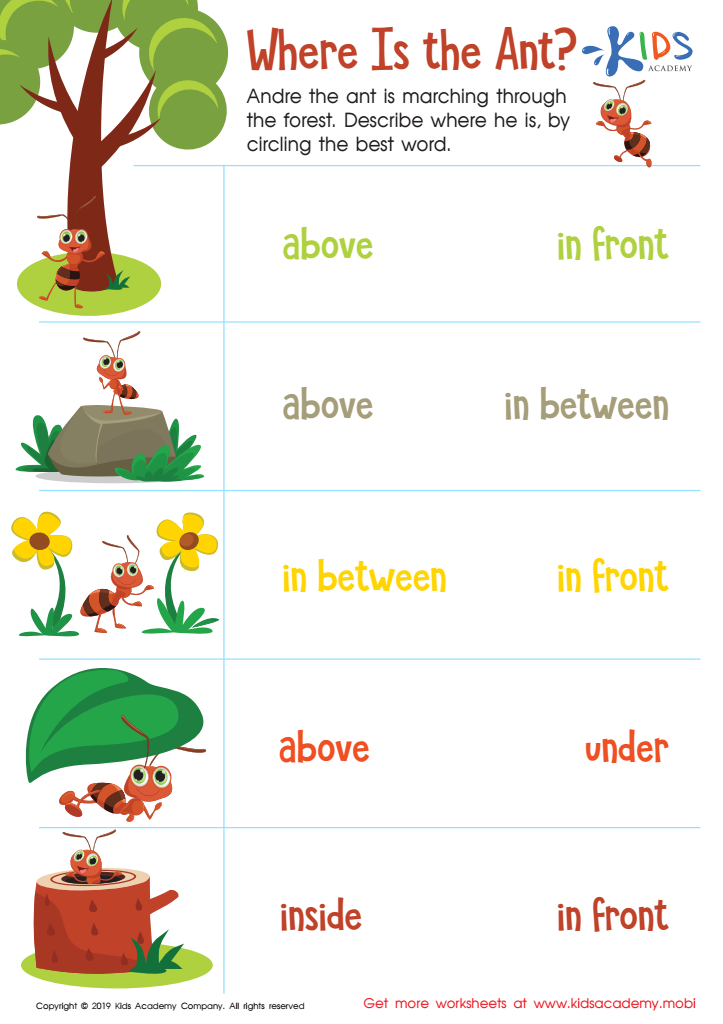
Where Is the Ant? Worksheet
Kids are captivated by ants. Andre is a busy ant, marching through the forest. Help your child circle the best word that best describes what he's doing in each picture. This colorful printout will show them the way.
 Assign to My Students
Where Is the Ant? Worksheet
Worksheet
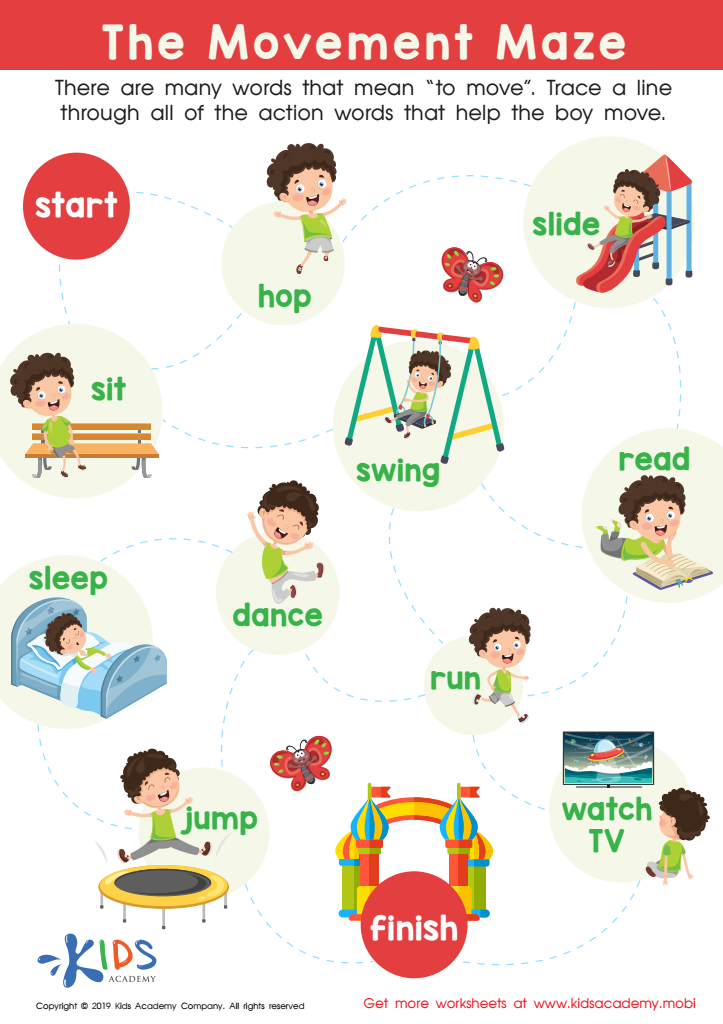
The Movement Maze Worksheet
Let your child have fun with this interactive PDF download. Kids will learn movement words with cute pictures, plus practice fine motor skills as they trace. A fun way to reinforce vocabulary. Jump, hop and sit – it's all here!
The Movement Maze Worksheet
Worksheet
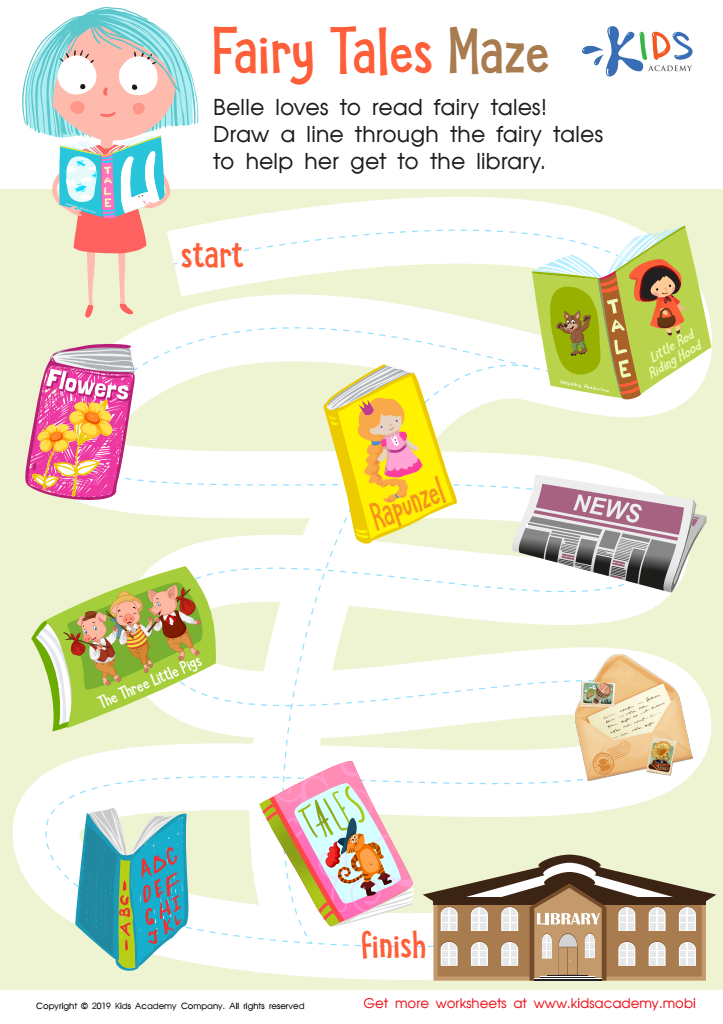
Fairy Tales Maze Worksheet
Kids love mazes and fairy tales, so this free worksheet is a great way to help teach young readers about familiar topics. They'll join Bella and use the traceable lines to travel through different reading genres, and find their way to the library for a nice reward!
Fairy Tales Maze Worksheet
Worksheet
Join Kids Academy for Free
Who is primarily going to use this learning content?





.jpg)

Parents and teachers should closely care about spatial awareness and reading skills in children ages 5-7 because they form the foundation for future learning and daily functioning. Spatial awareness, or the understanding of how objects relate to each other in space, is critical for activities ranging from math and science to handwriting and play. When a child grasps spatial concepts like over, under, next to, and between, they develop better coordination, problem-solving skills, and the ability to follow directions, impacting both academic performance and social interactions.
Reading during these early years is equally vital. It sets the stage for literacy, fostering language development, expanding vocabulary, and enhancing comprehension skills. Early reading practices also build attention span and concentration, helping children absorb information more effectively. Positive reading experiences can ignite a lifelong love for learning, boosting self-esteem and confidence.
Neglecting these skills can lead to difficulties in multiple subjects, social struggles, and decreased academic performance. By prioritizing spatial awareness and normal reading development, parents and teachers can equip children with essential tools for lifelong success, empowering them to navigate both educational and real-world challenges efficiently. Engaging in activities like puzzles, reading aloud, and interactive play can foster these crucial skills early on, ensuring well-rounded development.








