Moral understanding Normal Reading Fiction Worksheets for Ages 5-7
4 filtered results
-
From - To
Introduce your young learners to the richness of moral understanding with our carefully designed normal reading fiction worksheets, perfect for ages 5-7. Each delightful story and accompanying activity aim to cultivate empathy, kindness, and ethical reasoning. As children journey through relatable narratives, they'll reflect on right and wrong, learn valuable life lessons, and enhance their reading comprehension skills. Available at Kids Academy, these worksheets provide an engaging and educational way for kids to explore important moral concepts in a fun and supportive environment. Build strong character foundations while developing a love for reading with our expertly crafted resources.
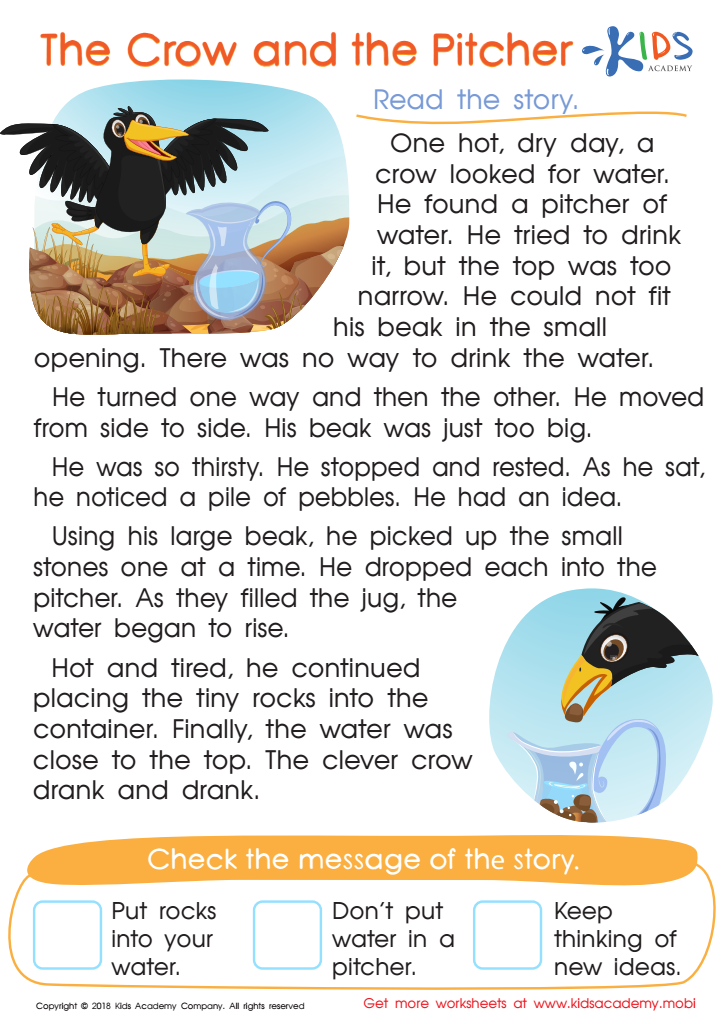
The Crow and the Pitcher Worksheet
 Assign to My Students
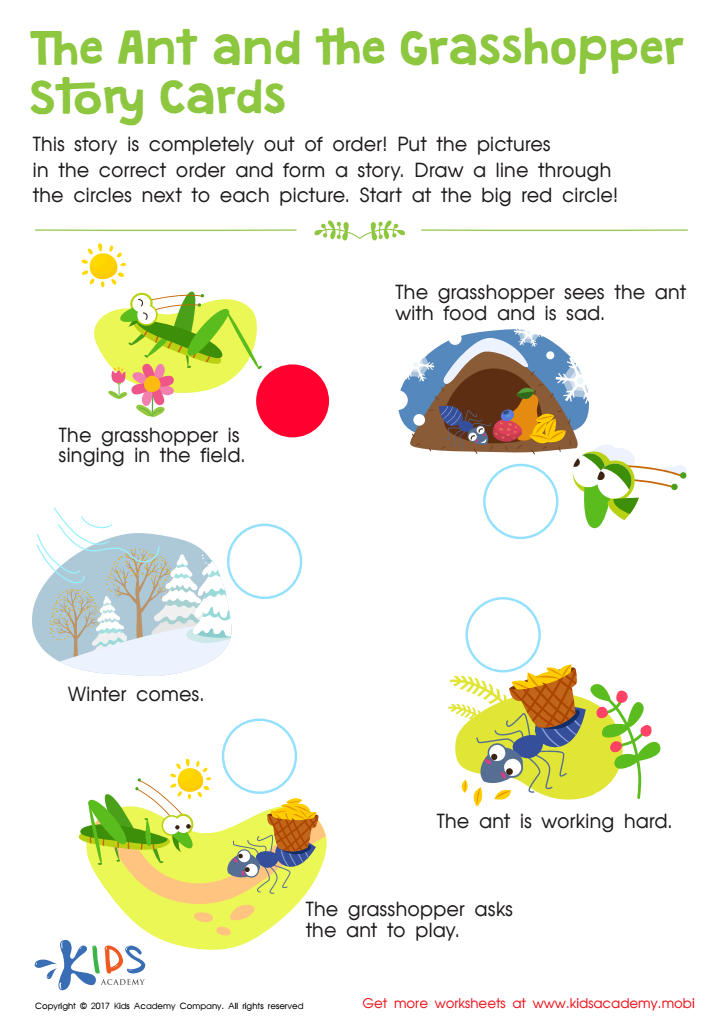
The Ant and The Grasshopper Worksheet
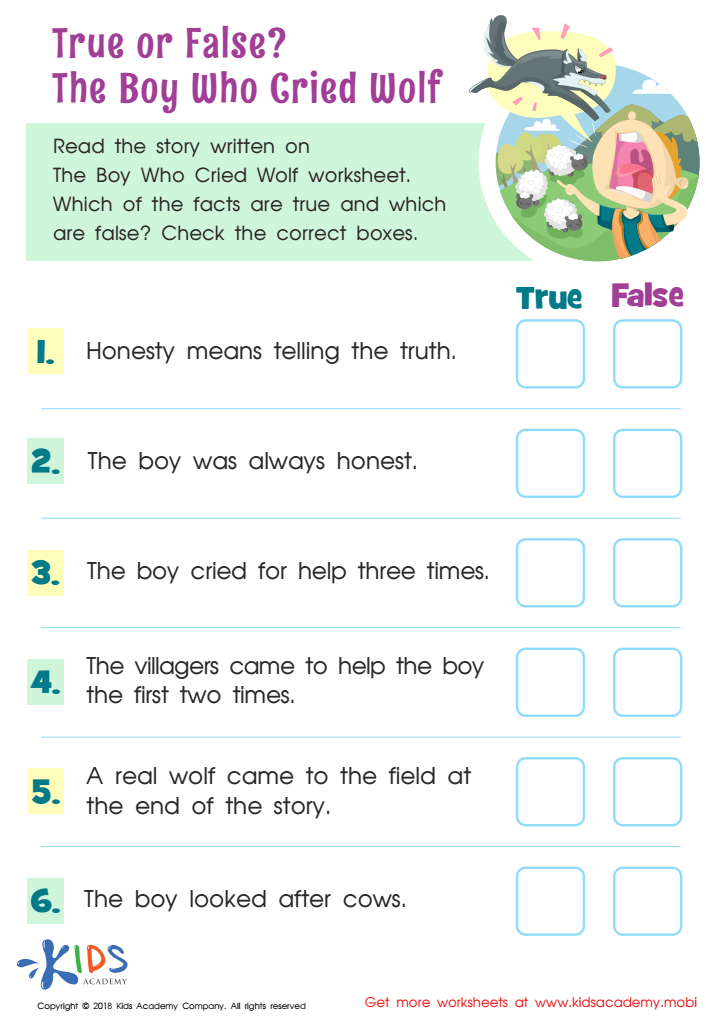
True or False? The Boy Who Cried Wolf Worksheet
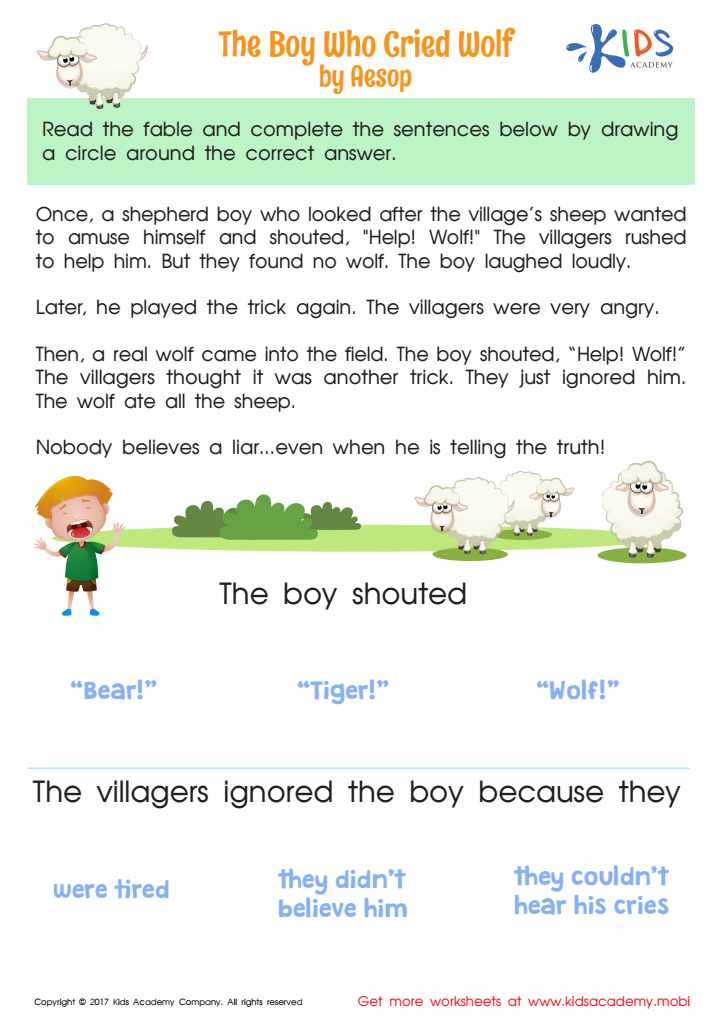
The Boy Who Cried Wolf Worksheet





.jpg)


Parents and teachers should value the role of moral understanding and reading standard fiction for children aged 5-7. This developmental stage is crucial for establishing a foundation of ethical reasoning and empathy. Stories often contain characters that grapple with moral dilemmas, and by engaging with these narratives, children can begin to comprehend concepts of right and wrong. Through the lens of characters’ actions and consequences, young readers can internalize lessons about kindness, fairness, and responsibility in a contextual and memorable way.
Additionally, regular exposure to fiction aids in critical language development. Standardized, age-appropriate fiction can introduce new vocabulary and complex sentence structures in an easily digestible manner. This familiarity with varied linguistic patterns can enhance children's reading fluency, comprehension, and overall literacy skills. Fictional stories also stimulate imagination and creativity, offering children a mental playground to explore different scenarios and perspectives.
Moreover, discussing stories encourages parent-child or teacher-student bonding. Conversations about the tales and underlying morals can foster deeper connections and offer opportunities to reinforce shared values and cultural norms. In sum, prioritizing moral understanding and regular fiction reading helps shape compassionate, literate, and imaginative individuals ready to contribute positively to their communities.







