Animal Classification Normal Animals Worksheets for Ages 5-7
5 filtered results
-
From - To
Discover our engaging Animal Classification Worksheets designed for children ages 5-7! Tailored to spark curiosity and enhance learning, these worksheets introduce young learners to the fascinating world of normal animals. Kids will explore different animal categories such as mammals, birds, reptiles, and more through fun activities that encourage critical thinking and creativity. Each worksheet features colorful illustrations and simple tasks to make learning enjoyable and accessible. Perfect for classroom use or at-home practice, our resources support early science skills while fostering a deeper understanding of the animal kingdom. Dive into the adventure of animal classification with us today!
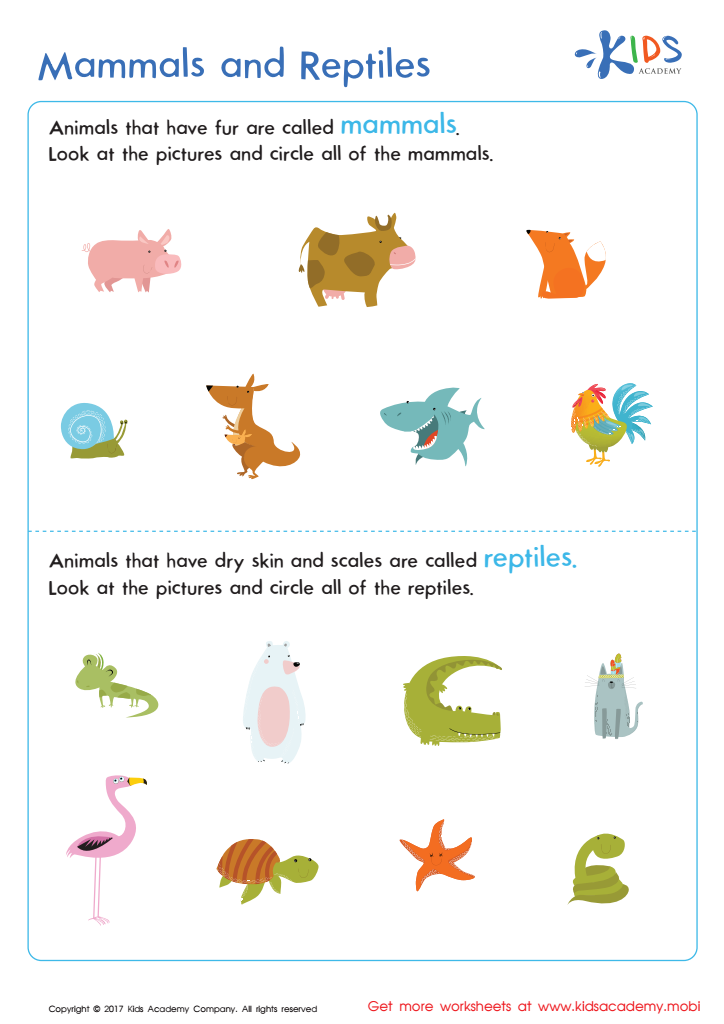
Mammals and Reptiles Worksheet
 Assign to My Students
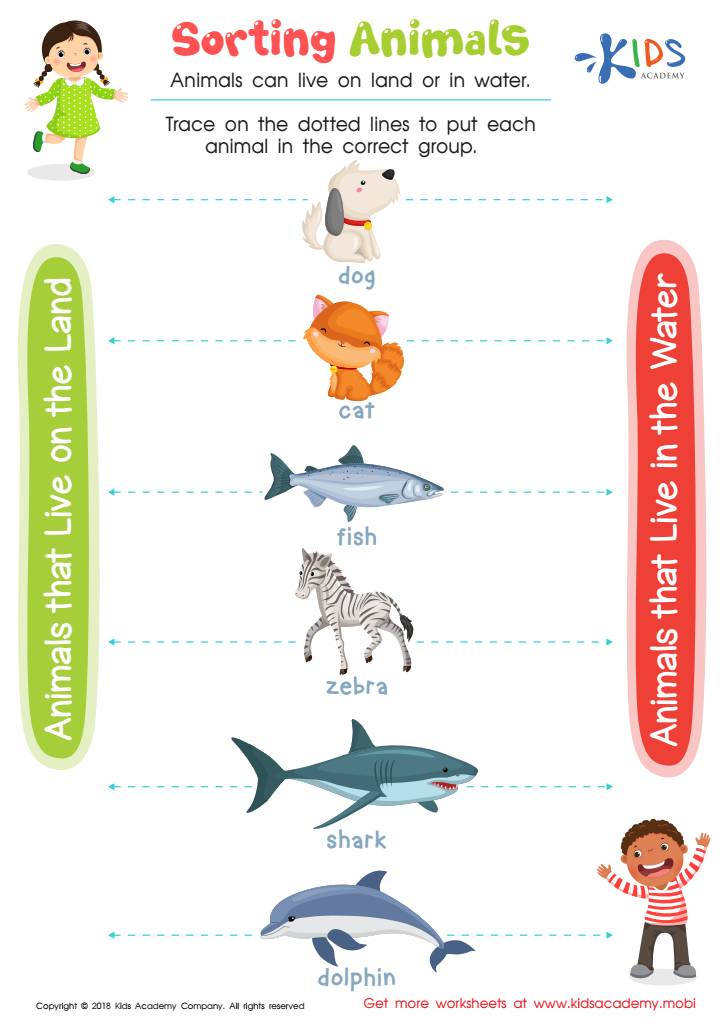
Sorting Animals Worksheet
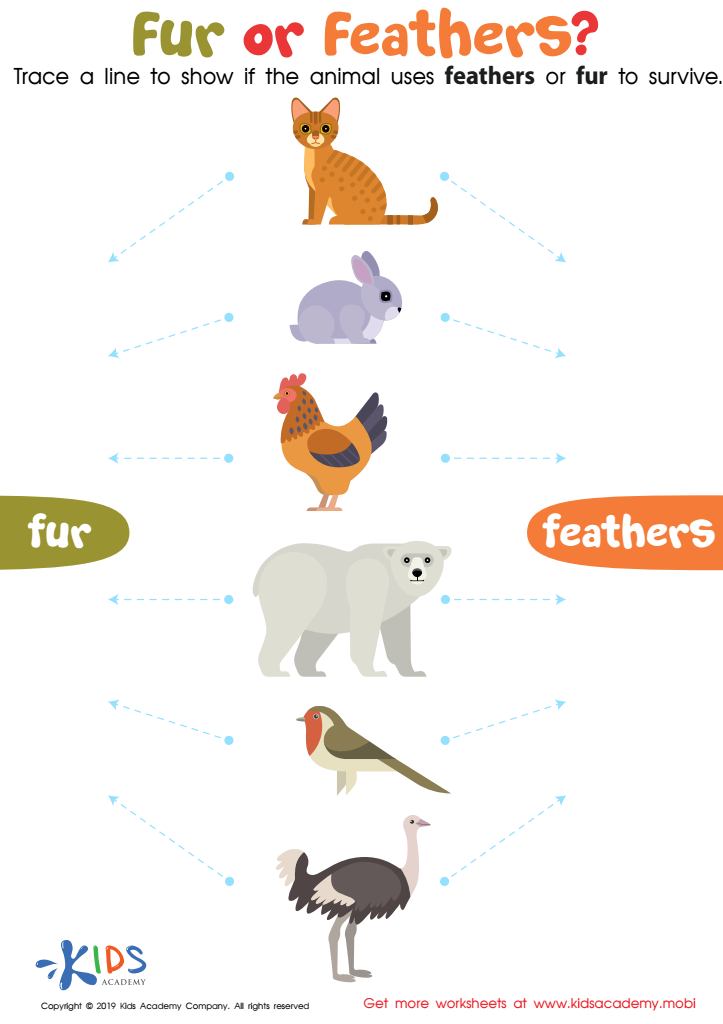
Fur or Feathers? Worksheet
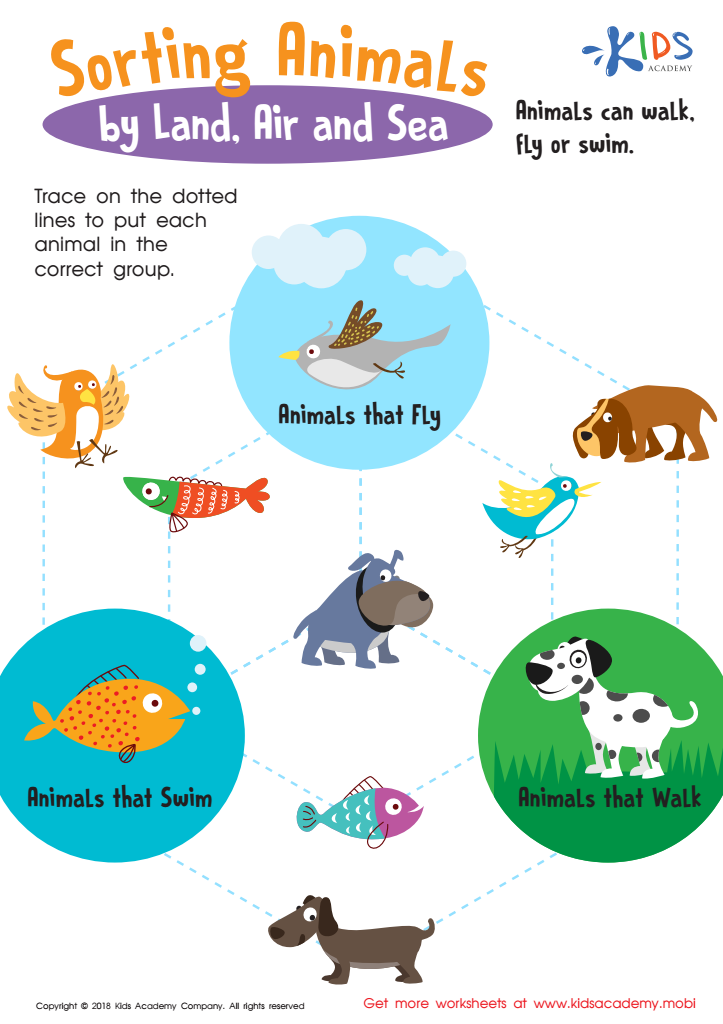
Sorting Animals by Land, Air and Sea Worksheet
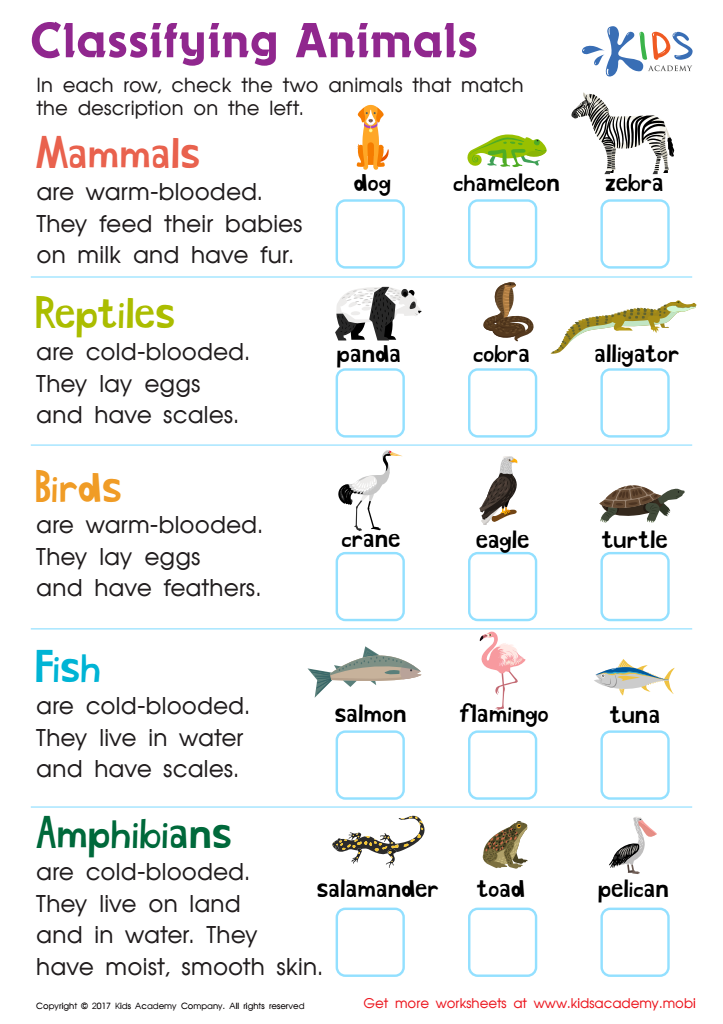
Classifying Animals Worksheet








Understanding animal classification is essential for young learners aged 5-7, as it lays the foundation for science education and fosters a sense of curiosity about the natural world. By teaching children about normal animals—those that students are likely to encounter in everyday life—parents and teachers can help children develop observation skills and critical thinking. Learning to classify animals, such as mammals, birds, reptiles, amphibians, and fish, introduces young learners to basic biological concepts that are integral to understanding ecosystems and the importance of biodiversity.
Moreover, discussions about animal classification can ignite imagination and encourage empathy towards living creatures. Children become more aware of the needs of different species, promoting themes of conservation and respect for nature. Engaging activities, like grouping animals based on similarities and differences, also strengthen cognitive skills and boost language development.
Furthermore, by incorporating stories and hands-on activities related to animal classification, educators can create a fun, interactive learning environment. This approach nurtures an appreciation for science from an early age, encouraging children to ask questions and seek knowledge, which forms the basis for lifelong learning. Overall, knowing about animal classification engages young minds, enhancing their educational journey while cultivating respect for the planet.








