Basic astronomy knowledge Normal Science Worksheets for Ages 5-7
3 filtered results
-
From - To
Explore the wonders of the universe with our "Basic Astronomy Knowledge Worksheets" designed specifically for ages 5-7. These engaging and colorful worksheets make learning about the stars, planets, and moon entertaining while aligning with normal science curriculum standards. Children will enjoy fun activities that introduce key concepts, sparking curiosity about space science. With simple exercises focusing on identification, sorting, and matching, young learners will enhance their understanding of astronomy in a playful way. Perfect for classrooms or home learning, these worksheets are a fantastic resource to inspire a love for science and the cosmos in your little ones!
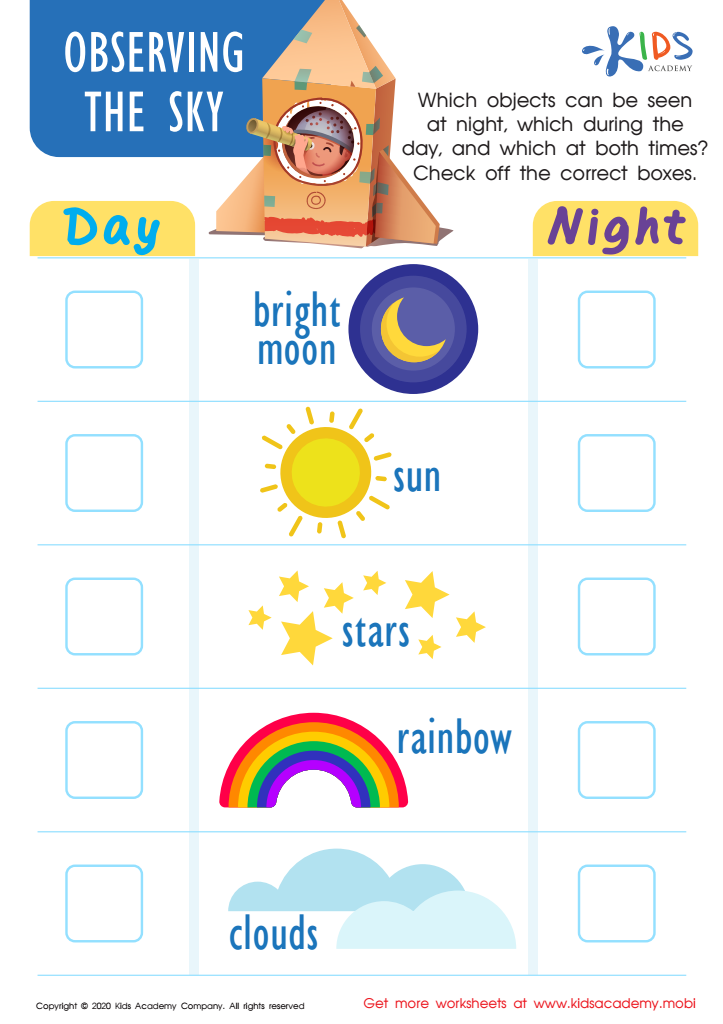
Observing the Sky Worksheet
 Assign to My Students
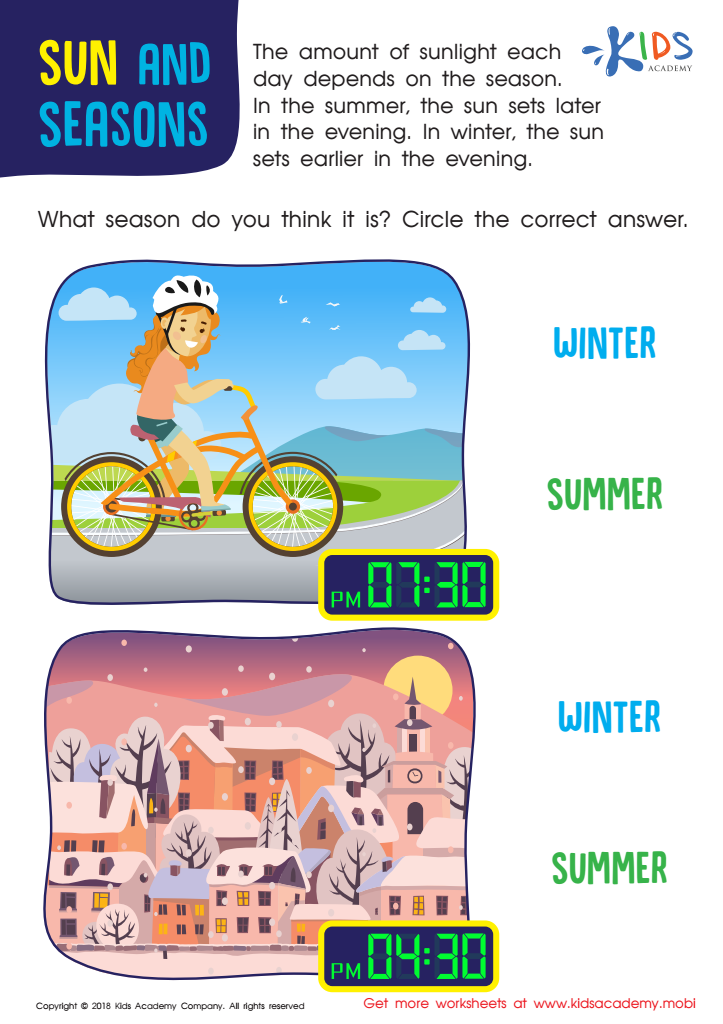
Sun and Seasons Worksheet
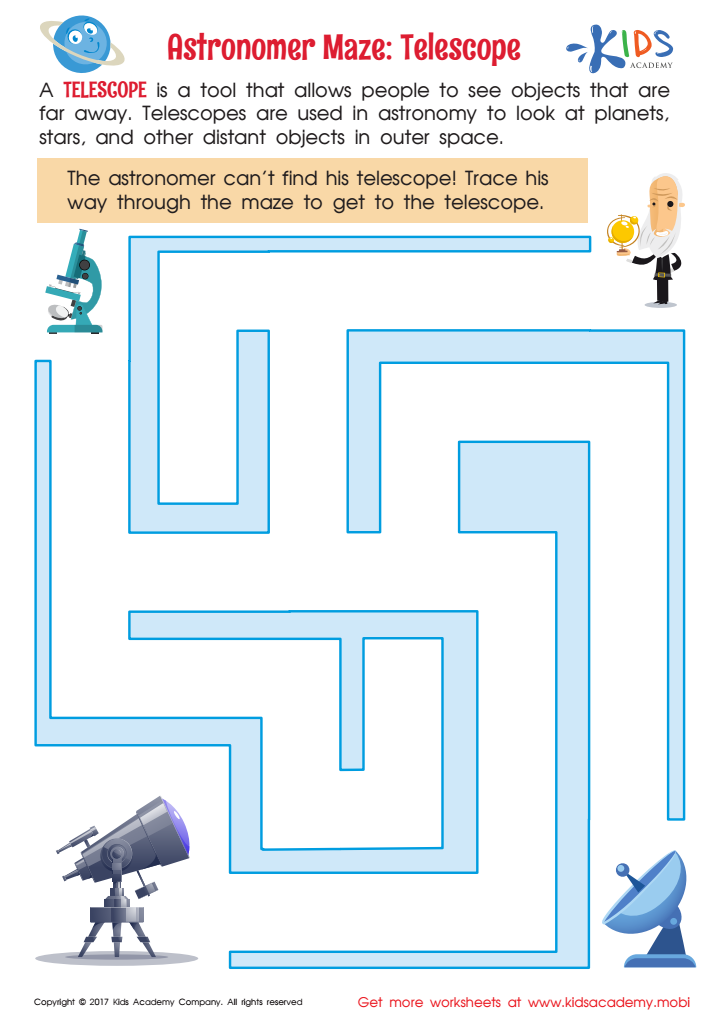
Astronomer Maze: Telescope Worksheet








Basic astronomy knowledge is essential for children ages 5-7 as it fosters a sense of wonder about the universe and promotes critical thinking skills. During these formative years, children are naturally curious, and introducing them to concepts like planets, stars, and the moon can spark their interest in science and the natural world.
Understanding basic astronomy helps develop essential cognitive skills. As children learn to identify different celestial bodies, they improve their observation skills and learn the importance of inquiry and exploration. Engaging with astronomy allows them to ask questions like “Why does the moon change shape?” or “What is a comet?” These inquiries encourage research, experimentation, and discussion—key elements of early learning.
Moreover, astronomy can connect to other subjects such as storytelling, art, and mathematics. For instance, reading stories about constellations or creating art representations of the solar system can integrate learning across disciplines, making it more meaningful and enjoyable.
Teachers and parents who emphasize basic astronomy can cultivate a love of learning, nurture imagination, and inspire future scientists, engineers, or artists. Ultimately, early exposure to these concepts builds foundational knowledge that can influence lifelong interests and curiosity about the universe.







