Categorization skills Normal Science Worksheets for Ages 5-7
4 filtered results
-
From - To
Discover the engaging "Categorization Skills Normal Science Worksheets" designed for children aged 5-7 at Kids Academy. These worksheets help young learners develop crucial science skills through fun and interactive activities. By sorting and grouping different objects and living things, kids enhance their understanding of the world around them. Perfect for both classroom use and at-home learning, these worksheets support early cognitive development, critical thinking, and problem-solving abilities. Encourage your little scientists to explore and categorize with ease using our expertly crafted resources, designed to make learning both effective and enjoyable. Visit Kids Academy today to start your educational adventure!
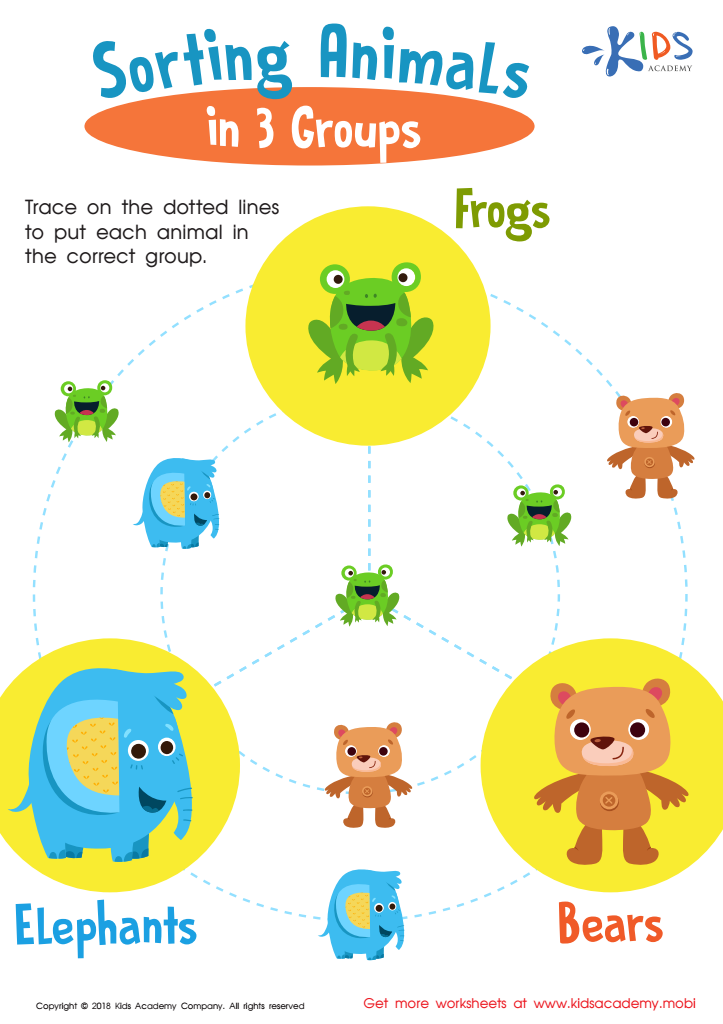
Sorting Animals in 3 Groups Worksheet
 Assign to My Students
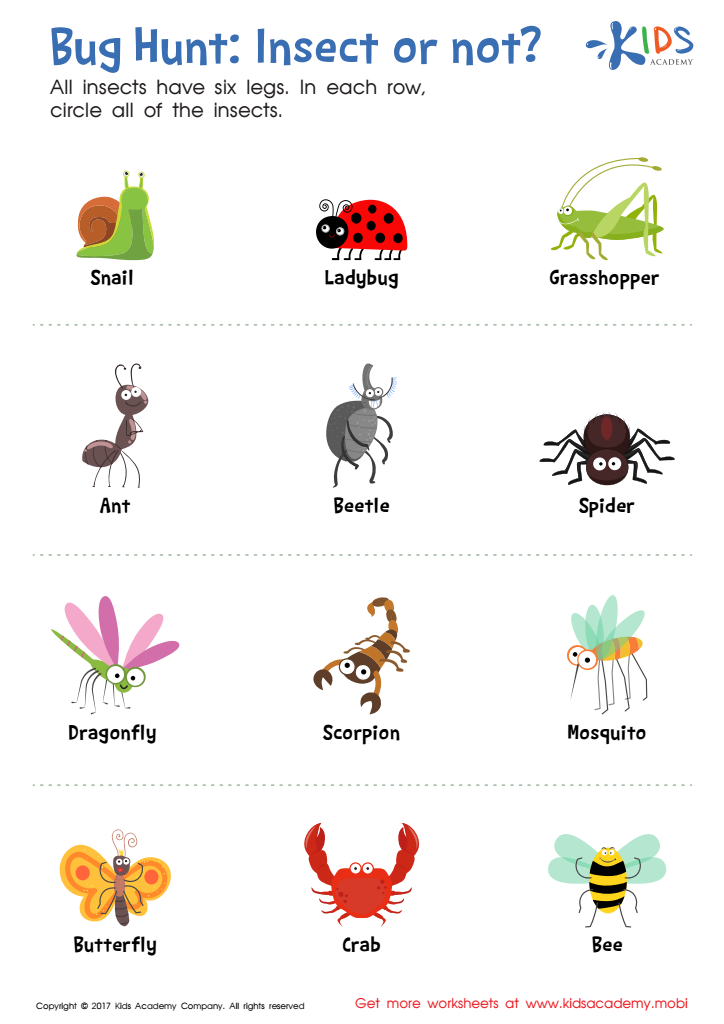
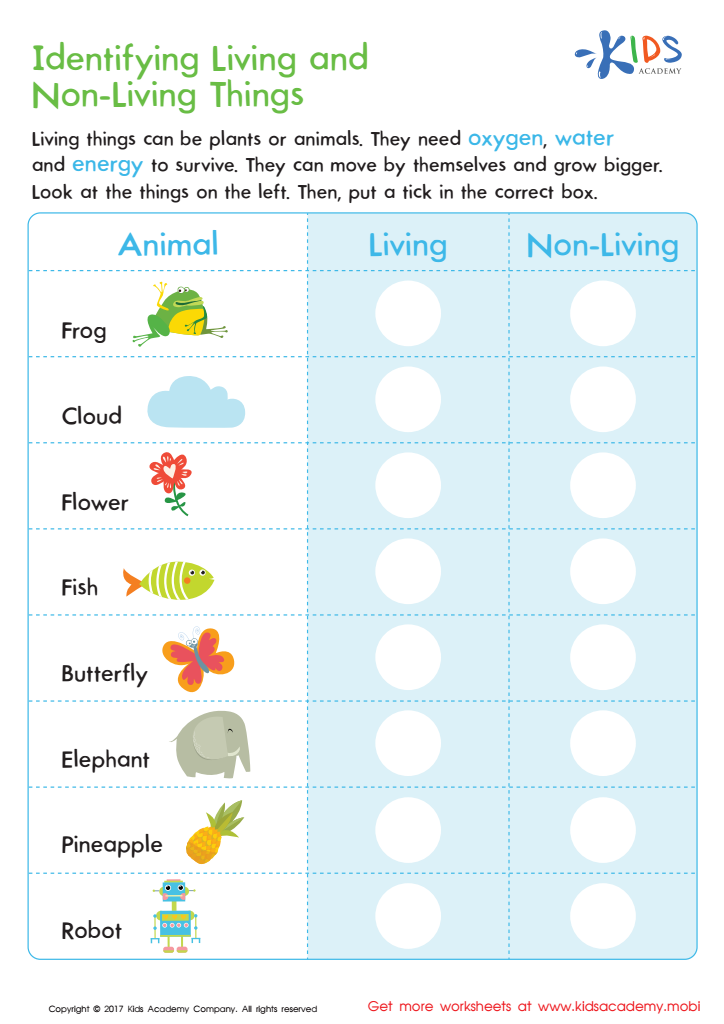
Identifying Living or Non–living Worksheet
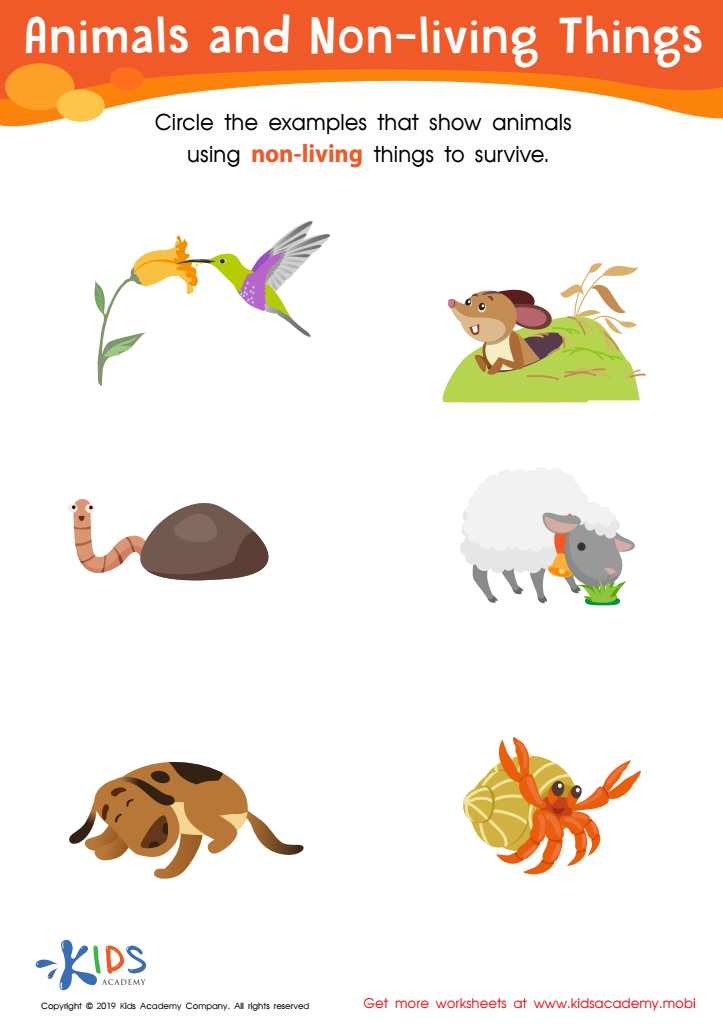
Animals and Non-Living Things Worksheet





Categorization skills are crucial for young children aged 5-7 as these early cognitive abilities form the foundation for more complex learning and understanding in later years. By understanding and organizing their world into categories, children can develop critical thinking and problem-solving skills, which are essential for academic success. Categorization helps in understanding relationships between different objects, concepts, and experiences thereby enhancing memory and recall.
For teachers and parents, nurturing these skills ensures children can efficiently process information and respond to new learning situations with better logic and reasoning. In the realm of science, categorization is fundamental because it helps children recognize patterns, draw conclusions, and make predictions. For instance, when children learn to group animals, plants, or types of materials, they begin to grasp essential scientific concepts like classification in biology or sorting in physical science.
Furthermore, strong categorization skills foster language development because describing and explaining the reasons for categorizing items builds vocabulary and comprehension. Encouraging activities like sorting objects, exploring nature, and engaging in discussions about observations at this age sets a foundation not only for future scientific understanding but also for overall cognitive development and academic achievement across disciplines. It’s a pivotal aspect of their early education that provides long-lasting benefits.







