Developing analytical skills Normal Science Worksheets for Ages 5-7
3 filtered results
-
From - To
Explore our engaging "Developing Analytical Skills Normal Science Worksheets" designed specifically for children aged 5-7. These worksheets encourage young learners to think critically and analyze information through fun, interactive activities. With a focus on foundational science concepts, children will align their understanding with essential analytical skills, honing their ability to observe, categorize, and draw conclusions. Each worksheet provides clear instructions and colorful illustrations that captivate young minds while promoting independent learning. Perfect for classroom use or at-home activities, these resources effectively combine learning and play, making science both accessible and enjoyable for early learners. Start enhancing your child's analytical abilities today!
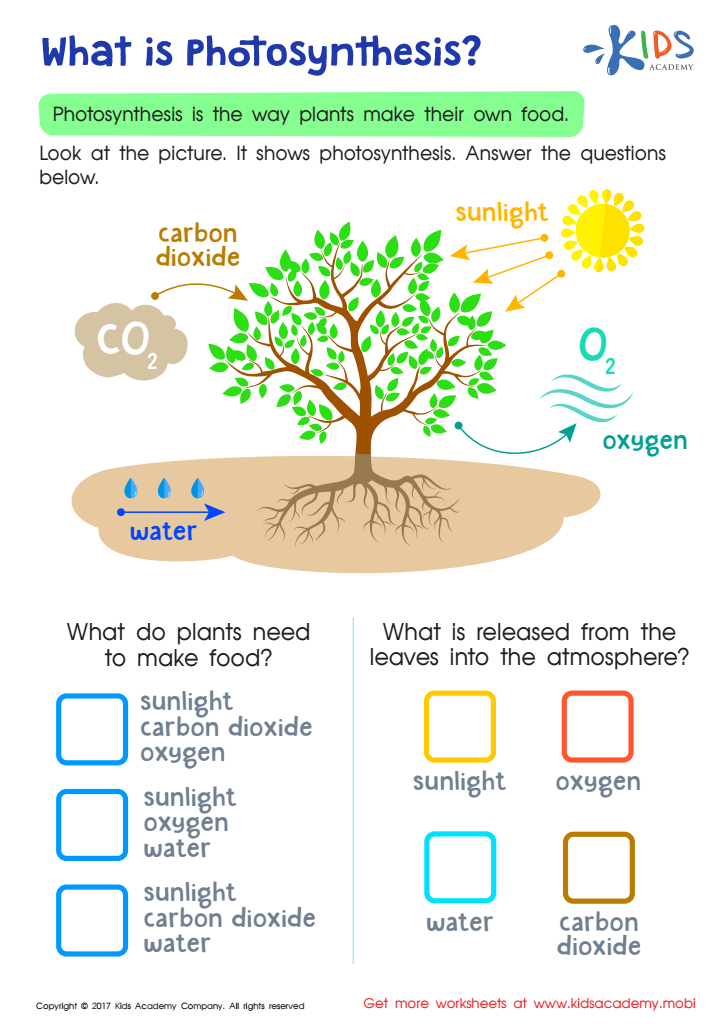
What is Photosynthesis Printable
 Assign to My Students
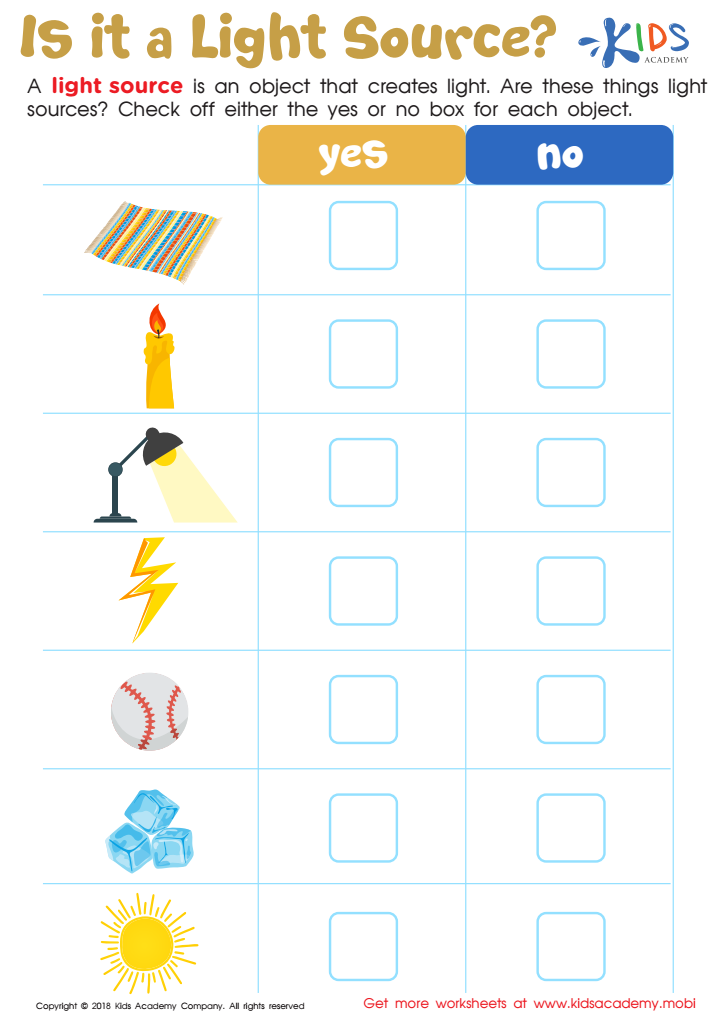
Is It a Light Source? Worksheet

How Light Travels Worksheet








Developing analytical skills in young children, particularly in the context of “Normal Science,” is crucial for their overall cognitive development. At ages 5-7, children are in a formative stage where they begin to explore the world more systematically. During this period, fostering analytical skills helps them question, explore, and draw connections within various scientific concepts. Engaging with basic scientific principles encourages curiosity and critical thinking—skills essential not only for academic success but for problem-solving in real-life situations.
For parents and teachers, nurturing these skills means offering children opportunities to ask questions, predict outcomes, and engage in hands-on experimentation. These activities help children understand cause and effect, enhance reasoning abilities, and foster teamwork through collaborative discoveries. When children learn to analyze information, they develop a growth mindset, where challenges are viewed as opportunities for learning rather than obstacles.
Furthermore, weaving analytical skills into their education promotes literacy across subjects, enhancing the ability to comprehend and communicate ideas effectively. By targeting analytical skills during this crucial developmental window, caregivers can lay a strong foundation that supports lifelong learning, empowering children to become innovative thinkers and responsible decision-makers in an increasingly complex world.







