Developing critical thinking Normal Science Worksheets for Ages 5-7
3 filtered results
-
From - To
Unlock your child's potential with our "Developing Critical Thinking Normal Science Worksheets" designed for ages 5-7. These engaging, printable worksheets inspire young learners to explore fundamental scientific concepts through exciting activities. Fostering critical thinking skills, each worksheet encourages kids to analyze, question, and make connections as they grasp essential science principles. Topics include observation, reasoning, and problem-solving, crafted to make learning interactive and enjoyable. Perfect for parents and educators alike, these resources provide a strong foundation for scientific inquiry and lifelong learning. Equip your child with the tools to think critically and excel in their educational journey! Explore our worksheets today!
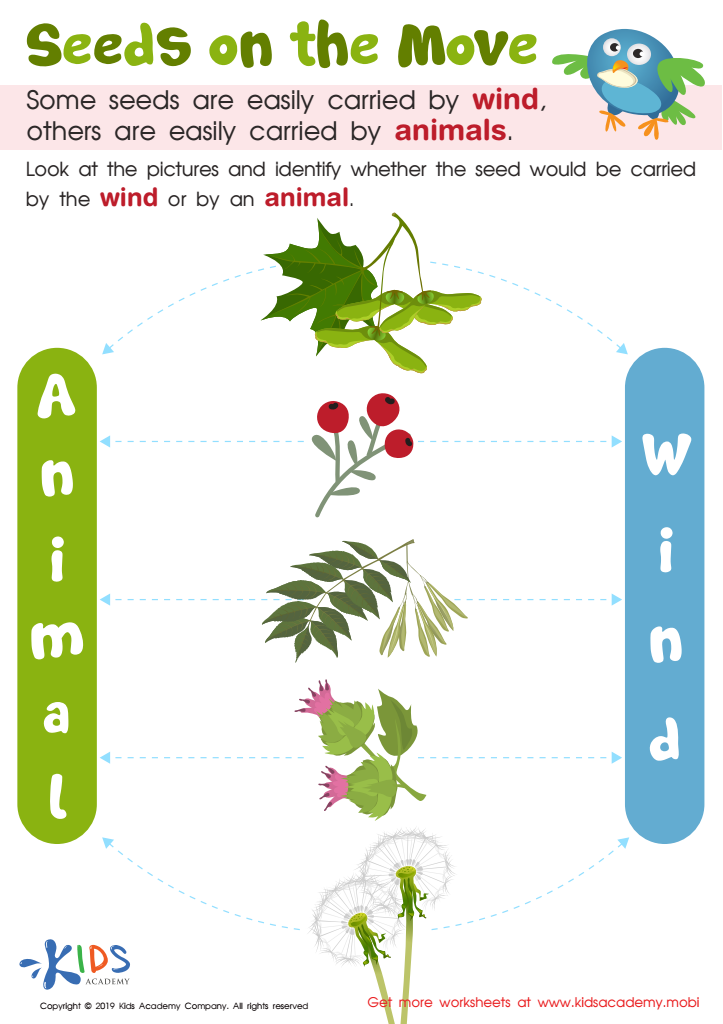
Seeds on the Move Worksheet
 Assign to My Students
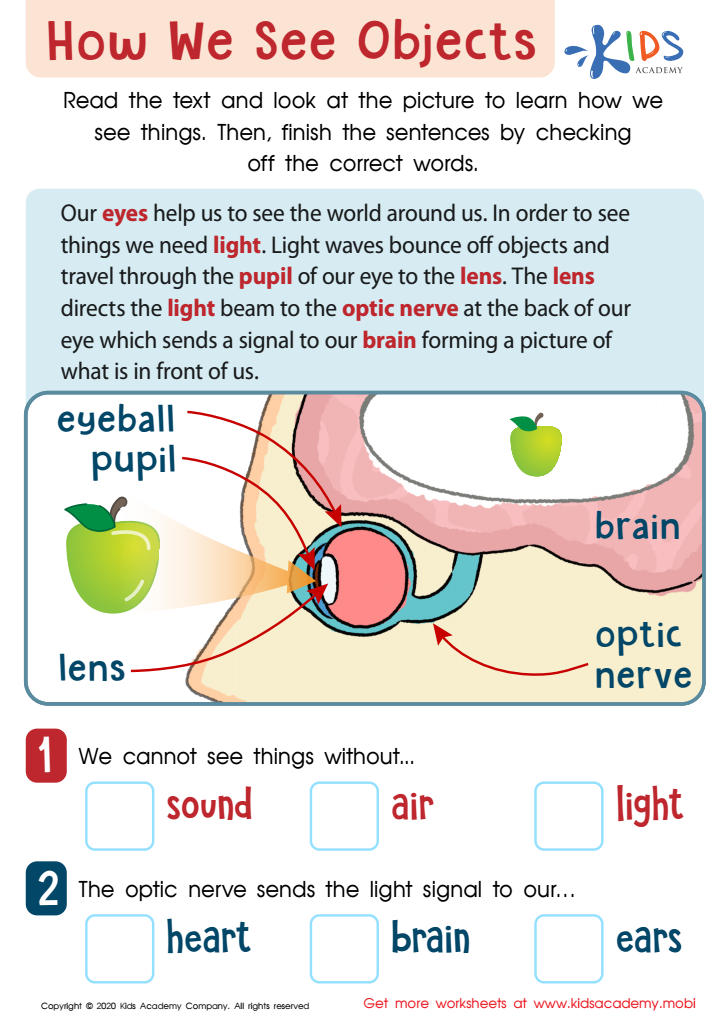
How We See Objects Worksheet
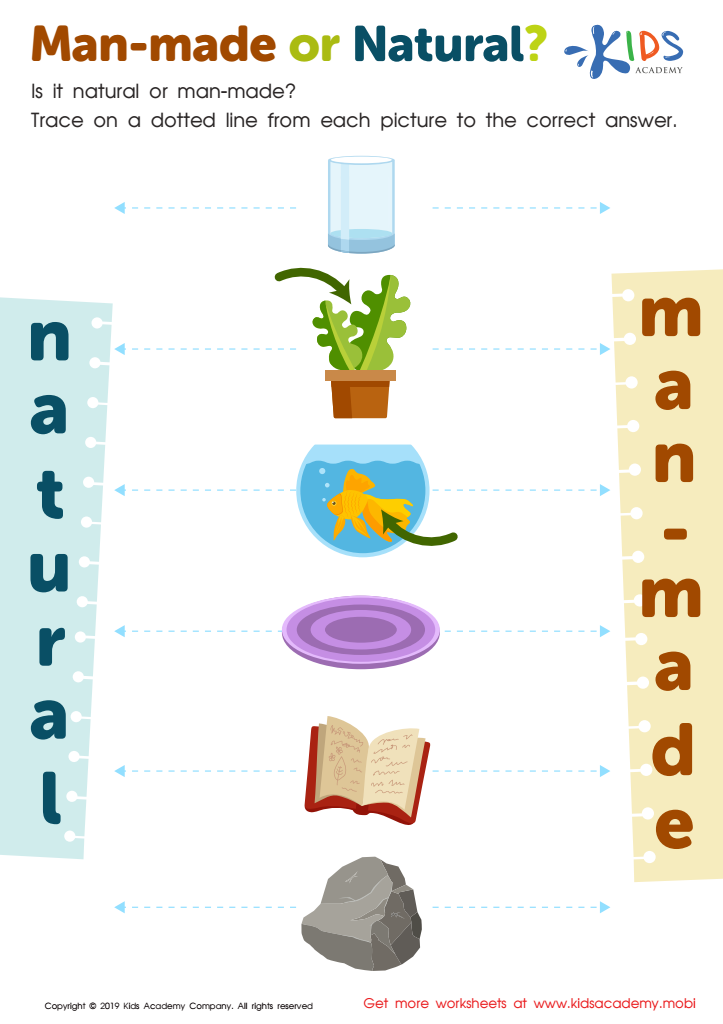
Man-Made or Natural? Worksheet







Developing critical thinking skills in young children, particularly in the context of Normal Science, is crucial for their overall cognitive and emotional development. For children aged 5-7, engaging in scientific inquiry helps them learn how to ask questions, seek evidence, and form conclusions. This iterative process nurtures curiosity and encourages them to explore the world around them.
Parents and teachers should care about fostering these skills because early childhood is a formative period for learning. Critical thinking supports problem-solving abilities, which are essential in everyday life and academic contexts. It promotes independence as children learn to trust their observations and reasoning rather than relying solely on others’ opinions.
Additionally, a foundation in Normal Science cultivates scientific literacy, allowing children to understand basic scientific principles and concepts, which is increasingly important in our technology-driven society. By encouraging discussions and hands-on experiments, caregivers can create an environment where children feel safe to express ideas and challenge assumptions.
Ultimately, developing critical thinking in young learners equips them with essential life skills and prepares them for future academic success. It empowers them to analyze information critically and make informed decisions as they grow into knowledgeable and engaged citizens.







