Matching skills Normal Science Worksheets for Ages 5-7
4 filtered results
-
From - To
Discover our engaging "Matching Skills Normal Science Worksheets for Ages 5-7" and help young learners enhance their cognitive abilities through fun, educational activities. These worksheets are specifically designed to introduce and reinforce basic science concepts while improving matching skills critical for early learning development. Each activity is age-appropriate, colorful, and interactive, making science enjoyable and accessible. Perfect for use at home or in the classroom, our worksheets align with educational standards to support math, literacy, and critical thinking goals. Visit Kids Academy to access a library of resources and inspire a lifelong love of science.
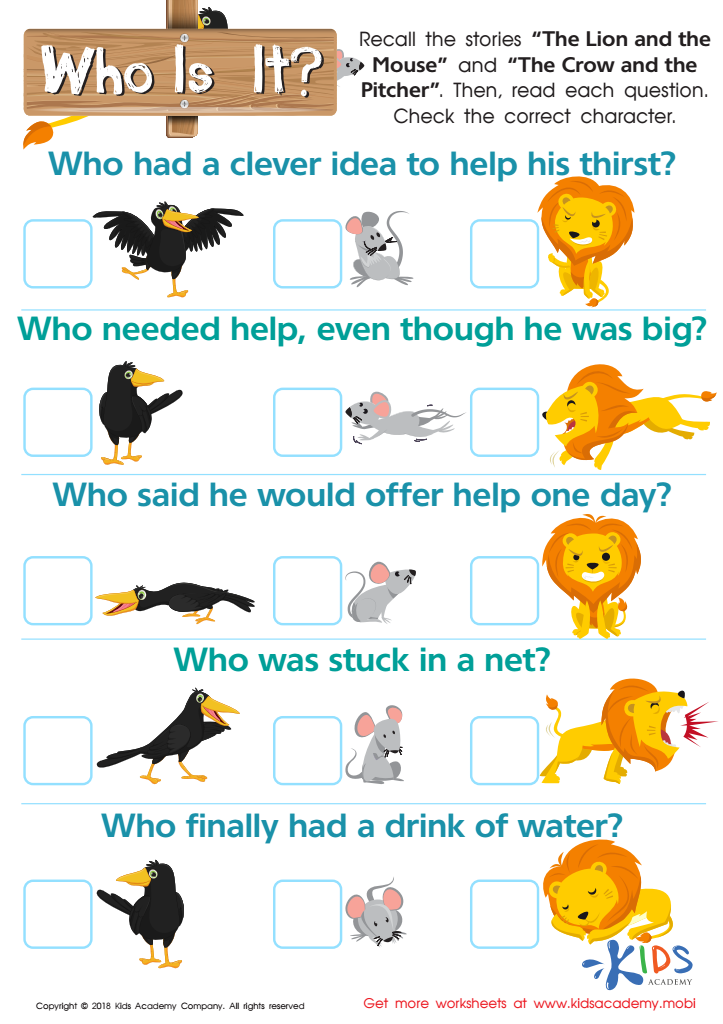
Who Is It? Worksheet
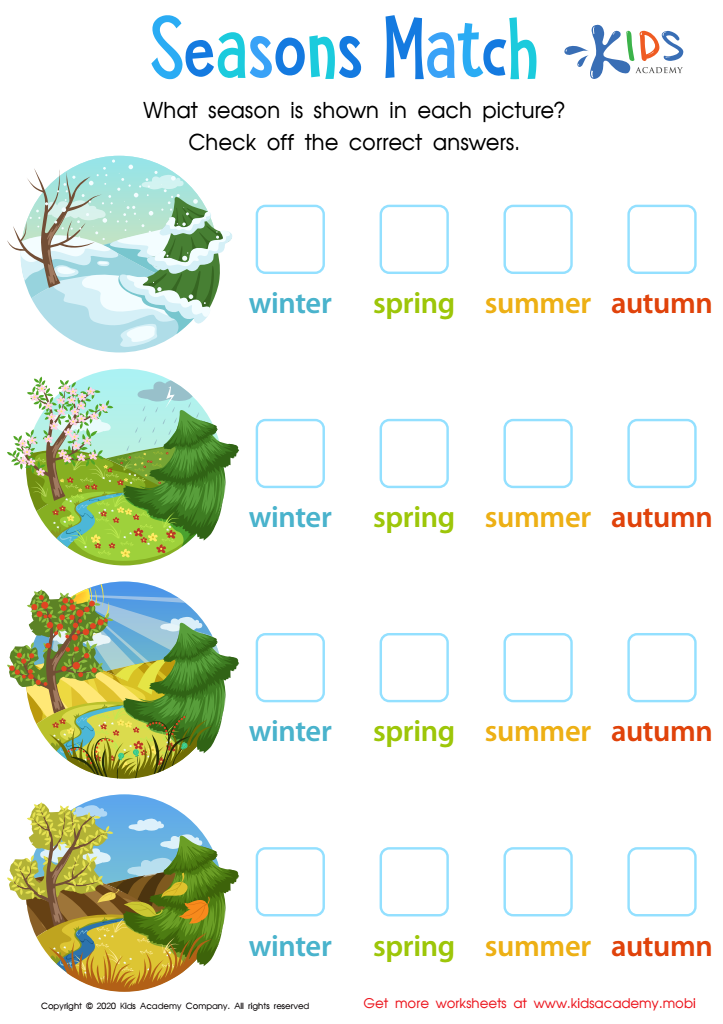
Seasons Match Worksheet
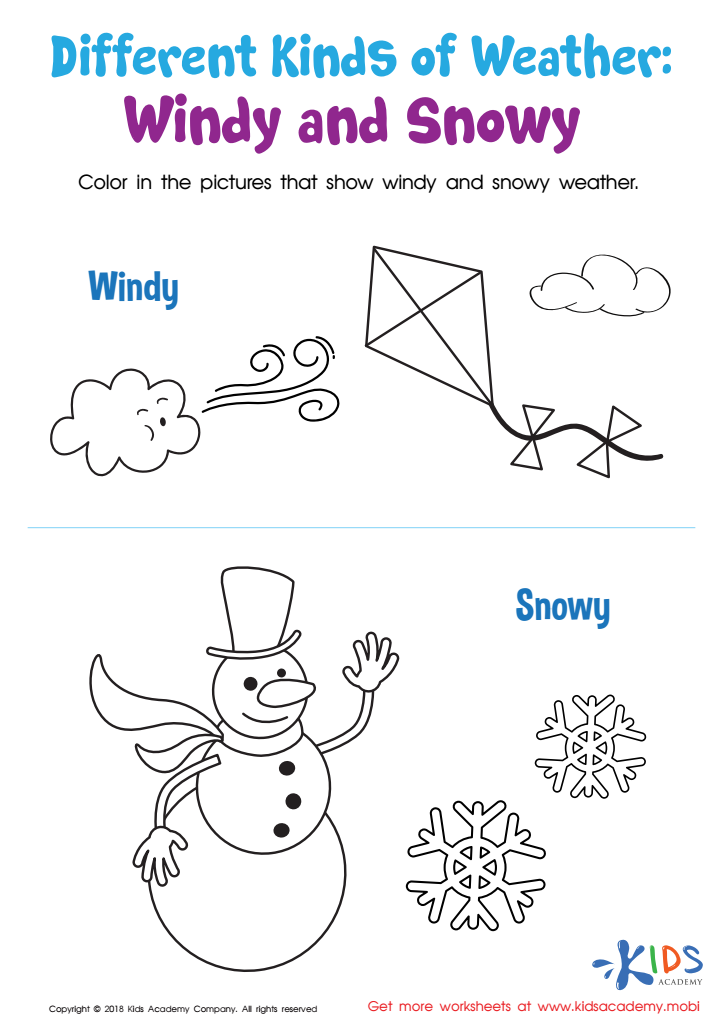
Different Kinds of Weather: Windy and Snowy Worksheet
 Assign to My Students
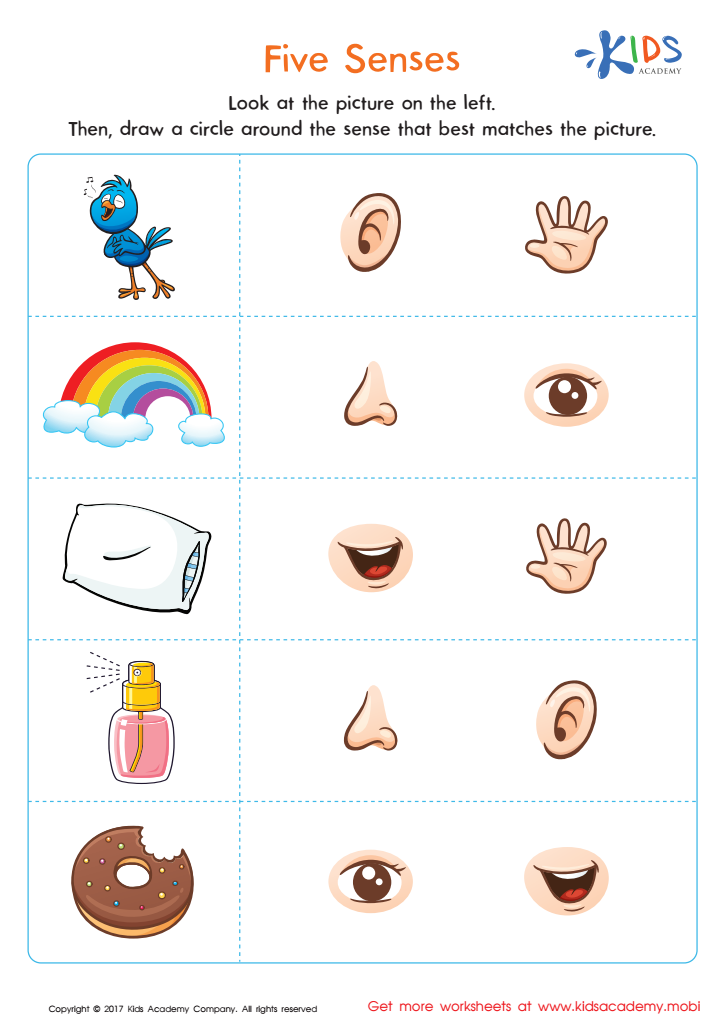
Five Senses Printable








Developing matching skills in children aged 5-7 is an essential foundation for their cognitive and academic growth. At this developmental stage, kids begin to understand relationships between objects and concepts, which is critical for early science education. Matching skills help children identify similarities and differences, categorize elements, and form logical connections, all of which are fundamental to scientific thinking.
By engaging in matching games and activities, parents and teachers can foster the child's ability to observe details, enhance memory, and improve problem-solving abilities. For example, matching pictures of animals to their habitats stimulates a child's observational skills and knowledge of the natural world. This foundational skill also strengthens neural pathways, thereby promoting cognitive development and preparing youngsters for more complex scientific concepts and critical thinking tasks later on.
Moreover, matching skills support literacy and numeracy development, benefiting a broad range of learning areas. When children match words to pictures, they are subconsciously learning vocabulary and language structure, aiding reading skills. Similarly, matching numbers or shapes fosters early math skills.
Parents and teachers should care about nurturing matching skills in these early years because it sets the stage for a robust educational journey where science and other disciplines are interconnected, thus preparing children for future learning endeavors.







