Understanding directions Normal Science Worksheets for Ages 5-7
4 filtered results
-
From - To
Explore our engaging "Understanding Directions Normal Science Worksheets" designed for children ages 5-7! These worksheets aim to develop essential directional understanding and critical thinking skills while making learning fun and interactive. Featuring vibrant illustrations, memorable activities, and easy-to-follow instructions, each worksheet encourages young learners to improve their comprehension of spatial concepts and logical reasoning. Whether statistics, mapping, or sequencing, our resources will spark curiosity and enhance classroom learning. Perfect for home or classroom use, these worksheets support early science education and help children gain confidence in their ability to follow and understand directions. Let's set the foundation for lifelong learning together!
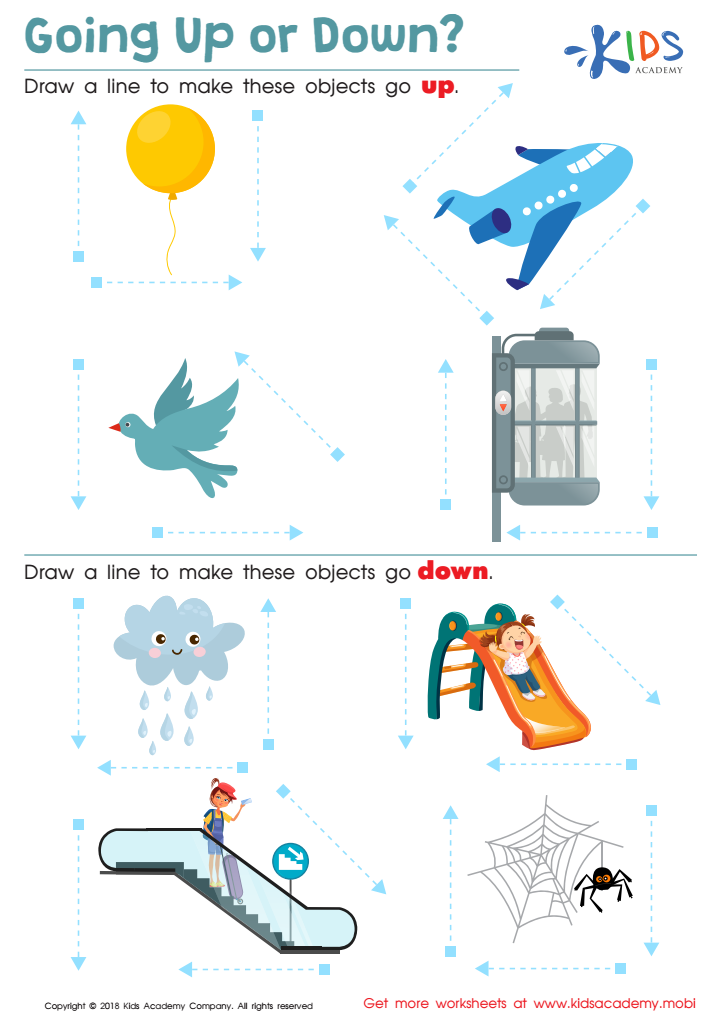
Going up or Down? Worksheet
 Assign to My Students
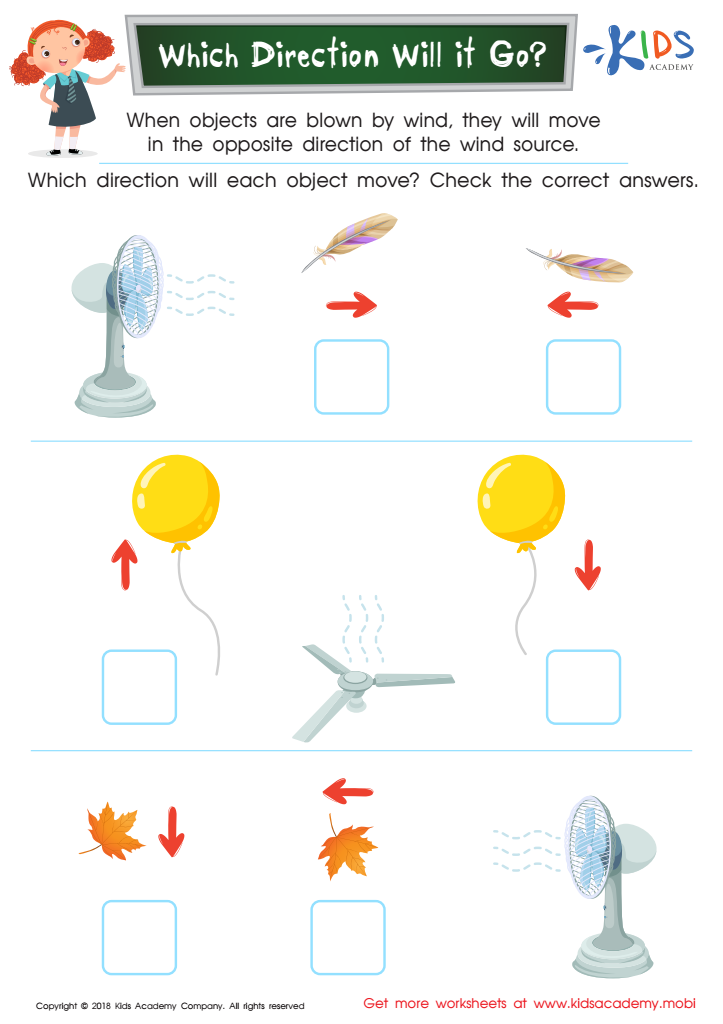
Which Direction Will it Go? Worksheet
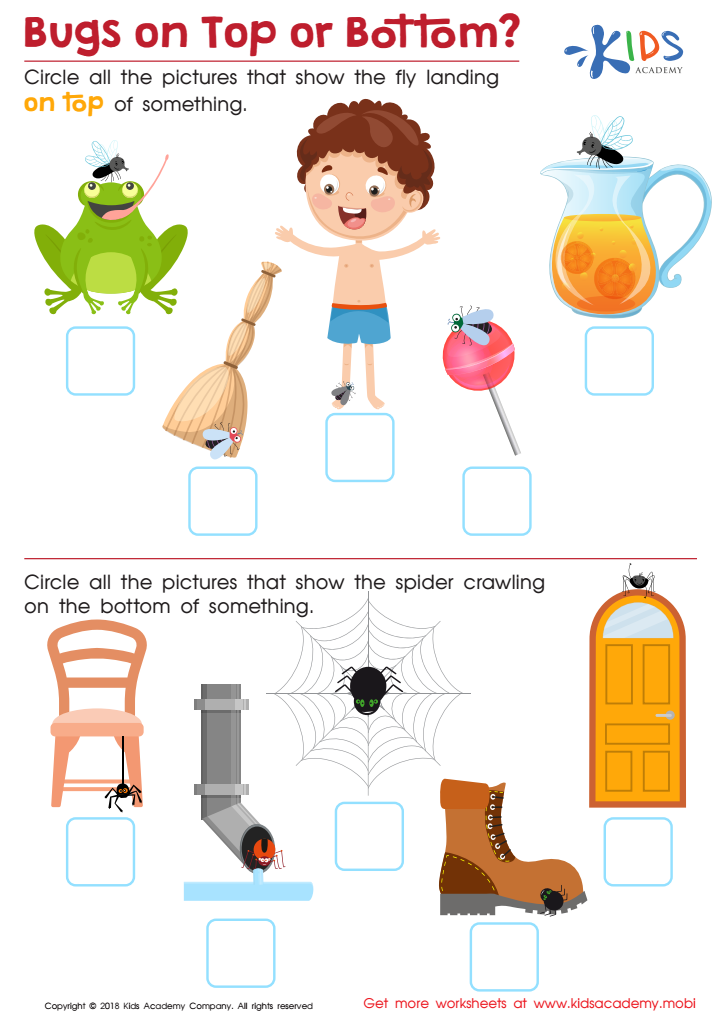
Bugs on Top or Bottom? Worksheet
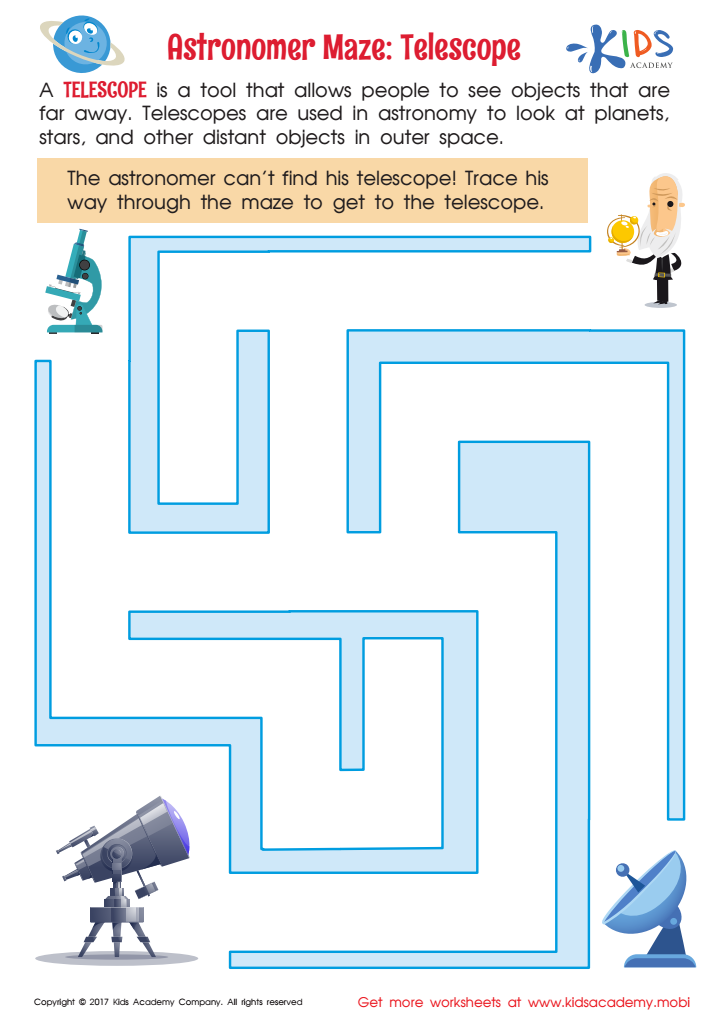
Astronomer Maze: Telescope Worksheet








Understanding directions in Normal Science is crucial for children aged 5-7 for several reasons. At this stage, children are developing foundational skills in critical thinking, problem-solving, and comprehension. When they learn to understand and follow directions, such as in scientific activities or experiments, they cultivate their cognitive abilities and enhance their ability to process information effectively.
Moreover, following directions aids in fostering independence. Children who master the skill of understanding directions become more confident in their abilities, leading to greater self-esteem and motivation in learning. This independence is vital for their overall development, as it prepares them for more complex tasks in the future.
Teachers and parents also benefit from children understanding directions, as it creates smoother learning environments. Clear comprehension of instructions minimizes frustration and maximizes engagement in activities, whether in science lessons or daily routines.
Lastly, a grounded understanding of directions sets the stage for engaging with scientific inquiry—a central component of education. When children grasp how to follow directions, they can participate more meaningfully in hands-on experiences that cultivate curiosity and a lifelong love for learning. In essence, teaching this skill is not just about completing tasks; it's about nurturing well-rounded, confident learners.







