Understanding landforms Normal Science Worksheets for Ages 5-7
3 filtered results
-
From - To
Explore the fascinating world of landforms with our "Understanding Landforms Normal Science Worksheets" designed for children aged 5-7! Our engaging worksheets introduce young learners to various landforms such as mountains, valleys, rivers, and deserts through fun activities and bright illustrations. These resources aim to simplify complex concepts, making science accessible and enjoyable for early learners. Enhance critical thinking and observational skills as kids complete interactive tasks that encourage them to identify and classify different landforms. Perfect for classroom use or at home, these worksheets are an excellent way to spark curiosity about the natural world and promote a love for science!
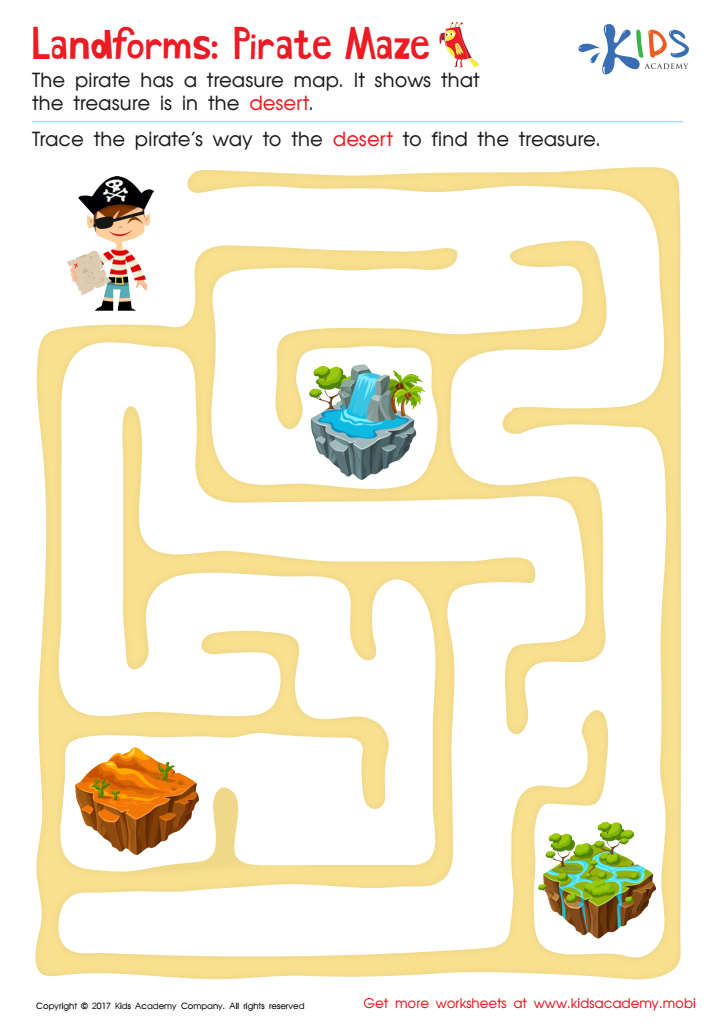
Landforms: Pirate Maze Printable
 Assign to My Students
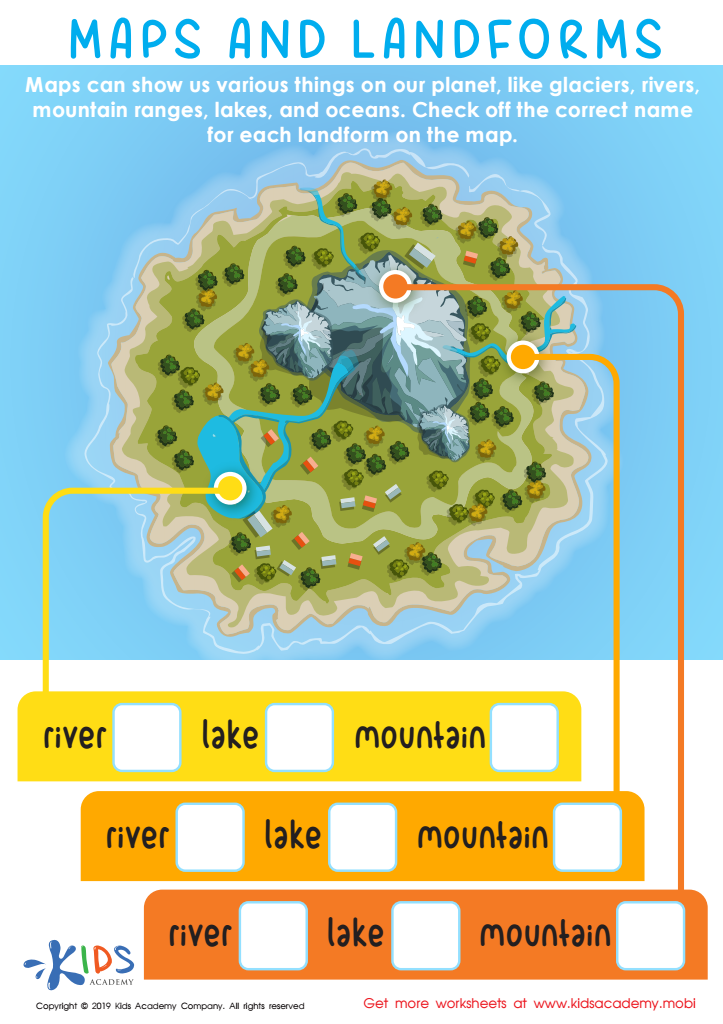
Maps and Landforms Worksheet
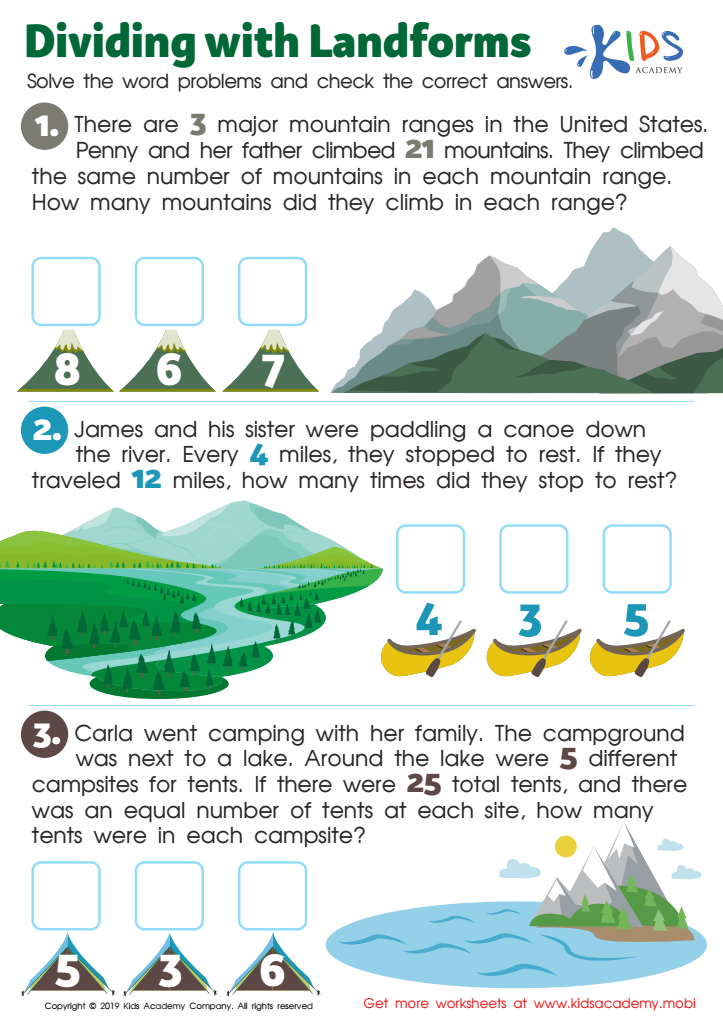
Dividing with Landforms






Understanding landforms is crucial for young learners aged 5-7 as it fosters a sense of curiosity and connects them to the world around them. At this age, children are naturally inquisitive and eager to explore their environment. By introducing concepts of landforms—such as mountains, valleys, rivers, and lakes—parents and teachers can ignite children's imaginations and enhance their observational skills.
Learning about landforms also supports broader educational goals, including science literacy and environmental awareness. Young children who understand their geographical surroundings can develop a respect for nature and the ecosystem. As they explore these concepts through hands-on activities, such as creating models or engaging in outdoor exploration, they develop critical thinking skills and learn to ask questions about how these structures are formed and their importance.
Moreover, discussing landforms can also be an entry point into lessons about community, habitats, and even climate. These foundational concepts support interdisciplinary learning, linking geography, science, art, and social studies. By prioritizing understanding landforms, parents and teachers equip children with the knowledge and skills necessary for responsible citizenship and problem-solving in a diverse world. This early grounding in science and geography lays the foundation for lifelong learning and exploration.







