Understanding photosynthesis Normal Science Worksheets for Ages 5-7
3 filtered results
-
From - To
Discover the wonders of photosynthesis with our engaging Normal Science Worksheets, designed specifically for kids aged 5-7! These interactive resources help young learners explore the essential process through fun activities, vibrant illustrations, and easy-to-understand concepts. Children will learn about how plants make their food, the role of sunlight, and the importance of leaves in a captivating way. Our worksheets encourage hands-on learning, critical thinking, and creativity, making science enjoyable for early learners. Ideal for home or classroom use, these materials will ignite curiosity and lay the foundation for a lifelong love of science! Perfect for budding scientists!
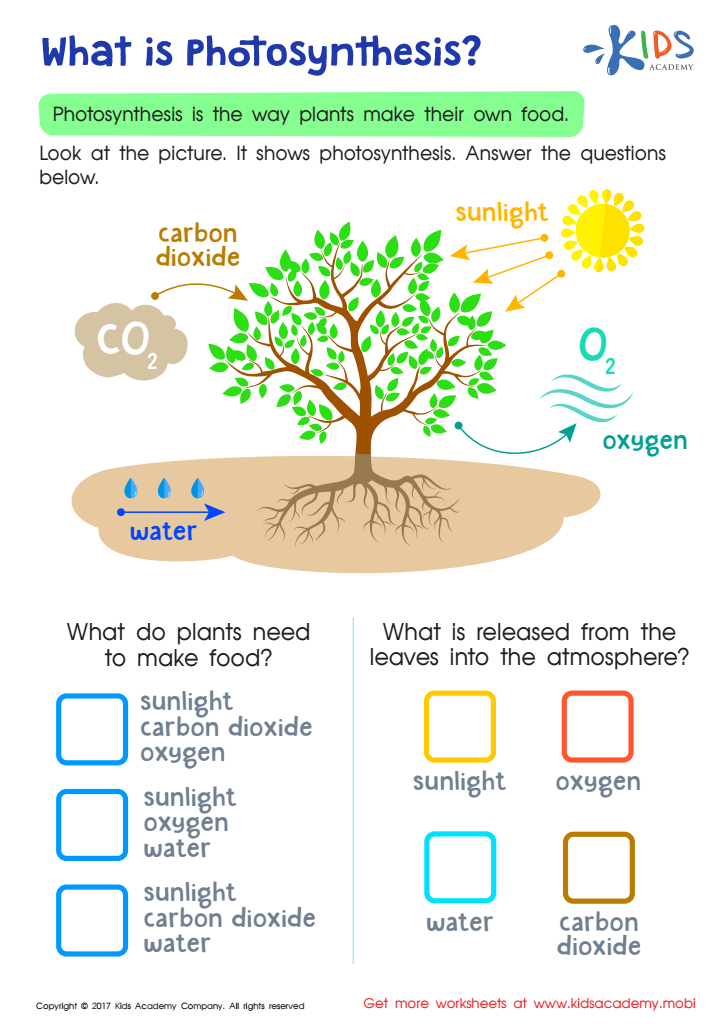
What is Photosynthesis Printable
 Assign to My Students
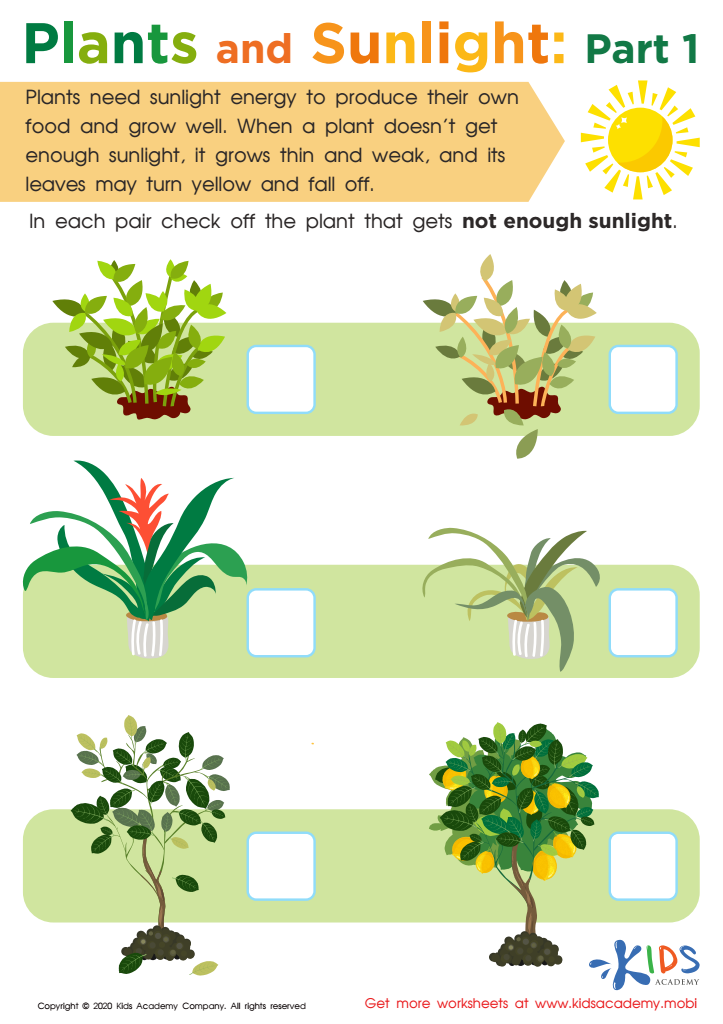
Plants and Sunlight: Part 1 Worksheet
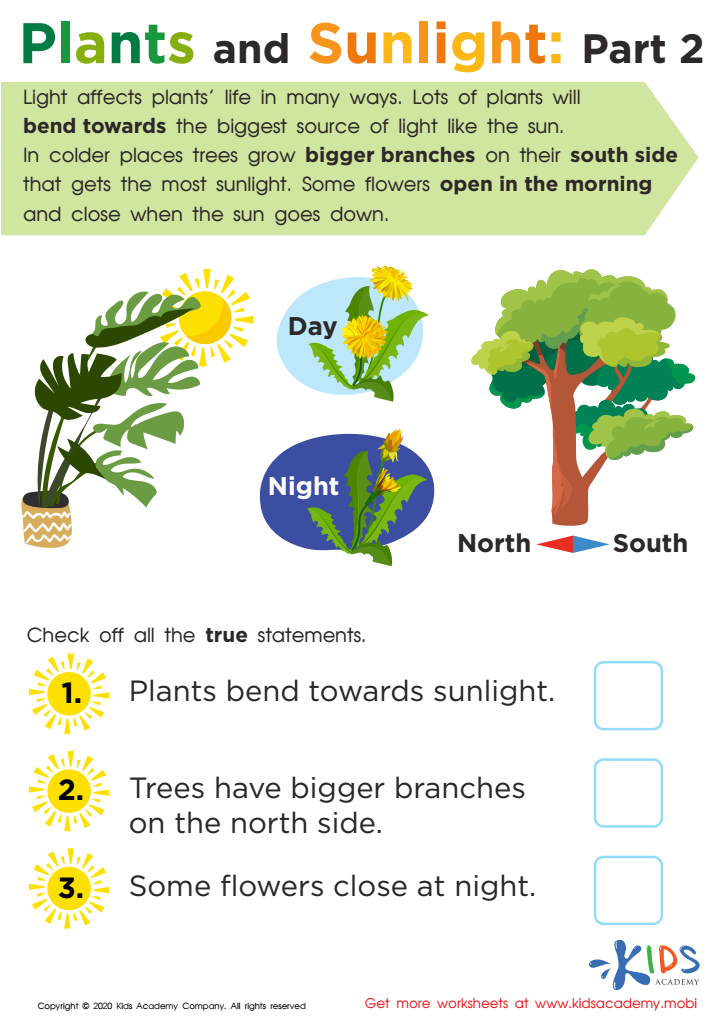
Plants and Sunlight: Part 2 Worksheet






Understanding photosynthesis is crucial for children aged 5-7, and both parents and teachers have a significant role in this learning journey. At this age, children are naturally curious about the world around them. Teaching them about photosynthesis fosters an early appreciation for nature and the environment. This foundational knowledge helps them grasp how plants grow and thrive, which influences their understanding of food sources, ecosystems, and the importance of biodiversity.
Moreover, learning about photosynthesis can ignite a love for science. By discussing how plants take in sunlight, carbon dioxide, and water to produce their food, children can connect these processes to everyday life, such as noticing how plants change in different seasons or how they rely on the sun's energy.
Encouraging curiosity and exploration about photosynthesis promotes critical thinking and inquiry skills. Additionally, it instills values about sustainability and responsibility towards the environment. By integrating this topic into their teaching, educators can create interactive and engaging experiences, such as observing plants or conducting simple experiments. Parents can reinforce this learning through nature walks or gardening activities. Ultimately, understanding photosynthesis serves as a stepping stone for future scientific learning and engagement with the natural world.







