Observational skills Normal Physical Science Worksheets for Ages 5-7
3 filtered results
-
From - To
Enhance your child's learning with our "Observational Skills Normal Physical Science Worksheets" designed specifically for ages 5-7. These engaging worksheets help young learners develop critical observational abilities through fun and interactive activities. Perfect for home or classroom use, our resources encourage children to explore and understand basic physical science concepts by observing and recording their findings. With a variety of activities tailored to cultivate curiosity and promote hands-on learning, these worksheets are ideal for fostering a love for science in early learners. Jumpstart your child's journey into the world of science with our thoughtfully crafted worksheets that make learning an adventure!
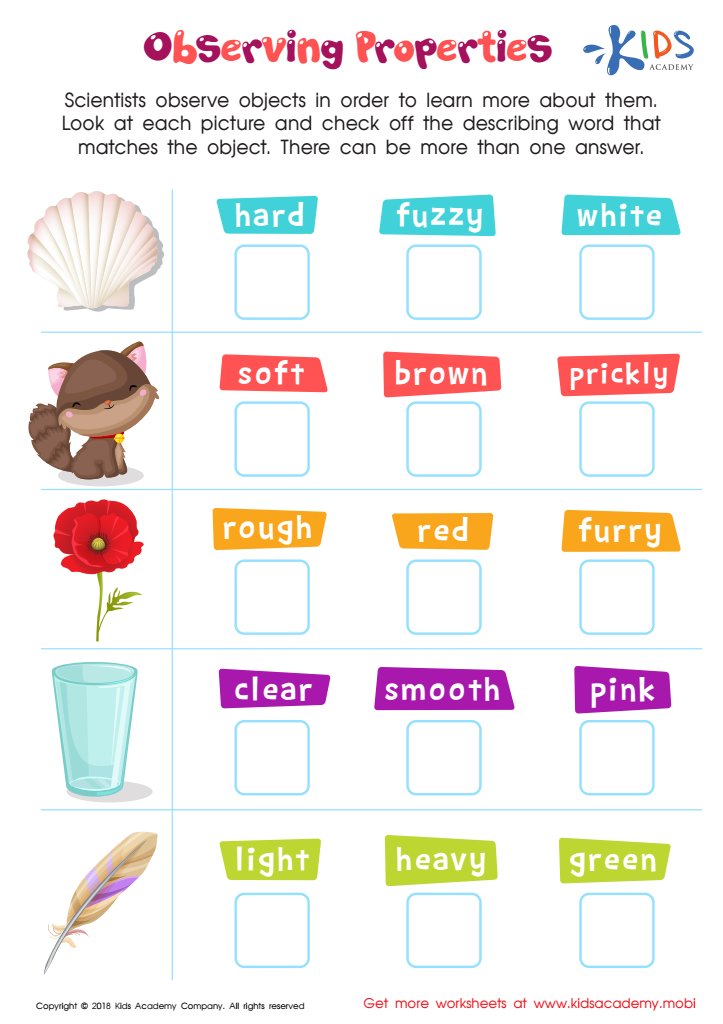
Observing Properties Worksheet
 Assign to My Students
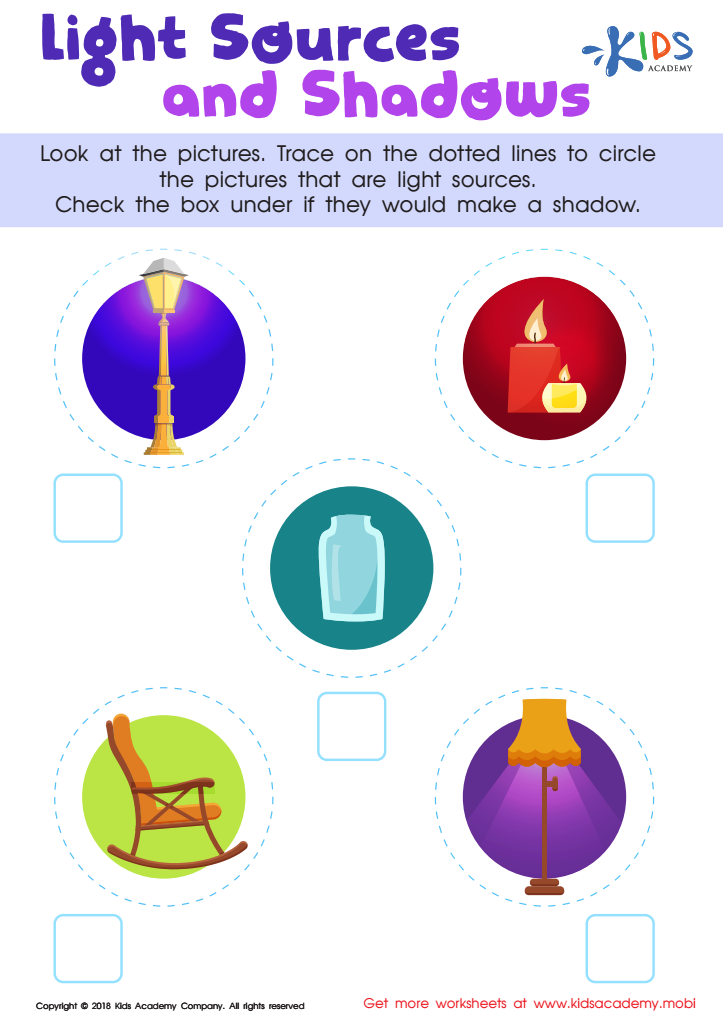
Light Sources and Shadows Worksheet
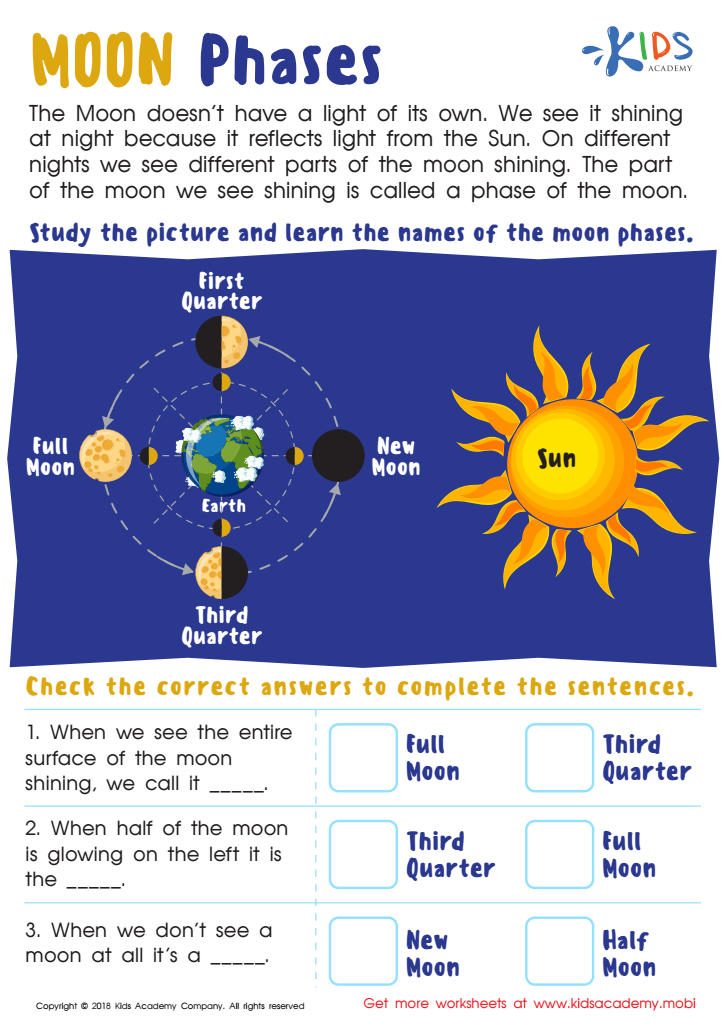
Moon Phases Worksheet






.jpg)

Parents and teachers should deeply care about promoting observational skills in Normal Physical Science for children aged 5-7, as these skills lay the foundation for critical thinking and understanding the world around them. At this developmental stage, children are naturally curious, and fostering their observational skills encourages exploration and inquiry. By observing phenomena in their environment, such as the changes in weather, the movement of objects, or the properties of materials, children learn to make connections between concepts, building a base for scientific reasoning.
Enhancing observational skills also promotes language development, as children learn to describe, categorize, and express their findings. This not only enriches their vocabulary but helps them articulate thoughts and ideas effectively. Furthermore, strong observational skills support problem-solving abilities, enabling children to gather evidence, make predictions, and draw conclusions based on what they see.
Incorporating observational activities into daily learning, whether through nature walks, simple experiments, or interactive play, nurtures a positive attitude toward science and exploration. Ultimately, developing these skills during early childhood builds confidence, fosters intellectual curiosity, and instills a lasting appreciation for learning, setting young learners on a path toward academic success and lifelong inquiry.







