Understanding light sources Normal Physical Science Worksheets for Ages 5-7
3 filtered results
-
From - To
Explore the fascinating world of light sources with our engaging Normal Physical Science Worksheets designed specifically for ages 5-7. These worksheets introduce young learners to the concept of light, helping them differentiate between natural and artificial sources. Through interactive activities, children will discover how light interacts with different materials and its importance in our everyday lives. Our engaging content and colorful illustrations make learning fun and effective, fostering curiosity and foundational science skills. Perfect for educators and parents alike, these worksheets encourage hands-on exploration and critical thinking. Illuminate your child’s understanding of science today!
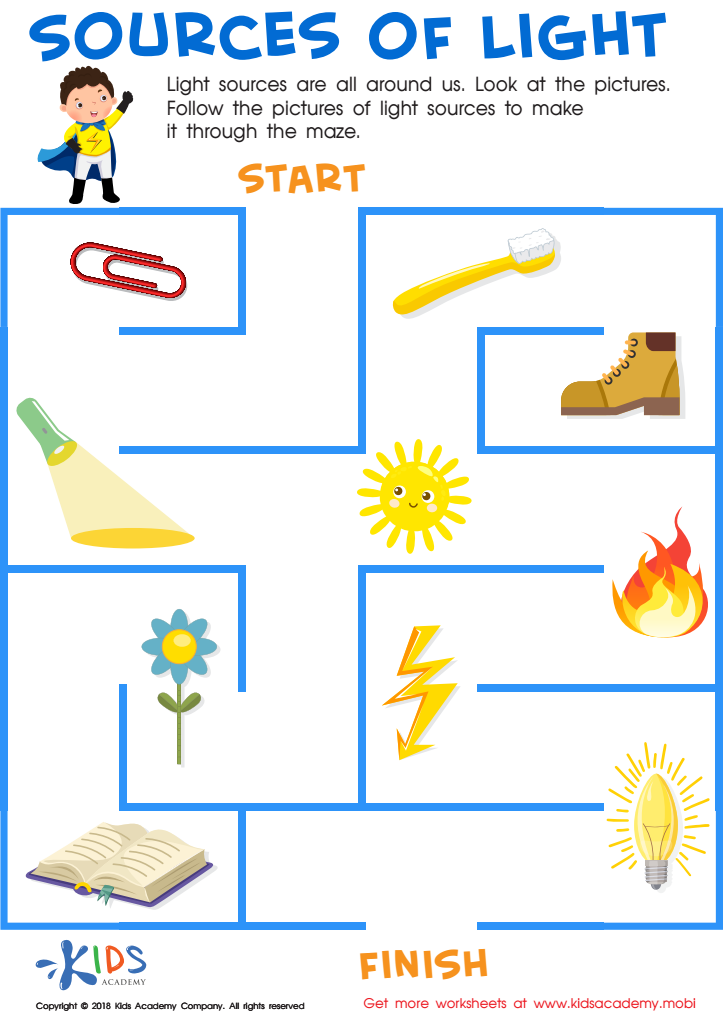
Sources of Light Worksheet
 Assign to My Students
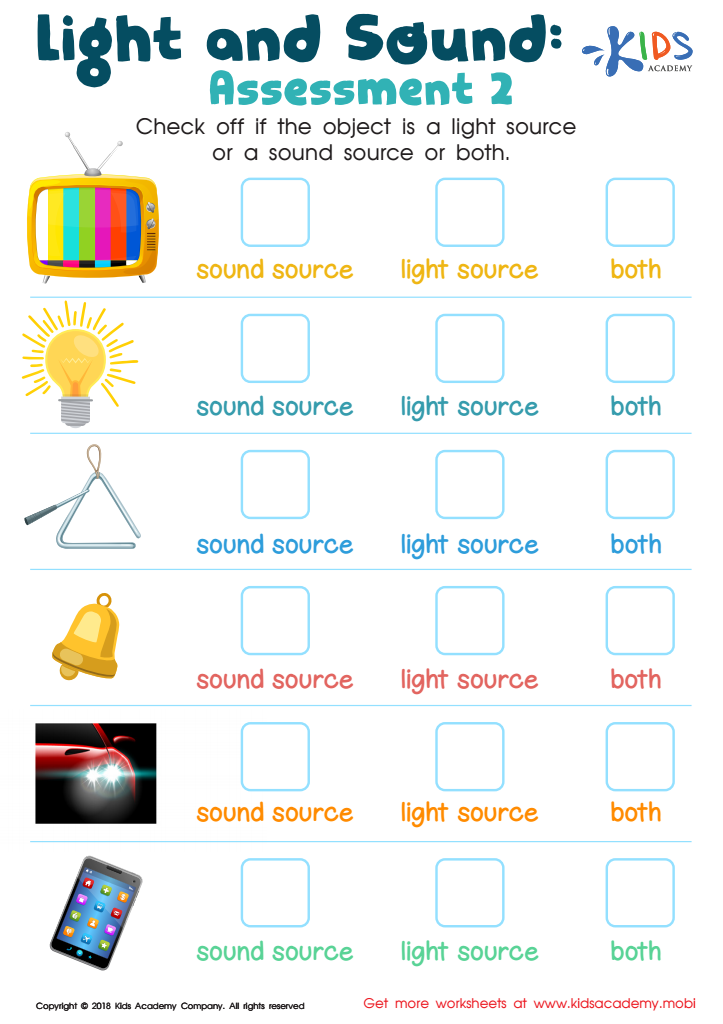
Light and Sound: Assessment 2 Worksheet
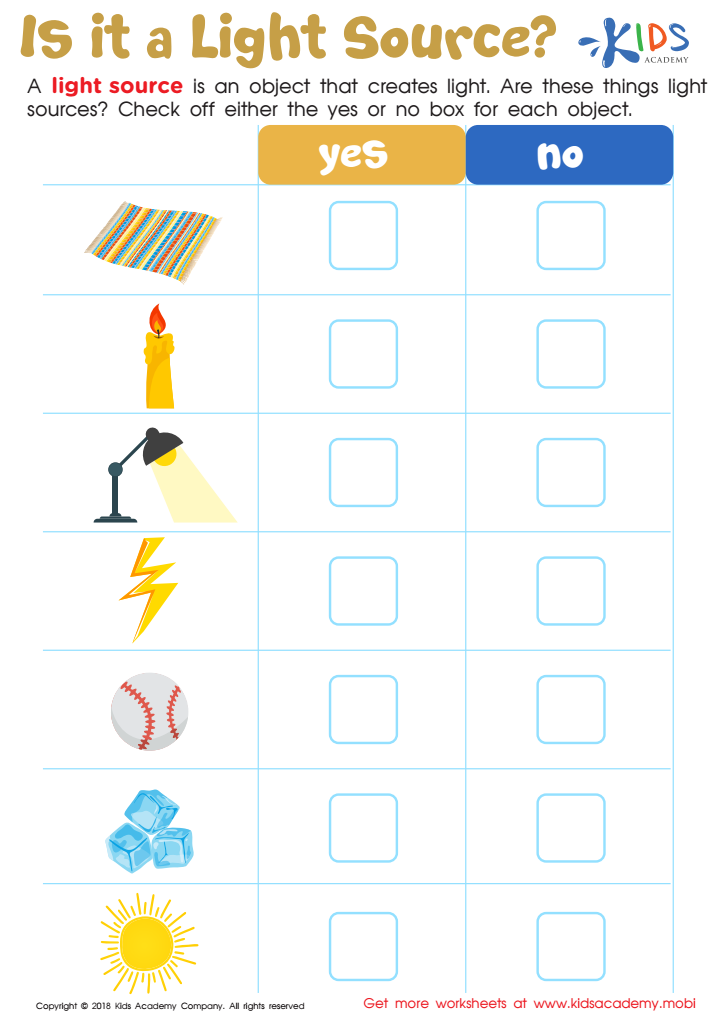
Is It a Light Source? Worksheet







Understanding light sources is vital for children aged 5-7 as it forms the foundation of their scientific literacy and everyday experiences. At this age, children are naturally curious and inclined to explore their surroundings. Introducing them to basic concepts of light through engaging activities allows them to develop critical thinking skills and an appreciation for the science behind phenomena they encounter daily.
When parents and teachers emphasize the significance of light sources, they help children become aware of the difference between natural light (like the sun) and artificial light (like lamps and flashlights). This knowledge fosters observational skills as children learn to ask questions and explore why certain sources illuminate spaces better than others. Additionally, understanding light promotes discussions about safety (e.g., avoiding shining a strong light into eyes) and energy conservation, as children consider why some lights consume more energy than others.
Incorporating light science also supports the development of vocabulary and literacy as children learn new terms and concepts, making connections between science and language. Ultimately, by emphasizing light sources in early education, parents and teachers nurture inquisitive minds, laying the groundwork for future scientific inquiry and awareness in a world influenced by technology and light.







