Understanding constellations Normal Space Worksheets for Ages 5-7
3 filtered results
-
From - To
Explore the wonders of the night sky with our "Understanding Constellations" worksheets designed for children ages 5-7. These engaging, interactive resources introduce young learners to the concept of constellations, helping them identify and understand popular star patterns. Each worksheet features colorful illustrations, simple activities, and fun facts that foster creativity and critical thinking. Perfect for enhancing science lessons at home or in the classroom, these worksheets encourage children to use their imagination and start their journey into astronomy. Whether tracing star maps or coloring constellation images, our materials make space education exciting and accessible for early learners.
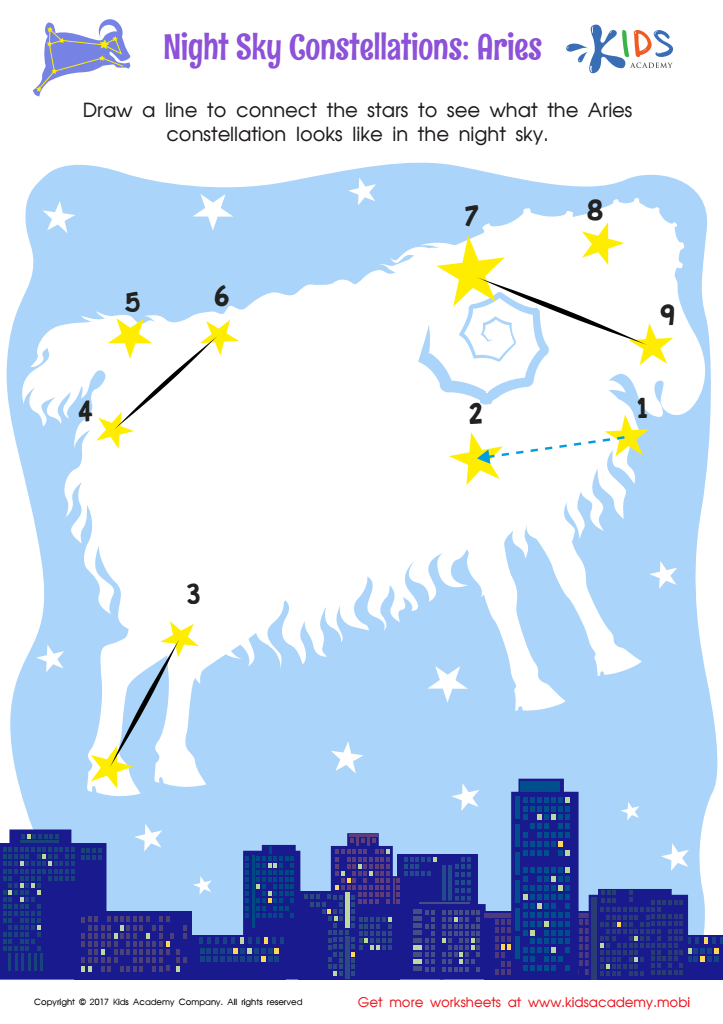
Night Sky Constellations: Aries Worksheet
 Assign to My Students
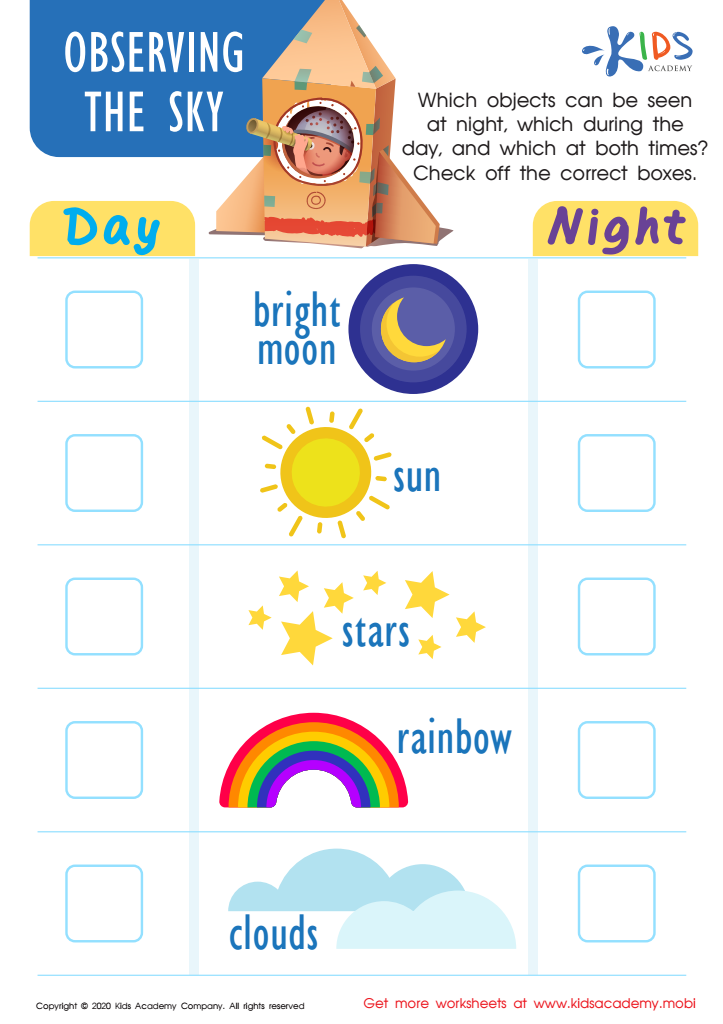
Observing the Sky Worksheet
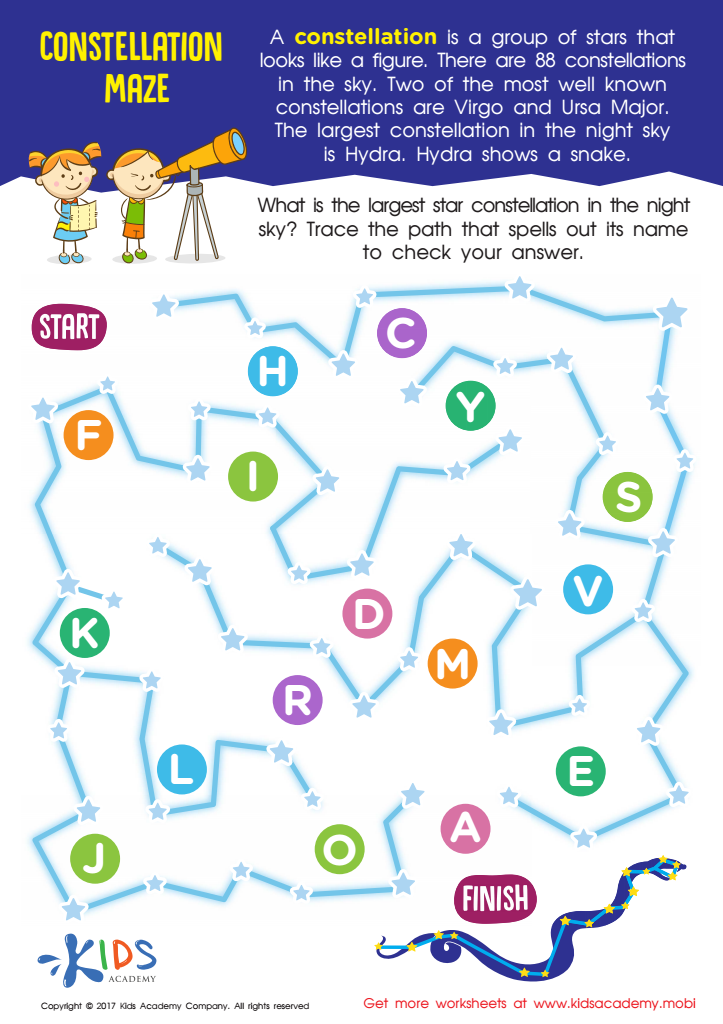
Constellations Worksheet








Understanding constellations and the concept of normal space is crucial for children aged 5-7 as it lays a foundational understanding of the universe around them. At this early age, children are naturally curious about the world, and studying celestial formations can spark their interest in science and astronomy. Recognizing constellations fosters observational skills, encouraging young learners to look up to the night sky and connect with nature. This promotes critical thinking, as they learn to identify patterns and relationships in their environment.
Furthermore, exploring constellations enhances imaginative play and storytelling. Kids can create their own myths about the stars, enriching their language development and creativity. It's also an excellent opportunity to teach about teamwork and collaboration, often requiring group activities like star-gazing or making constellation charts.
Teaching constellations encourages early math skills too, as children can measure distances between stars or calculate angles in drawings. Parents and teachers can use this subject to tie in lessons on navigation, geography, and cultural stories associated with the stars, providing a comprehensive learning experience.
In essence, understanding constellations is not just about stars; it nurtures curiosity, critical thinking, collaboration, and creativity, making it a vital part of early education.







