Weather identification Normal Weather Worksheets for Ages 5-7
4 filtered results
Difficulty Level
Grade
Age
-
From - To
Subject
Activity
Standards
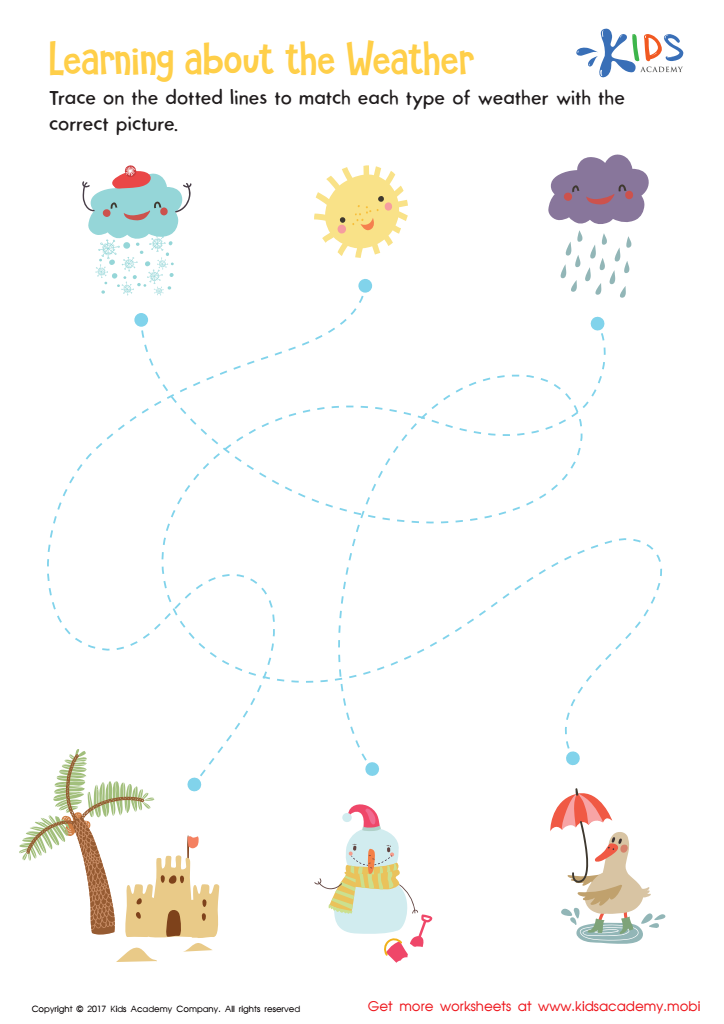
Introduce your young learners to the fascinating world of weather with our "Weather Identification Normal Weather Worksheets for Ages 5-7". Specifically designed to engage children aged 5-7, these worksheets help kids recognize and understand various weather conditions. From sunny days to rainy scenes, each worksheet is packed with vibrant illustrations and fun activities to make learning about the weather exciting and effective. Perfect for classroom or home use, these resources will enhance observational skills and ignite curiosity about the natural world. Download now and watch your children become budding meteorologists!
Favorites
With answer key
Interactive
About the Weather Printable
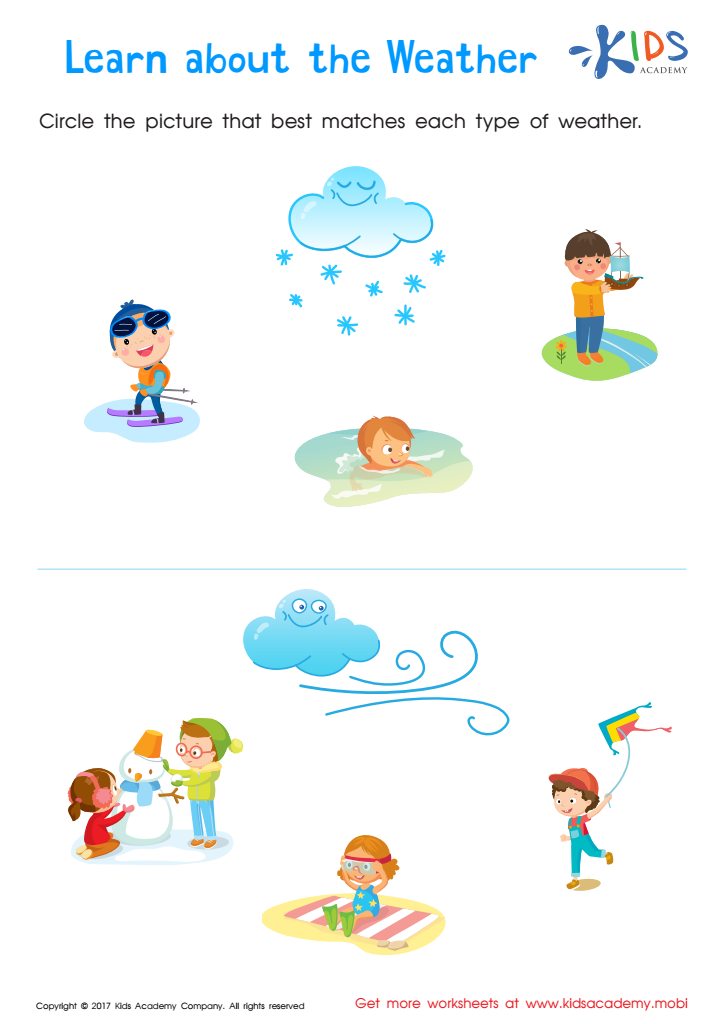
This worksheet is perfect for reinforcing knowledge about changing weather and activities that suit each season. Help your child use their life experiences to observe the weather and complete the worksheet. Fun and colorful, it's a great way to learn about weather and seasons. Let's get started!
 Assign to My Students
About the Weather Printable
Worksheet
What's the Weather Like? Worksheet
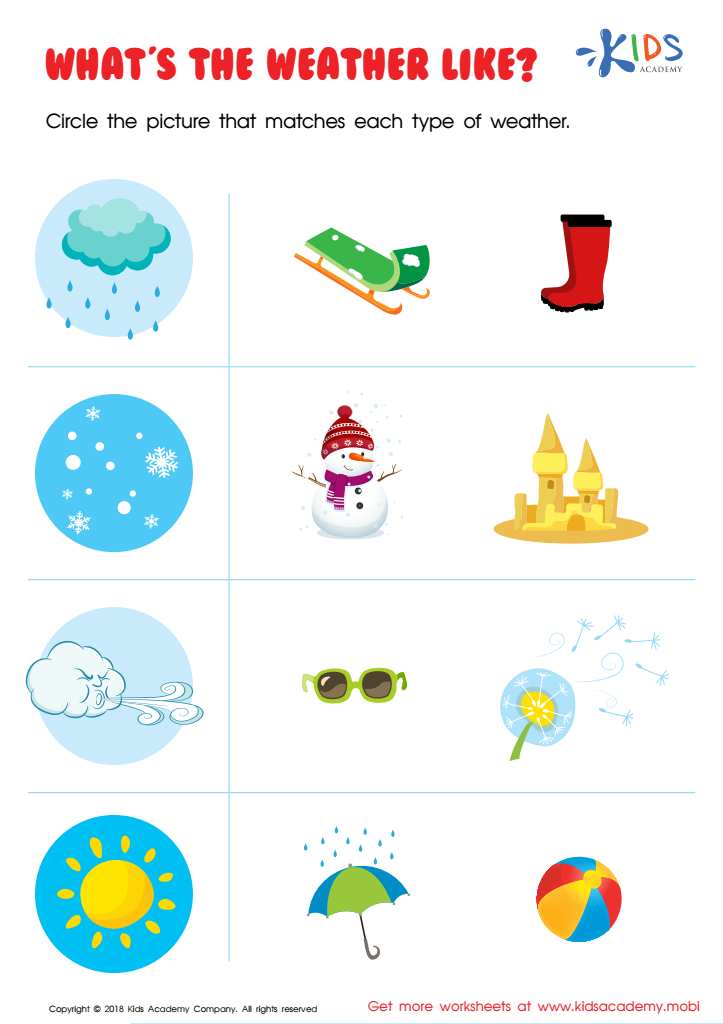
Help budding meteorologists practice matching weather to seasons with this PDF worksheet. Picture clues help identify seasons and fine motor skills are practiced circling the correct weather patterns. Bright and engaging characters make learning fun and reinforce weather knowledge.
What's the Weather Like? Worksheet
Worksheet
What's the Weather? Worksheet
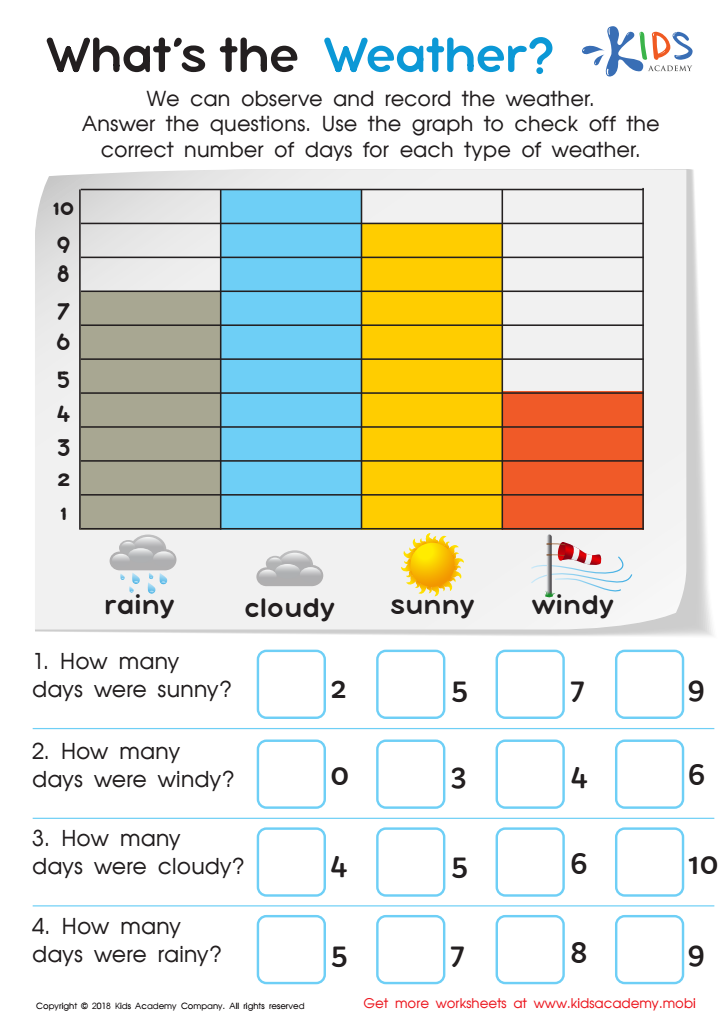
Check the weather outside. Help kids learn and practice science and math by tracking different types of days using this printable worksheet. Have them count bars next to weather types like cloudy, sunny, windy, and rainy. Answer the questions and take the lesson further by creating a bar graph to show the monthly weather.
What's the Weather? Worksheet
Worksheet
Join Kids Academy for Free
Who is primarily going to use this learning content?








Understanding weather is crucial for children aged 5-7 as it shapes their daily activities and personal safety. Parents and teachers play an essential role in introducing them to this concept, fostering both awareness and curiosity.
Firstly, knowing about normal weather patterns helps children dress appropriately for the day, determining whether they need a jacket, umbrella, or sunscreen. This level of preparedness keeps them comfortable and healthy, as young children are more vulnerable to temperature changes, getting cold or overheated easily.
Secondly, weather identification skills enhance a child’s ability to engage in outdoor activities more safely. Early awareness helps in recognizing signs of sudden weather changes, such as darkening clouds indicating a possible rainstorm. This knowledge can prompt timely actions to seek shelter or postpone an outdoor game, mitigating the risks associated with sudden weather changes.
Moreover, it provides excellent learning opportunities, encouraging children to observe, ask questions, and engage in discussions about the environment. This curiosity can be the foundation for a lifelong interest in science and nature, fostering a love for discovery and learning.
By teaching children about weather, parents and teachers ensure they are not only safe but also keen observers of the world around them, nurturing both practical life skills and their inherent curiosity.