Geography knowledge Normal Community Worksheets for Ages 5-7
3 filtered results
Difficulty Level
Grade
Age
-
From - To
Subject
Activity
Standards
Explore our Geography Knowledge worksheets designed for children ages 5-7. These engaging and educational activities introduce young learners to fundamental geographic concepts, including map skills, identifying landforms, and understanding communities. Each worksheet is thoughtfully created to foster curiosity, bolster critical thinking, and enhance spatial awareness in early elementary students. Perfect for classroom use or at-home practice, these resources support foundational social studies skills while making learning fun and interactive. Help your child or students discover the fascinating world of geography with our expertly crafted worksheets tailored to their developmental needs.
Favorites
With answer key
Interactive
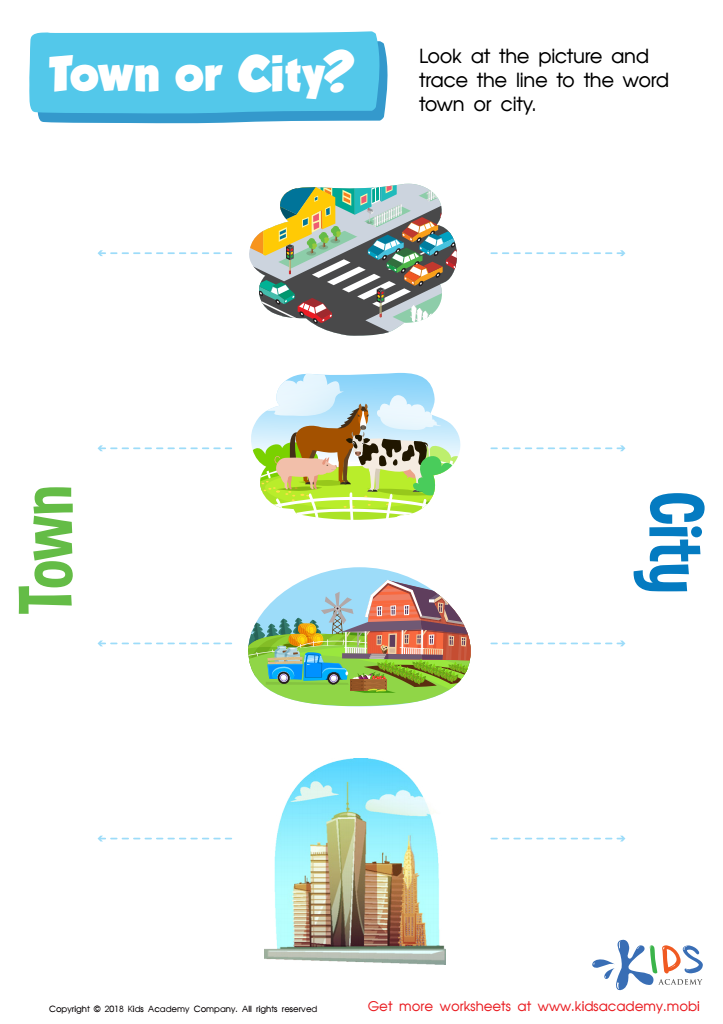
Town or City? Worksheet
Kids will have fun with this free worksheet, matching pictures to either a city or a town. Fine motor skills will be practiced as they trace the lines to their answer. It's a great way to reinforce the differences between cities and towns.
 Assign to My Students
Town or City? Worksheet
Worksheet
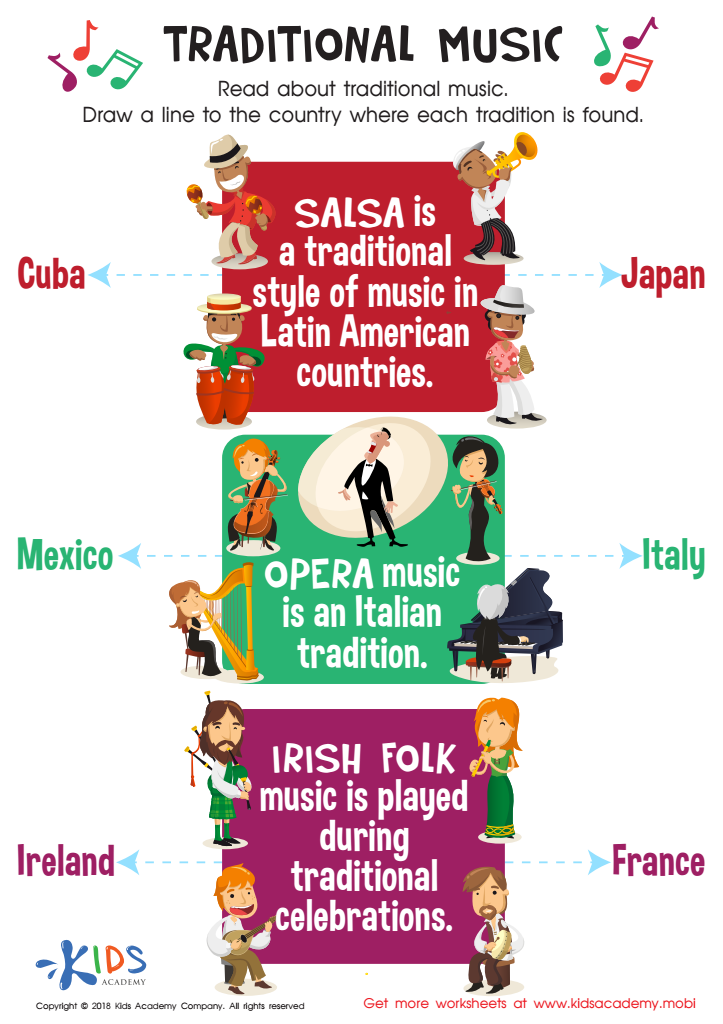
Traditional Music Worksheet
Exploring different countries' music is a great way for global learners to appreciate their place in the world. This worksheet helps them match music - like Salsa and Irish Folk - to various geographic regions with colorful visuals. It boosts reading comprehension while supporting their cultural understanding.
Traditional Music Worksheet
Worksheet

Towns Worksheet
Towns are generally quiet and safe, making them attractive for young families. Cities have more people, businesses and tall buildings. Roads are busy, and there is often plenty to do and see. Help your kids check which pictures in this worksheet show towns.
Towns Worksheet
Worksheet
Join Kids Academy for Free
Who is primarily going to use this learning content?






Geography knowledge is essential for young learners as it lays a crucial educational foundation. For children aged 5-7, learning about their normal community geography helps them develop a sense of space, place, and belonging. This early exposure fosters curiosity and understanding about the world around them, making learning relatable and meaningful.
Firstly, understanding geography aids social development. When children learn about local landmarks, natural features, and neighbors, they build a sense of community and cultural awareness. This awareness fosters empathy and respect for diversity, values integral for harmonious social interactions.
Additionally, geography enriches cognitive skills. It involves spatial thinking, problem-solving, and an analytical approach to how different elements are interconnected. Young learners who comprehend local geographical concepts can better understand more complex ideas later. For example, recognizing how weather impacts daily life lays groundwork for comprehending broader environmental concepts.
Moreover, early geographical knowledge supports practical life skills. Simple activities, like reading maps or identifying streets, enhance directional sense and independence. Parents and teachers who integrate geography into early education empower children with the tools to navigate their immediate world confidently and safely.
Overall, making geography a priority in early education equips children with practical knowledge and promotes cognitive and social-emotional development essential for lifelong learning.