Understanding communities Normal Community Worksheets for Ages 5-7
4 filtered results
-
From - To
"Understanding Communities Normal Community Worksheets for Ages 5-7" offers engaging activities designed to help young learners explore the importance of communities. These worksheets teach children about different roles within a community, including helpers like firefighters and teachers, and the concept of neighborhoods. The resources promote social awareness, critical thinking, and empathy by helping kids understand how communities function and the significance of working together. Tailored for ages 5-7, these printable worksheets feature fun, interactive tasks such as matching exercises, puzzles, and drawing assignments that make learning about communities enjoyable and educational. Perfect for home or classroom settings, these activities build foundational social studies skills in a relatable way.
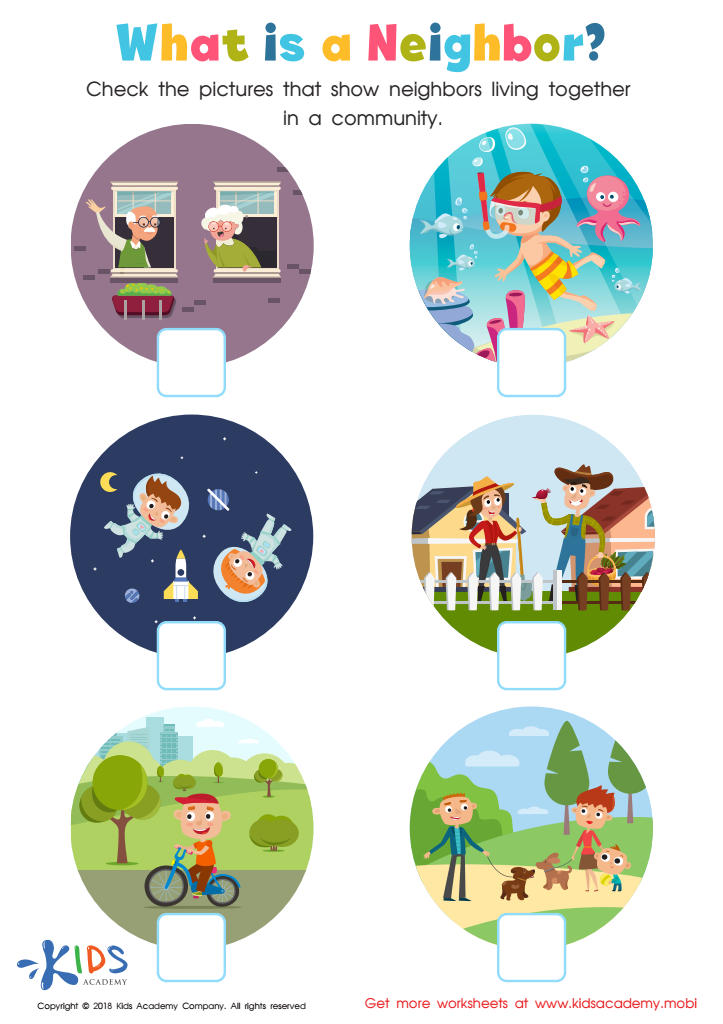
What is a neighbor Worksheet
 Assign to My Students
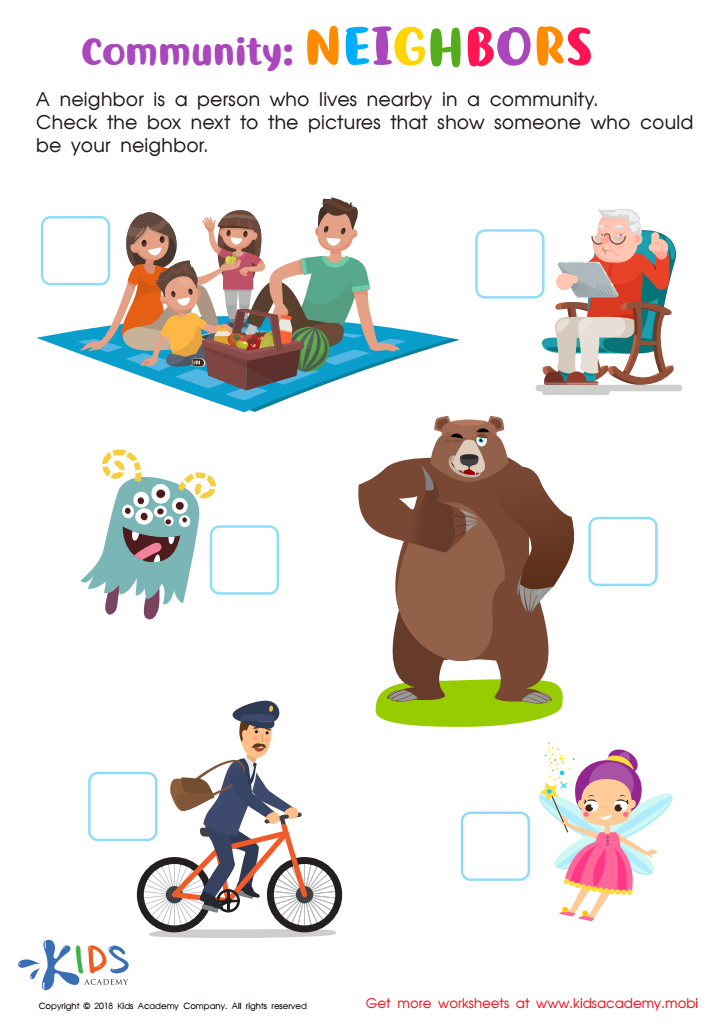
Community: Neighbors Worksheet
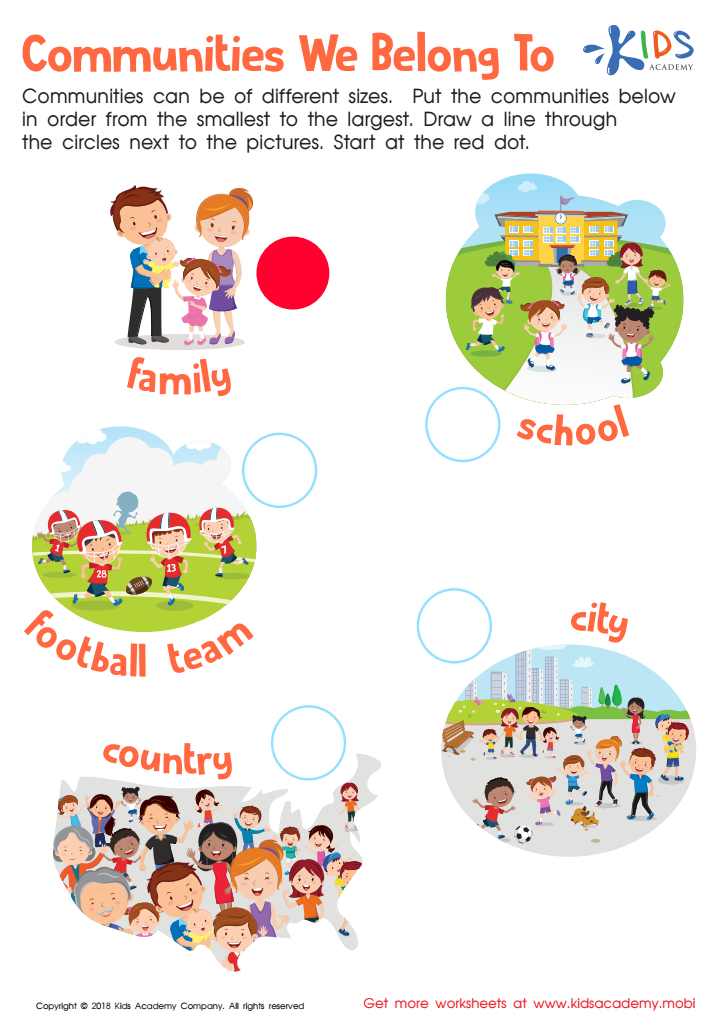
Communities We Belong to Worksheet
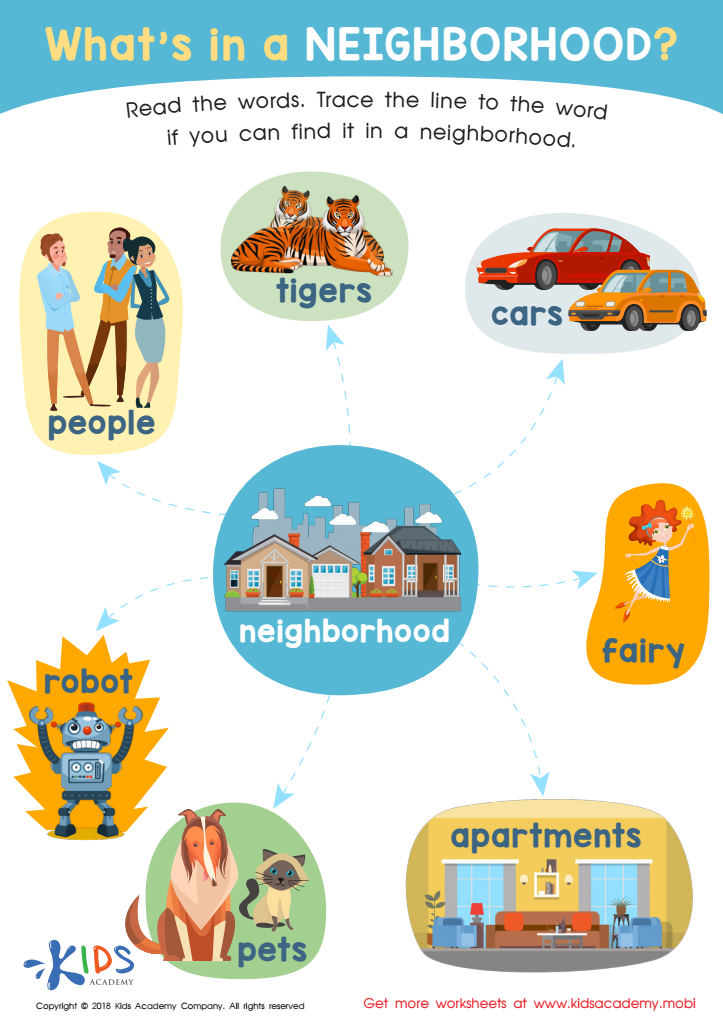
What's in a Neighborhood? Worksheet







Understanding the concept of communities is crucial for young children aged 5-7 as it forms the foundation of their social learning and personal growth. At this formative age, children are beginning to expand their social circles beyond the family. Teaching them about communities—including their structure and importance—helps foster a sense of belonging and cooperation.
When children understand that a community consists of various individuals, each contributing in unique ways, they learn about diversity, empathy, and collaboration. This awareness helps develop their social skills as they learn to interact politely and respectfully with peers, educators, and neighbors. Participating in community-oriented activities, even simple ones like classroom jobs or helping with local events, instills a sense of responsibility and service.
Parents and teachers caring about this aspect of children's education also set the groundwork for civic engagement and ethical behavior. It shows children the importance of contributing positively to their environment, which can lead to being conscientious adults. Moreover, these early lessons on community foster emotional intelligence and resilience by teaching children that support systems are available in times of need. Overall, understanding communities equips young children with critical life skills and a mindset that appreciates and enhances collective well-being.