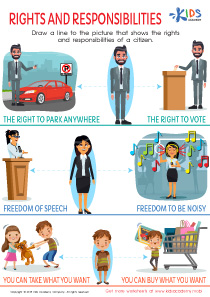
Critical Thinking Normal Governance and Civics Worksheets for Ages 5-7
3 filtered results
Difficulty Level
Grade
Age
-
From - To
Subject
Activity
Standards
Introduce your young learners to the world of governance and civics with our "Critical Thinking Normal Governance and Civics Worksheets for Ages 5-7". These thoughtfully designed worksheets nurture curiosity and foundational understanding of social structures, encouraging children to think critically about their role in society. Through engaging activities, kids will explore essential topics such as community roles, responsibilities, decision-making, and rules. Equip your child with the critical thinking skills they need to develop informed perspectives and become active, thoughtful citizens. Perfect for educators and parents alike, these resources blend fun with education, fostering lifelong learning and civic awareness from an early age.
Favorites
With answer key
Interactive
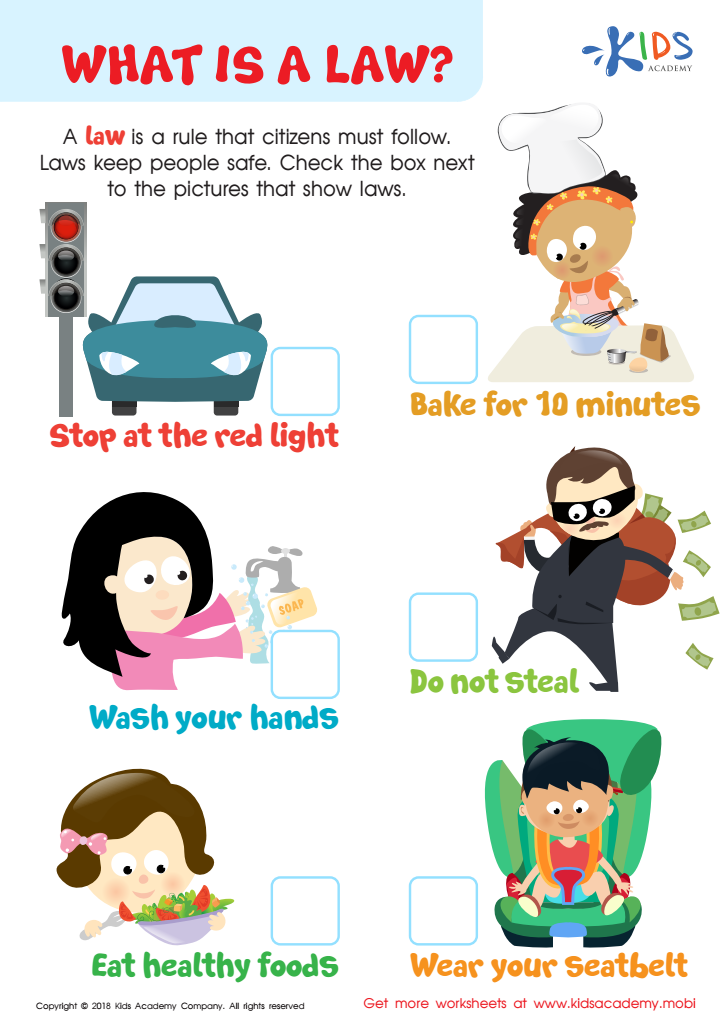
What is a Law? Worksheet
Encourage your students to think about the laws they abide by - at home, school, and the playground. Explain the importance of laws in keeping us safe, then ask them to check the box next to the pictures depicting different laws in a worksheet.
 Assign to My Students
What is a Law? Worksheet
Worksheet
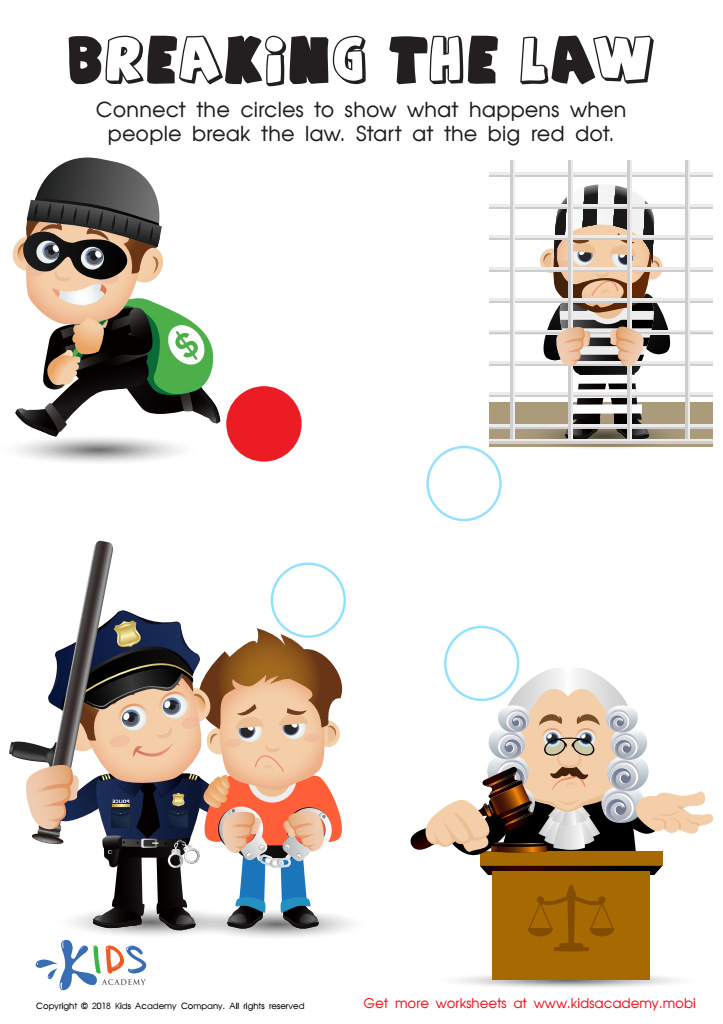
Breaking the Law Worksheet
Explain to your child why people go to jail. Show them this worksheet; it illustrates the stages a criminal goes through from breaking the law to receiving their punishment. Guide them in connecting the circles from the big red dot. Finish with a discussion on why it's important to follow the law.
Breaking the Law Worksheet
Worksheet
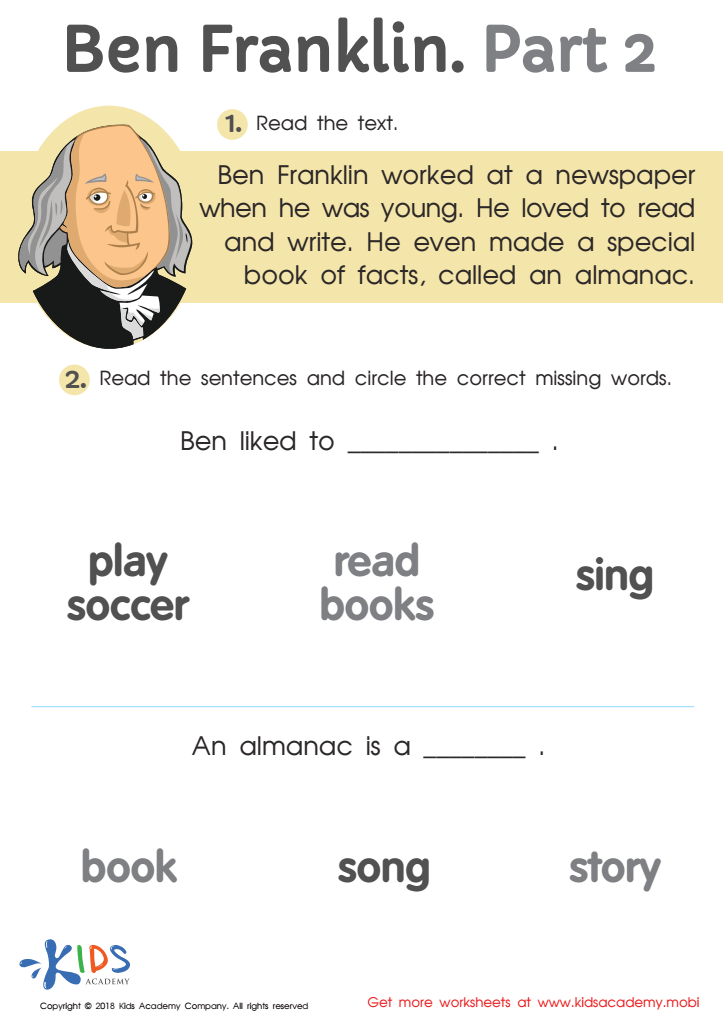
Ben Franklin Part 2 Worksheet
History is filled with great figures, like Benjamin Franklin. Let your kids in on the legacy by introducing them to the founder of the US fire department, diplomat, and inventor. Then, use a worksheet to have them fill in the blanks with the correct word to teach them more. Read the text, then read the sentences and have them circle the missing word.
Ben Franklin Part 2 Worksheet
Worksheet
Join Kids Academy for Free
Who is primarily going to use this learning content?


Critical Thinking, Normal Governance, and Civics are foundational concepts that parents and teachers should consider integrating into the education of children ages 5-7. At this early developmental stage, children are highly impressionable and capable of absorbing new ideas rapidly. Introducing them to critical thinking helps nurture their natural curiosity and enhances their problem-solving abilities. By encouraging young learners to ask thoughtful questions, analyze situations, and consider multiple viewpoints, we set the groundwork for independent thinking skills that will benefit them throughout life.
Teaching basic concepts of governance and civics is equally paramount. Understanding the functions of community roles, fairness, and rules helps children grasp the importance of responsibilities and ethical behavior. Activities like classroom voting, understanding simple community jobs, or role-playing can illustrate these concepts. Learning about governance and civics instills a sense of belonging and responsibility within the community, fostering early citizenship and respect for societal norms.
Together, these teachings help in shaping well-rounded, socially conscious individuals. Helping children to think critically and understand basic societal functions prepares them not just for academic success, but also for informed, engaged participation in their communities as they grow older. Doing this from an early age builds essential life skills that contribute to individual growth and a more cohesive society.