Spelling practice Normal Grammar Worksheets for Ages 5-7 - Page 2
26 filtered results
-
From - To
 Assign to My Students
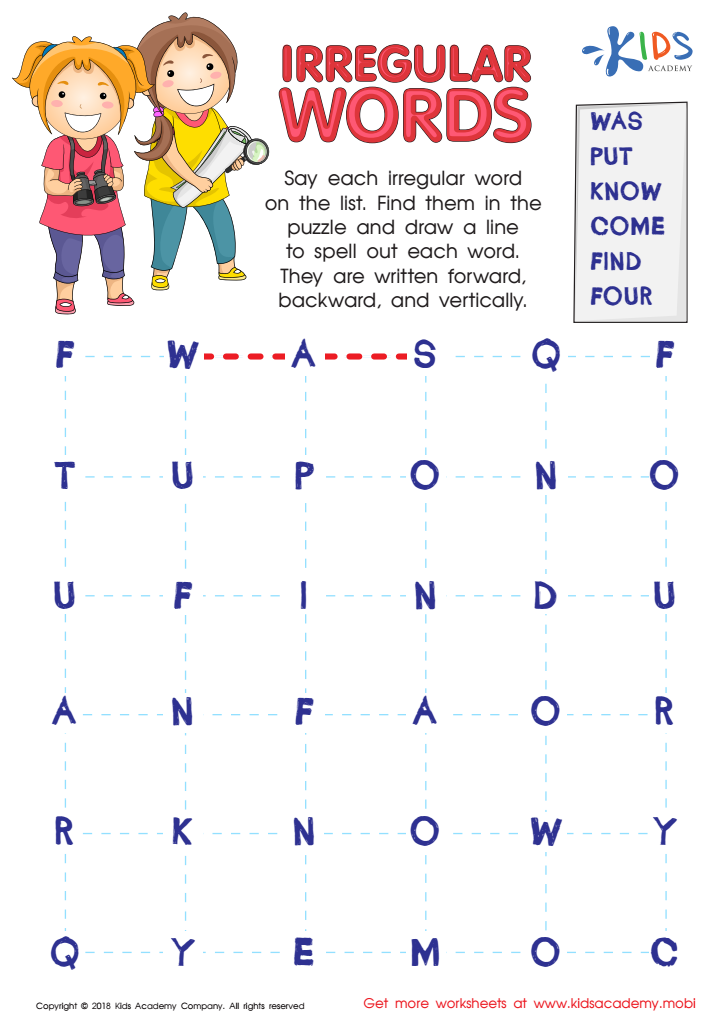
Irregular Words Worksheet








Spelling practice is crucial for children aged 5-7, as it's a foundational skill that benefits their overall literacy development. At this stage, children are beginning to recognize words, understand sounds, and make connections between letters and phonetics. Mastering spelling enhances their reading skills, enabling them to decode and understand texts more effectively. When children spell correctly, they gain confidence in their writing, allowing them to express their thoughts clearly.
Moreover, spelling practice fosters attention to detail and critical thinking. When kids learn to identify and correct their spelling mistakes, they develop a sense of ownership over their learning. This reinforces their ability to analyze language and apply grammatical rules, which is essential for effective communication.
Parental involvement in spelling practice can create a supportive learning environment, making the process enjoyable through games and activities. Teachers can reinforce spelling through classroom strategies that blend fun and education. Furthermore, strong spelling skills are linked to success in other subjects, as clear writing and comprehension play a role across the curriculum. By prioritizing spelling practice, both parents and teachers are investing in the child’s long-term academic success and self-esteem.