Sight word recognition Normal Tracing Words Worksheets for Ages 5-7
3 filtered results
Difficulty Level
Grade
Age
-
From - To
Subject
Activity
Standards
Discover engaging Sight Word Recognition Normal Tracing Words Worksheets designed specifically for children aged 5-7. These worksheets offer an effective way for young learners to practice essential sight words through fun tracing activities. By honing their handwriting skills while recognizing high-frequency words, children will build a strong foundation for reading and writing success. Each worksheet is tailored to reinforce vocabulary, enhance Visual and motor skills, and promote confidence in early literacy. Perfect for both classroom and home use, these delightful activities make learning sight words enjoyable and interactive. Dive into the world of words and watch your child flourish!
Favorites
With answer key
Interactive
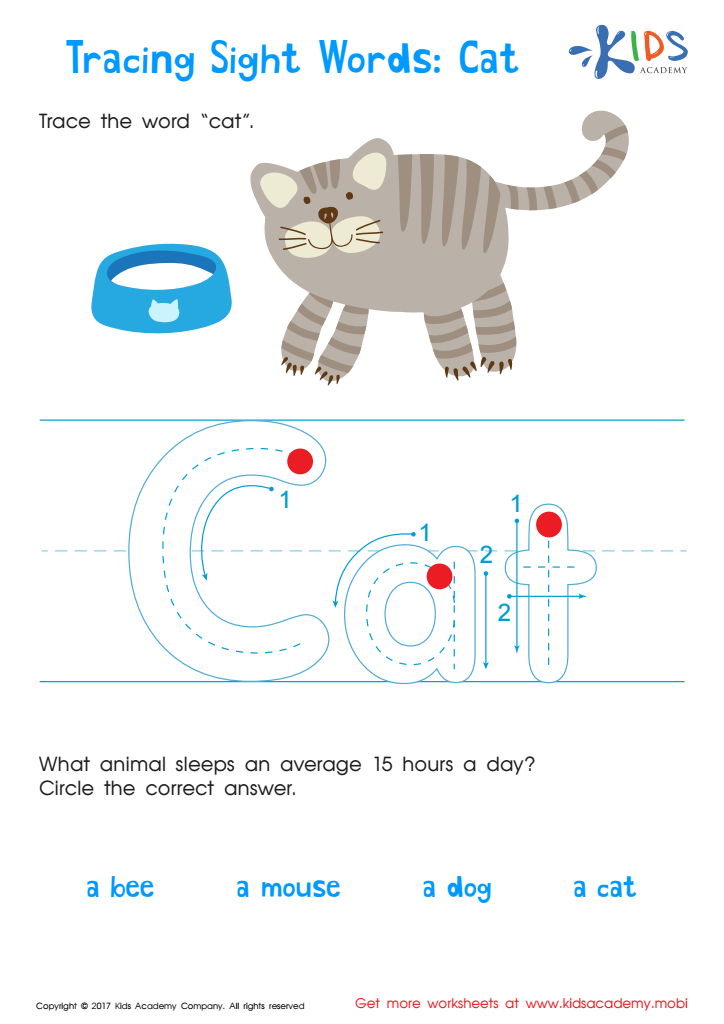
Cat Printable Sight Words Worksheet
Encourage your child's literacy with this fun sight words worksheet: cat PDF! It helps build a solid foundation for reading, featuring activities such as reading and tracing the word cat, and finding it amongst other sight words. With its cute cat, Kids Academy makes learning to read a delight!
 Assign to My Students
Cat Printable Sight Words Worksheet
Worksheet
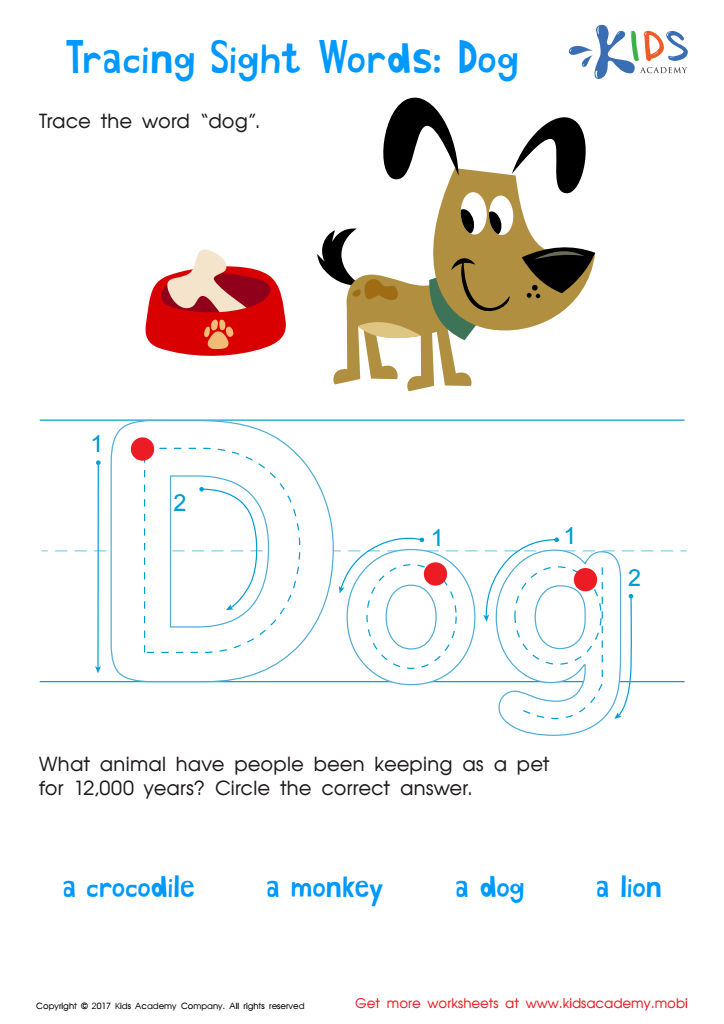
Dog Worksheet Sight Words Worksheet
Get your kids excited to read with our dog-themed sight words worksheet!
Excite your child to read with our sight words worksheet: dog edition! Featuring a lovable dog character to put a smile on any kid's face, this worksheet helps kids practice reading and writing the word "dog". Build a library of words they can read quickly and promote increasing literacy skills with early fluency! Get them ready for reading with our dog-themed sight words worksheet!
Dog Worksheet Sight Words Worksheet
Worksheet
Join Kids Academy for Free
Who is primarily going to use this learning content?







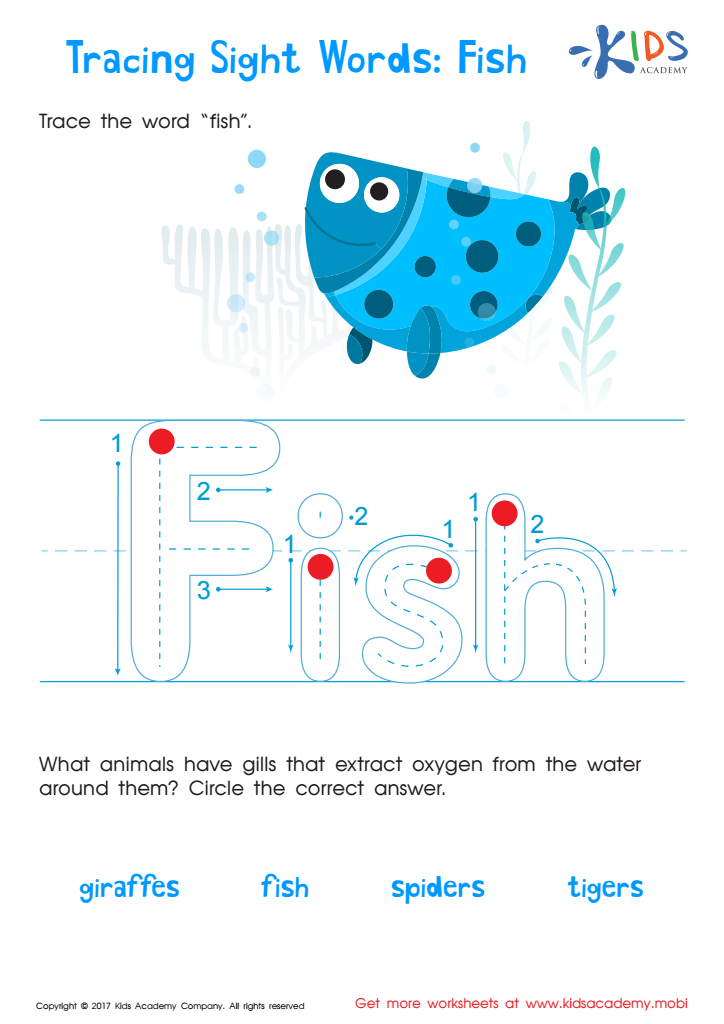
Sight word recognition is crucial for children aged 5-7 as it serves as a foundational skill for reading fluency and comprehension. Sight words are commonly used words that young readers need to recognize automatically, which helps them decode texts smoothly without having to pause for each word. By focusing on sight words, parents and teachers enhance children's confidence and enjoyment in reading, allowing them to have successful literacy experiences.
Normal tracing of words reinforces this skill by engaging kinesthetic learning, helping solidify letter shapes and word formation through hands-on practice. When children trace letters and words, they enhance their fine motor skills while simultaneously internalizing word recognition. This combination of visual, auditory, and tactile learning helps cement these essential words in their memory.
Furthermore, a solid grasp of sight words allows children to focus more on understanding the meaning of what they read, rather than decoding each individual word. This shift in focus promotes reading fluency and a love for literature. For these reasons, supporting sight word recognition and tracing activities is vital for developing proficient, confident readers who will thrive in their educational journeys. Investing time in early literacy initiatives pays long-lasting dividends for children's overall academic success.