Color Identification Normal Alphabet Worksheets for Ages 5-9
3 filtered results
-
From - To
Discover our engaging "Color Identification Normal Alphabet Worksheets" designed specifically for children ages 5-9! These interactive worksheets help young learners master both color recognition and the alphabet through eye-catching activities and illustrations. Perfect for homeschooling or classroom use, these resources enhance fine motor skills while making learning fun. Each worksheet features colorful images that prompt kids to identify and match colors with corresponding letters, fostering cognitive development in an enjoyable way. Encourage creativity and reinforce essential skills with our vibrant, easy-to-use worksheets while nurturing a love for learning. Download now and watch your child's skills flourish!
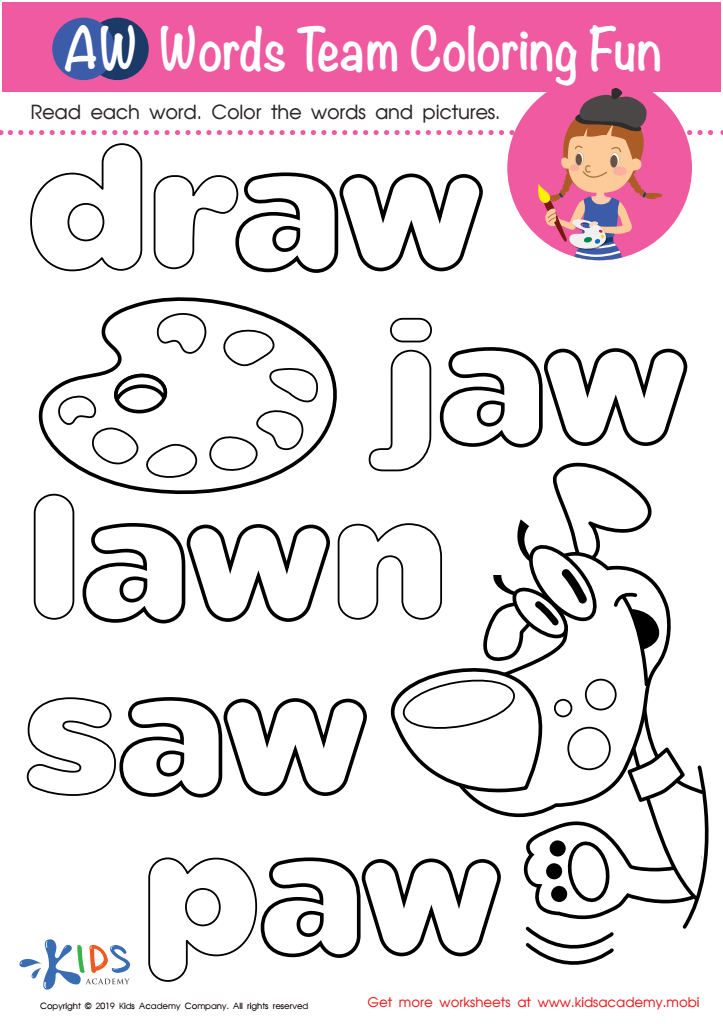
AW Words Team Coloring Fun Worksheet
 Assign to My Students

Let's Review! Big Letters Worksheet
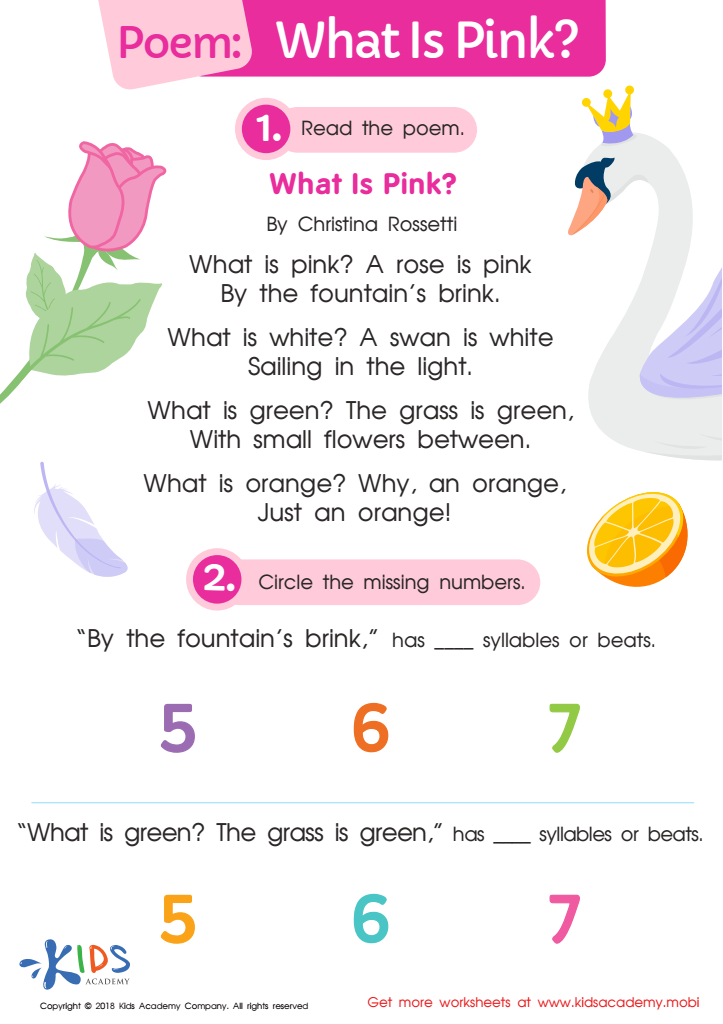
Poem: What Is Pink? Worksheet








Color identification is a fundamental skill for children aged 5-9, laying the groundwork for various cognitive and developmental milestones. Parents and teachers should prioritize this skill because it enhances children's ability to categorize and classify objects, facilitating better learning experiences. Recognizing colors is not just extrinsic; it is intrinsically tied to language development, improving vocabulary as children learn to label their environment accurately.
Furthermore, color identification is crucial for developing basic math skills. Children engage with concepts like sorting, patterns, and even basic addition or subtraction when they manipulate colored items. It also promotes creativity and expression in arts and crafts, environments where color plays a symbolic and emotional role.
Socially and emotionally, understanding colors can help children express feelings and preferences, fostering healthy communication. Additionally, color identification is tied to emotional intelligence—different colors can evoke different feelings, linking them to both personal and cultural narratives.
By emphasizing color identification, parents and teachers equip children with essential skills that serve as a backdrop for future learning while fostering growth in various domains, including cognitive, emotional, and social development. Choosing to nurture this skill is a significant step toward comprehensive childhood education.







