Uppercase identification Normal Alphabet Worksheets for Ages 5-9
5 filtered results
-
From - To
Discover the ideal resource for teaching uppercase letter identification with our printable worksheets, designed for ages 5-9. These engaging and educational activities help young learners recognize and differentiate between uppercase letters while making learning fun. Each worksheet is thoughtfully crafted to boost alphabet knowledge, enhance fine motor skills, and build a strong foundation in reading and writing. Perfect for classroom or at-home learning, these sheets promote confidence and mastery through visually appealing exercises. Download our free printable uppercase identification worksheets today and give your child the tools they need for early literacy success!
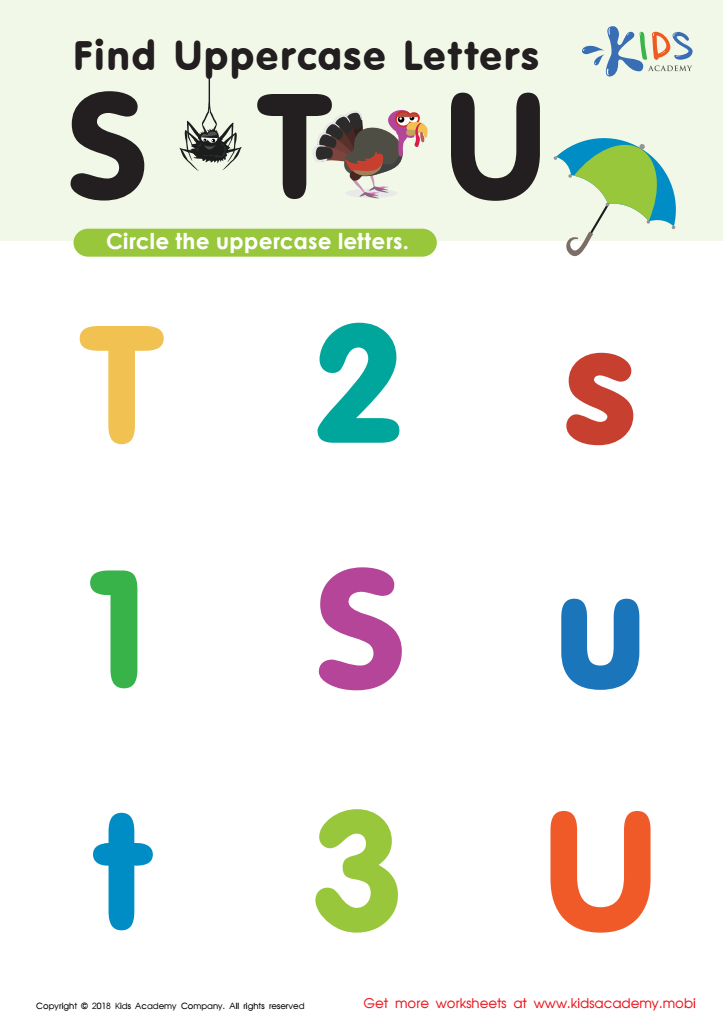
Find Uppercase Letters Worksheet
 Assign to My Students
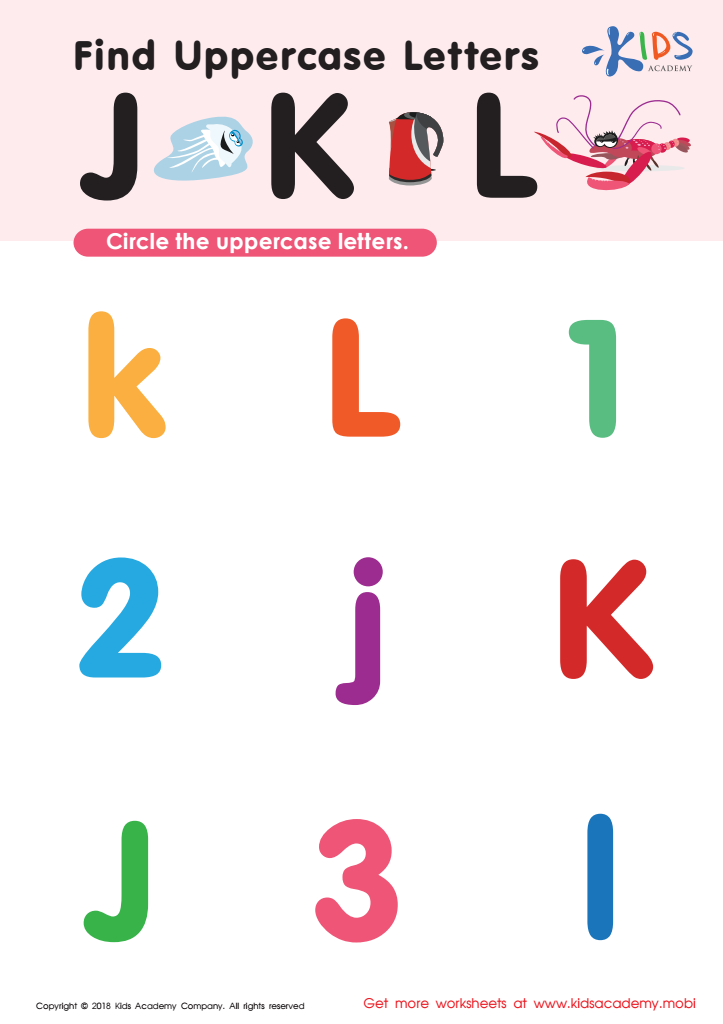
Find Uppercase Letters J, K, and L Worksheet
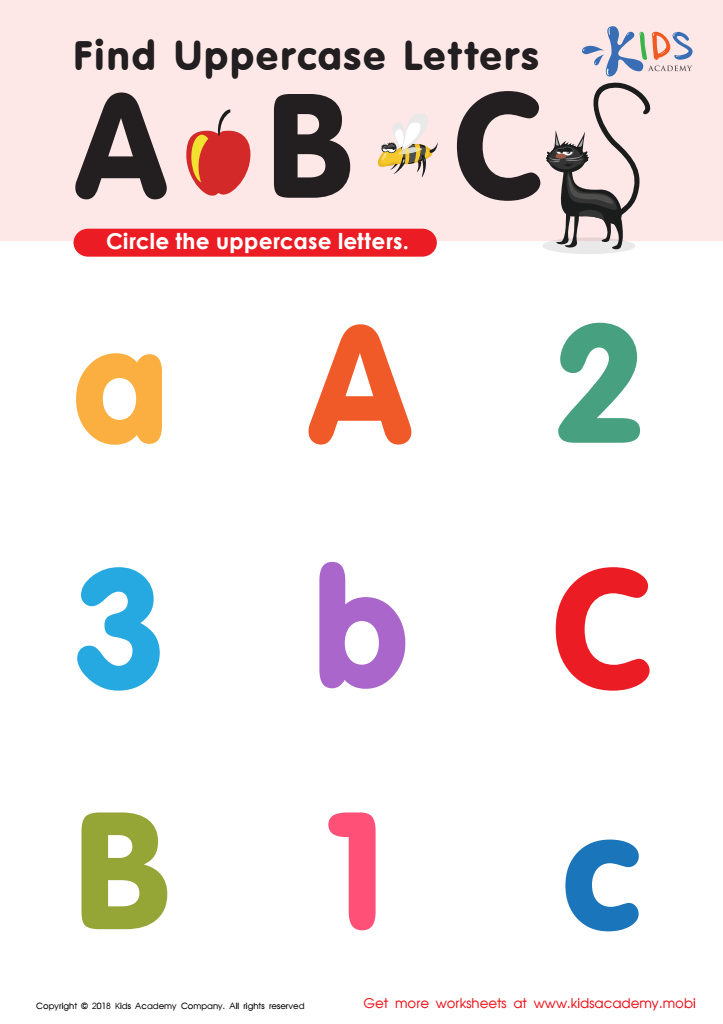
Find Uppercase Letters A, B, and C Worksheet
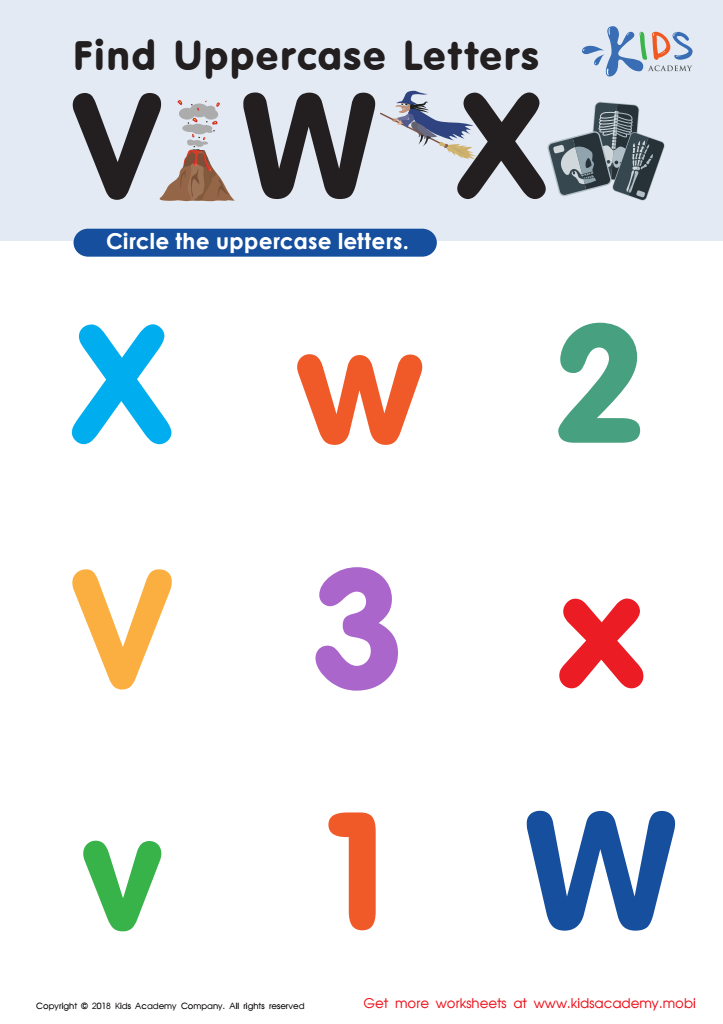
Find Uppercase Letters V, W, X Worksheet
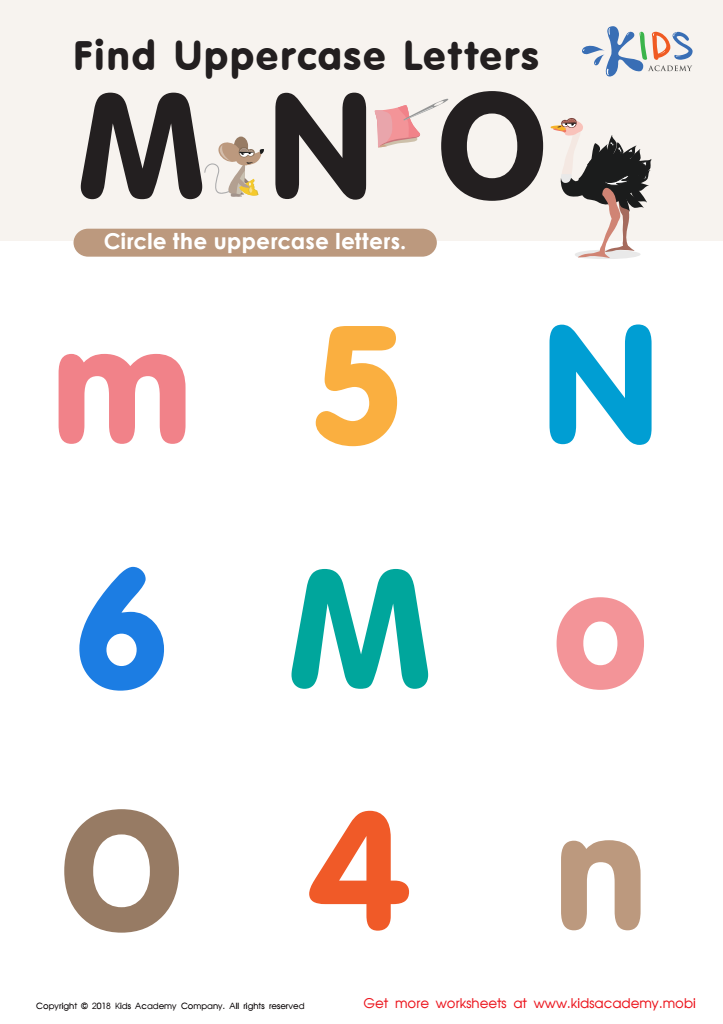
Find Uppercase Letters M, N, and O Worksheet







Parents and teachers should care about uppercase identification in the normal alphabet for children ages 5-9 because it is foundational to early literacy and reading skills. Recognizing and understanding uppercase letters is typically one of the first steps in a child's journey to becoming a proficient reader. Uppercase letters often introduce children to the concept of written language; they encounter them in names, signs, and titles, which are frequent in their everyday environment.
At this formative age, children's brains are highly receptive to learning new concepts. Mastery of uppercase letters can instill confidence and build the pre-reading skills necessary for tackling more complex literacy tasks. Uppercase identification helps with distinguishing different letter shapes, contributes to better print awareness, and lays the groundwork for letter-sound recognition, which is crucial for phonics and spelling instruction.
Furthermore, consistent practice with uppercase letters supports fine motor development. Since uppercase letters are generally simpler in form than lowercase ones, they're easier for young children to learn to write correctly, improving their handwriting skills. Ensuring children are familiar with uppercase letters also aids in their ability to follow written instructions, recognize words in different contexts, and cultivate an overall love for reading and learning. Hence, stressing this aspect of literacy education provides children with the tools that will aid their academic success and lifelong learning.







