
Alphabet Learning Normal Letter Recognition Worksheets for Ages 5-9
3 filtered results
Difficulty Level
Grade
Age
-
From - To
Subject
Activity
Standards
Unlock your child's potential with our Alphabet Learning Normal Letter Recognition Worksheets, specially designed for children ages 5-9. These engaging worksheets enhance letter recognition skills, essential for early literacy development. Each activity promotes fine motor skills through fun exercises such as tracing, matching, and identifying letters in various contexts. Ideal for classroom use or at-home learning, our resources cater to diverse learning styles, keeping children excited and motivated. Parents and teachers will appreciate the ease of use and integration into existing curriculums. Spark a love for letters and boost confidence with our thoughtfully crafted worksheets - a perfect step towards reading readiness!
Favorites
With answer key
Interactive
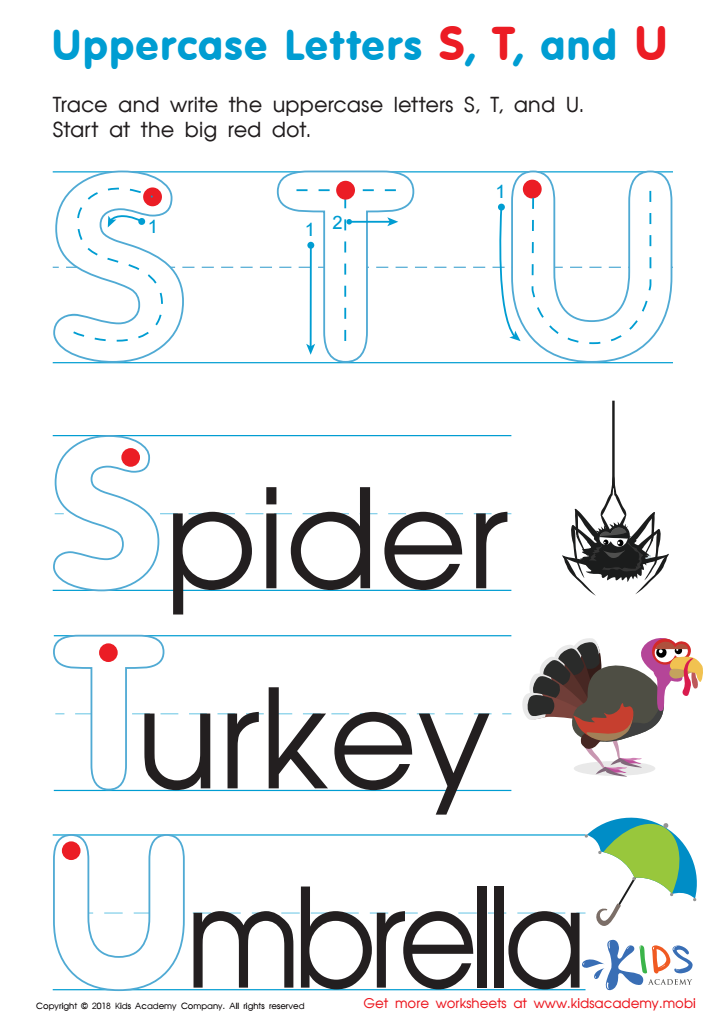
Uppercase Letters S, T, and U Worksheet
Help your kids learn to write upper-case letters with this fun tracing sheet. Start at the big red dot for each letter: S, T, and U. Show them the pictures and ask what letter each word starts with. Guide their hand and watch them learn!
 Assign to My Students
Uppercase Letters S, T, and U Worksheet
Worksheet
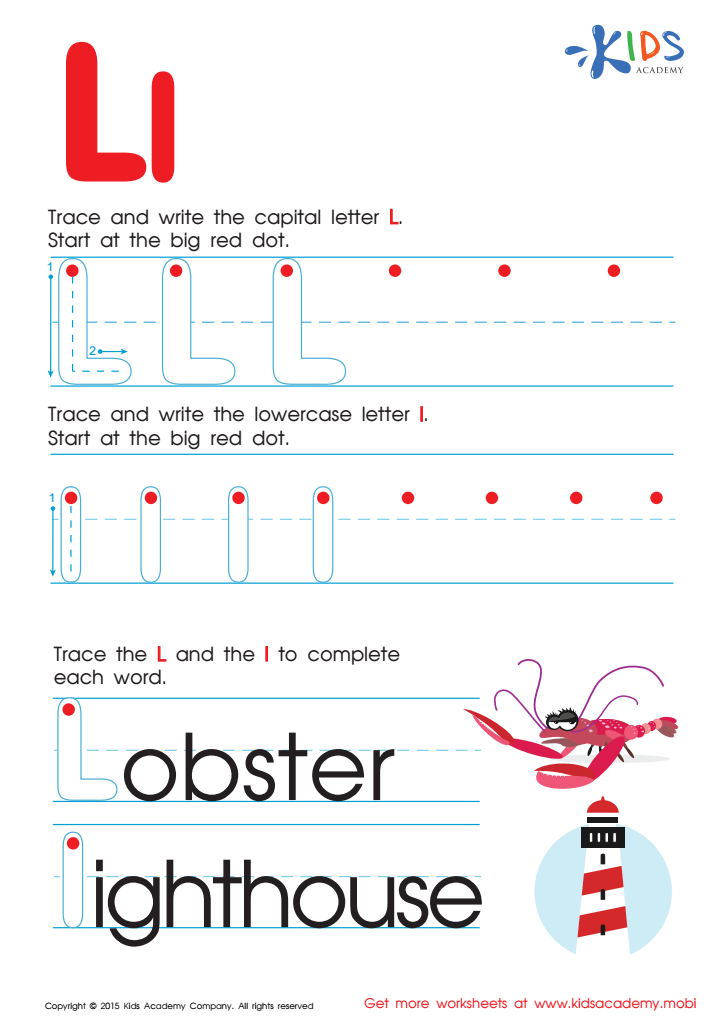
Letter L Tracing Page
Trace uppercase and lowercase letters to practice writing. Pay attention to the lowercase letters, like the "L", that are not as tall as an uppercase "I" or as short as a lowercase "i". Words like "lobster" and "lighthouse" are waiting to be completed. Enjoy!
Letter L Tracing Page
Worksheet

Letter F Tracing Page
Trace "F" with your pencil! Start at the red dot and draw lines — it's fun! Check it out — it looks great! Keep practicing to make it even better. Then, try completing words. Help out the broken fan and funny frog! Get free alphabet worksheets and activities for your kids. Come see our new tracing pages!
Letter F Tracing Page
Worksheet
Join Kids Academy for Free
Who is primarily going to use this learning content?








Alphabet learning and normal letter recognition are crucial for children aged 5-9, as this foundational skill sets the stage for literacy development. At this age, children are beginning to make connections between spoken and written language, enabling them to decode words and foster reading fluency. Mastering letter recognition paves the way for improved reading comprehension, vocabulary expansion, and ultimately, academic success.
Furthermore, recognizing letters equips children with the tools to communicate effectively, allowing for personal expression through writing. This skill also promotes confidence and independence, enhancing their eagerness to engage with texts and participate in classroom activities.
For parents and teachers, supporting alphabet learning is essential in creating a rich literacy environment. They can nurture a child’s love for reading by integrating fun activities, such as games and storytelling, which reinforce recognition skills. Additionally, kids who struggle with letter recognition risk falling behind, creating gaps in learning that may be challenging to bridge later on. By prioritizing alphabet learning, educators and parents ensure that children develop strong literacy skills, laying a solid foundation for lifelong learning, inquisitiveness, and effective communication. Ultimately, stimulating letter recognition fosters academic growth and prepares students for future success both inside and outside the classroom.








