Fine motor skills development Normal Letter Recognition Worksheets for Ages 5-9
3 filtered results
-
From - To
Enhance your child's fine motor skills while promoting letter recognition with our engaging worksheets designed for ages 5-9. Focusing on motor skill development, these age-appropriate activities offer a fun way for children to practice writing letters, tracing, and completing engaging tasks. Each worksheet is crafted to help strengthen hand-eye coordination and improve dexterity, setting a solid foundation for future learning. Perfect for homeschooling or supplementary practice, our fine motor skills development worksheets will keep your little learners excited and motivated. Explore our collection to support your child’s journey in building essential skills while having fun with letters!
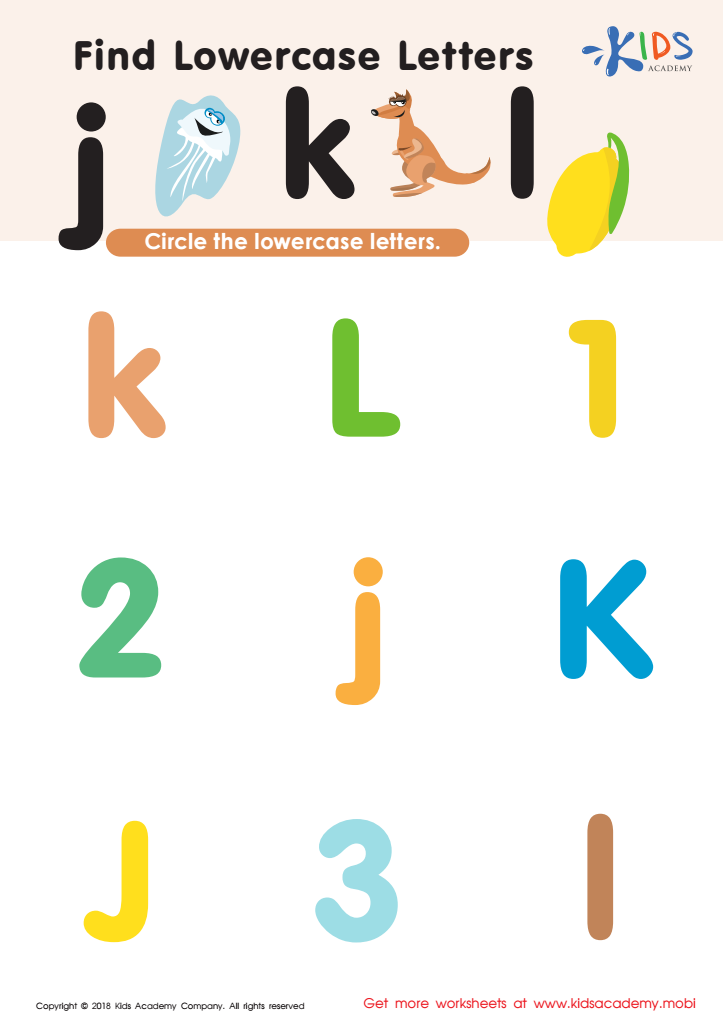
Find Lowercase Letters j k l Worksheet
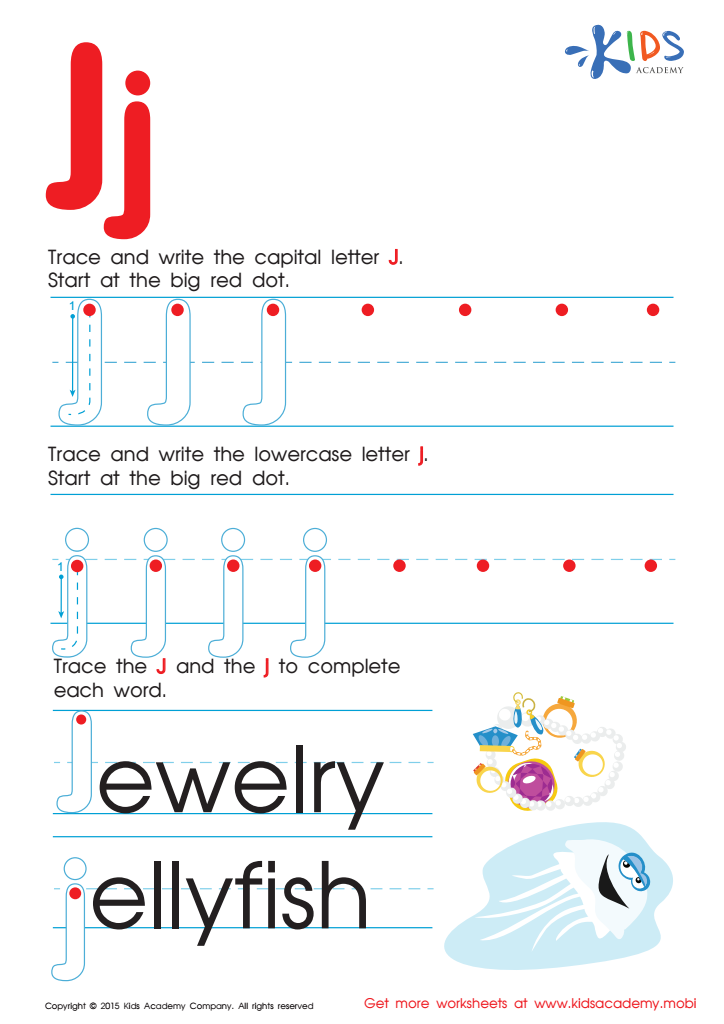
Letter J Tracing Page
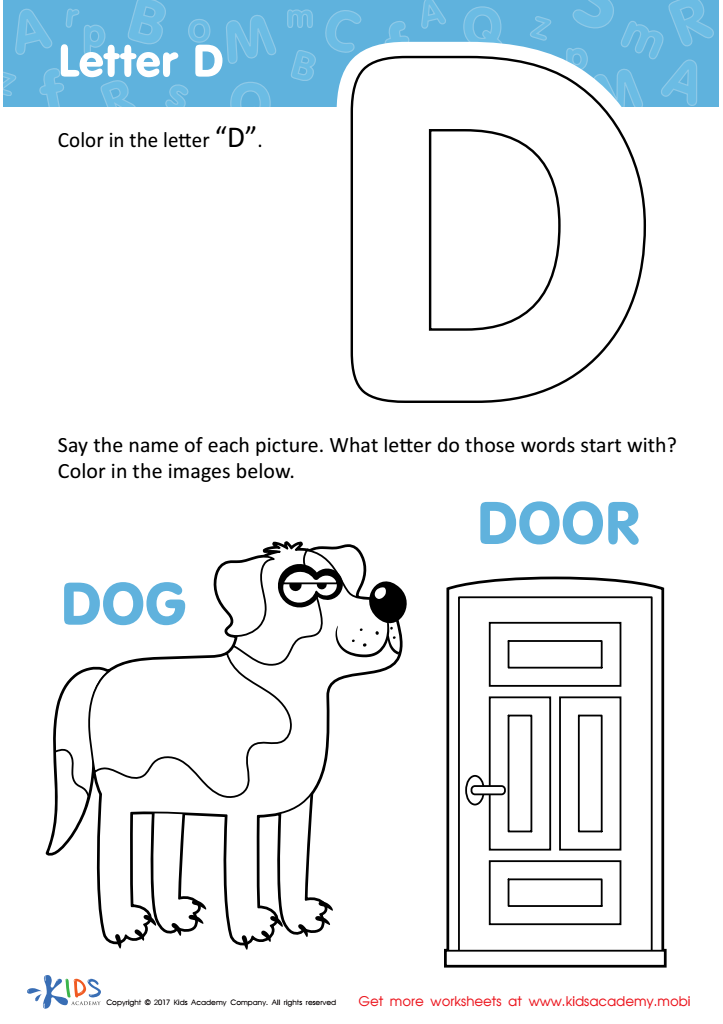
Letter D Coloring Sheet
 Assign to My Students








Fine motor skills and letter recognition are crucial developmental milestones for children aged 5-9, and understanding their importance is essential for parents and teachers alike. Fine motor skills involve the small muscles in the hands and fingers and are key to tasks such as writing, cutting, and manipulating small objects. Mastering these skills allows children to express themselves effectively and increases their independence in everyday activities.
Normal letter recognition, which includes recognizing, naming, and writing letters, is fundamental for literacy development. It lays the groundwork for reading and writing and helps children understand the relationship between sounds and letters. When children can identify letters, they are more likely to transition smoothly into more complex reading tasks.
Parents and teachers should care about these skills because they are interlinked; competent fine motor skills facilitate better handwriting and more effective reading practices. By fostering an environment that promotes fine motor skill activities, such as arts and crafts, puzzles, and writing, adults can enhance children’s cognitive development. This not only boosts academic performance but also builds confidence and social skills as children collaborate and share their creations. Supporting these skills during this formative age ensures children are well-prepared for future learning challenges.








