
Hand-eye Coordination Normal Letter Recognition Worksheets for Ages 5-9
7 filtered results
Difficulty Level
Grade
Age
-
From - To
Subject
Activity
Standards
Discover our engaging Hand-eye Coordination Normal Letter Recognition Worksheets designed specifically for children aged 5-9. These worksheets seamlessly integrate essential skills of letter recognition and hand-eye coordination, making learning enjoyable and effective. Each activity encourages kids to practice identifying letters while honing their fine motor skills through tracing and writing exercises. Perfect for home, classroom, or supplemental learning, our resources are tailored to foster early literacy and coordination in young learners. With vibrant designs and age-appropriate challenges, these worksheets will captivate your child's attention, ensuring they develop confidence in their reading abilities. Start your child's journey to literacy with our expertly crafted worksheets today!
Favorites
With answer key
Interactive
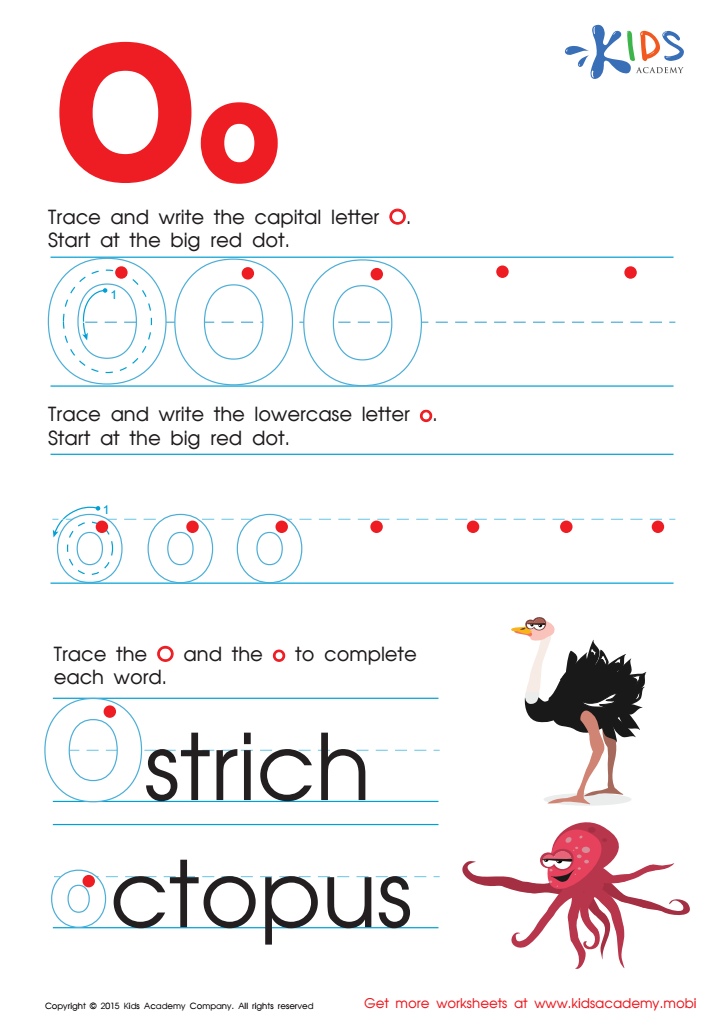
Letter O Tracing Page
Practice writing the letter "O" with our new worksheet. Trace and write the letter several times, starting at the red dot. First do the uppercase letter, then the lowercase. Use the pictures to complete the words "Ostrich" and "octopus". Kids Academy offers more fun alphabet worksheets.
 Assign to My Students
Letter O Tracing Page
Worksheet
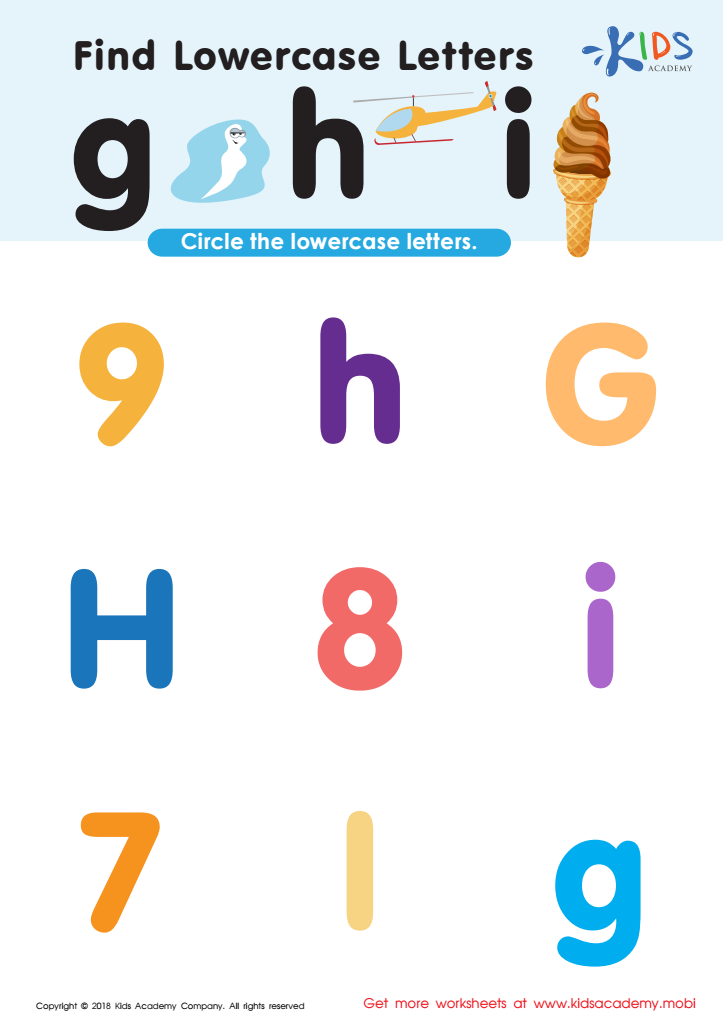
Find Lowercase Letters g h i Worksheet
Turn learning into a fun journey with your child! Use this free worksheet to find and circle the lowercase letters hidden amongst uppercase letters and numbers. Your child will understand what you're teaching them as they enjoy the search.
Find Lowercase Letters g h i Worksheet
Worksheet
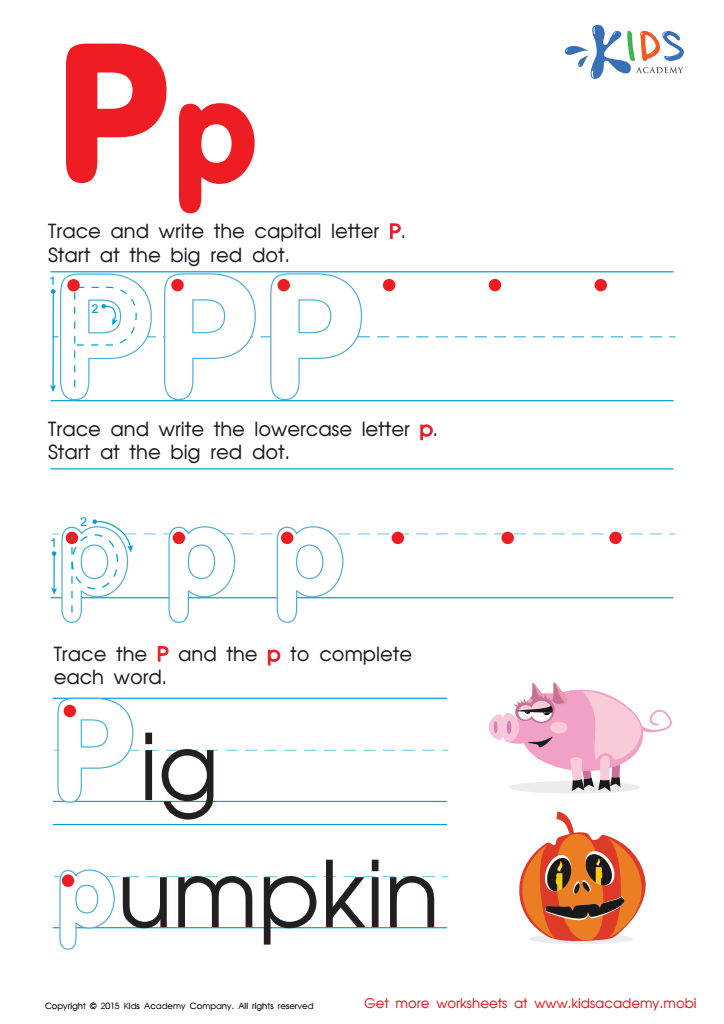
Letter P Tracing Page
Trace the lines from the red dot to learn to write "P"! Then practice this letter with the fun activities: complete the word "Pig" and "Pumpkin". Check out Kids Academy to get more free ABC worksheets.
Letter P Tracing Page
Worksheet

Letter H Tracing Page
Trace the letter "H", then practice writing its lowercase form. Finally, choose your favorite form of transport and ride away! Get our worksheets to make learning fun and easy.
Letter H Tracing Page
Worksheet
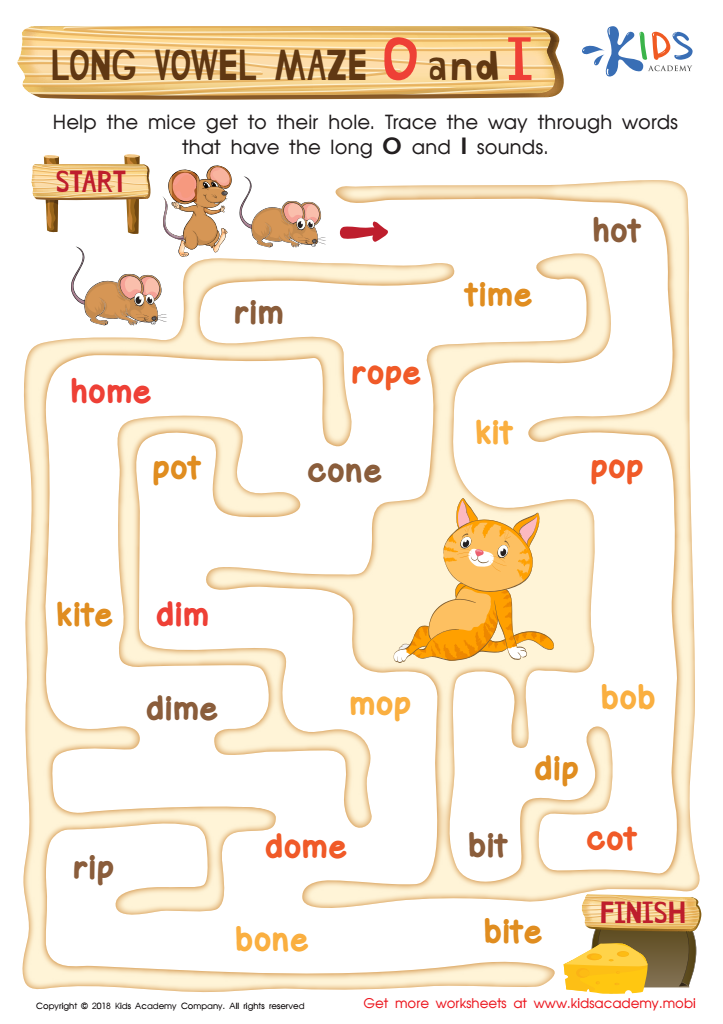
Long Vowel Maze /o/ and /i/ Worksheet
Help your new readers have fun and build their sight word vocabulary! Guide the mice to their prize cheese by having them trace the route on the worksheet, using words with the long o and long i sounds. But watch out for the kitty!
Long Vowel Maze /o/ and /i/ Worksheet
Worksheet
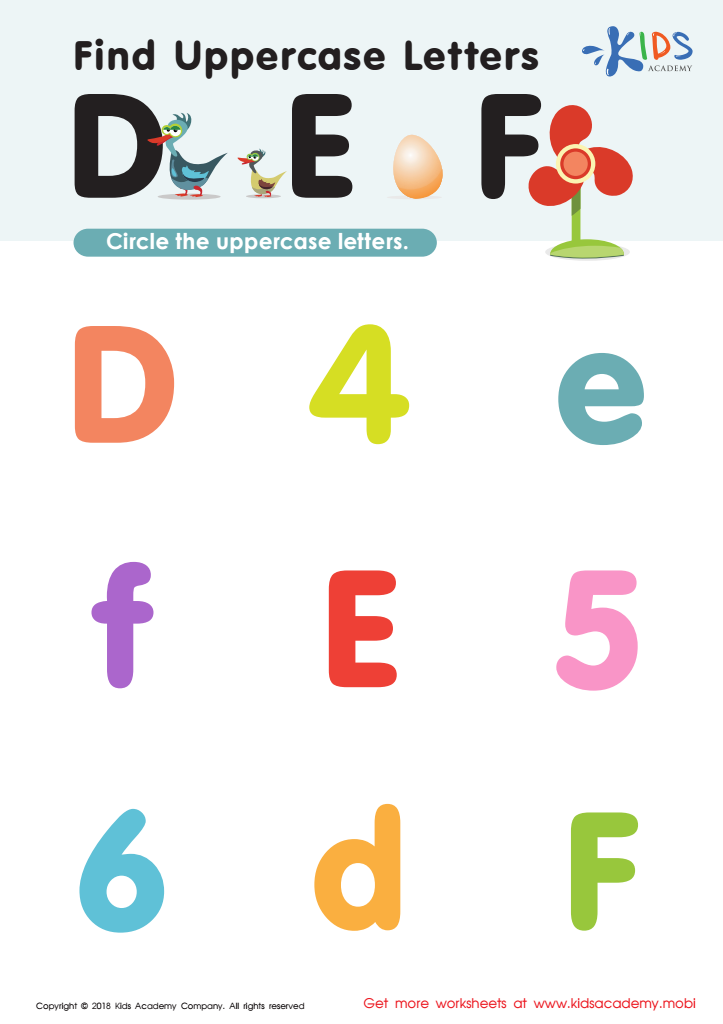
Find Uppercase Letters D, E, and F Worksheet
Follow the duckling and mom to find the capital letters D, E and F on this fun alphabet worksheet! Kids learn to read and recognize letters, while differentiating them from numbers. For extra challenge, don't let the numbers fool them. The pictures above remind them of each letter's sound. Have fun and get letter-savvy!
Find Uppercase Letters D, E, and F Worksheet
Worksheet

Letter D Tracing Page
Trace and write capital and lowercase letter "D" with our free printable alphabet worksheet! Be careful not to mix up "b" and "d" - just look at the ducks and write their first letter. The dolphin wants to join the fun too - do you like dolphins? Get more fun worksheets and activities at Kids Academy!
Letter D Tracing Page
Worksheet
Join Kids Academy for Free
Who is primarily going to use this learning content?








Hand-eye coordination and normal letter recognition are crucial skills for children aged 5-9 as they form the foundation for effective learning and cognitive development. Effective hand-eye coordination allows children to engage in activities such as writing, drawing, and sports, promoting fine motor skills necessary for later academic success. Good coordination enhances self-confidence and encourages a sense of achievement, fostering a positive attitude towards learning.
Normal letter recognition, on the other hand, is vital for literacy. Children who can recognize letters easily are better prepared to learn phonics, read, and write. This skill helps them decode words with confidence, paving the way for more advanced reading comprehension and communication abilities.
For parents and teachers, nurturing these skills can significantly impact a child's educational journey. Engaging children in activities like puzzles, arts and crafts, tracing, and reading can immensely improve hand-eye coordination and letter recognition. Collaboration between parents and teachers can ensure a consistent approach to skill development, making learning both enjoyable and effective. Recognizing the importance of these foundational skills helps adults to intentionally support children's growth, ultimately leading to better academic performance and lifelong learning habits.








