Lowercase letter writing Normal Letter Recognition Worksheets for Ages 5-9
3 filtered results
-
From - To
Welcome to our Lowercase Letter Writing and Normal Letter Recognition Worksheets, designed specifically for children ages 5-9! These engaging and interactive worksheets are perfect for establishing foundational literacy skills. Through fun activities, kids will practice identifying and writing lowercase letters while enhancing their letter recognition abilities. Each worksheet features colorful illustrations and clear guidelines, making learning enjoyable and effective. Ideal for both classroom and home use, our resources support fine motor development and instill confidence in young learners as they master the alphabet. Start your child's literacy journey now with our comprehensive and delightful worksheets that promote a love for learning!
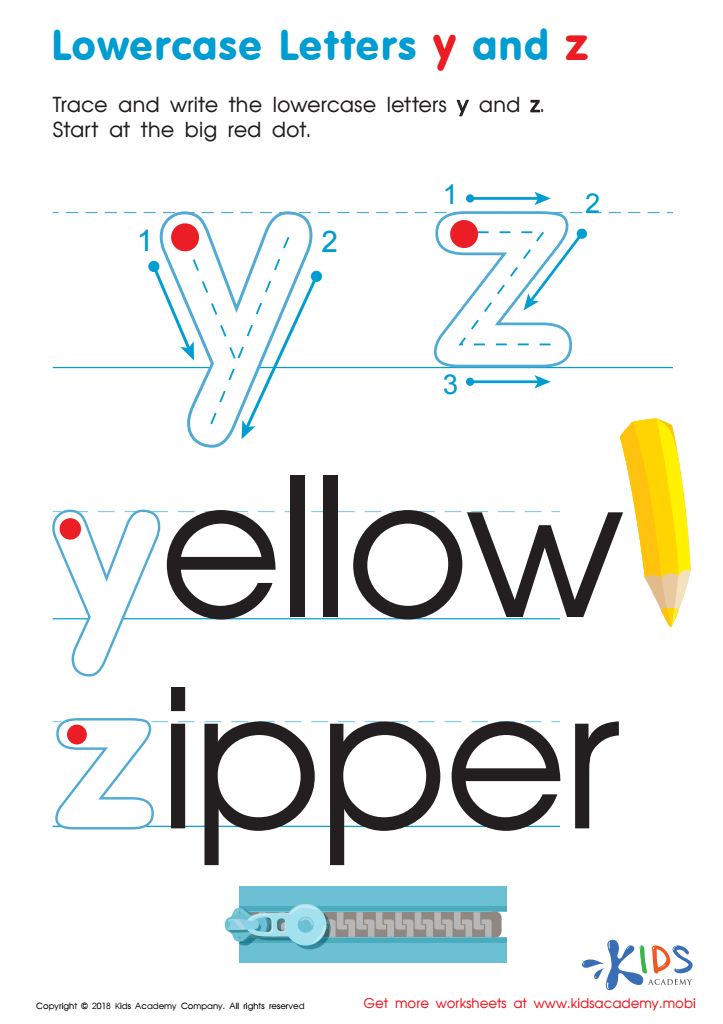
Lowercase Letters y z Worksheet
 Assign to My Students
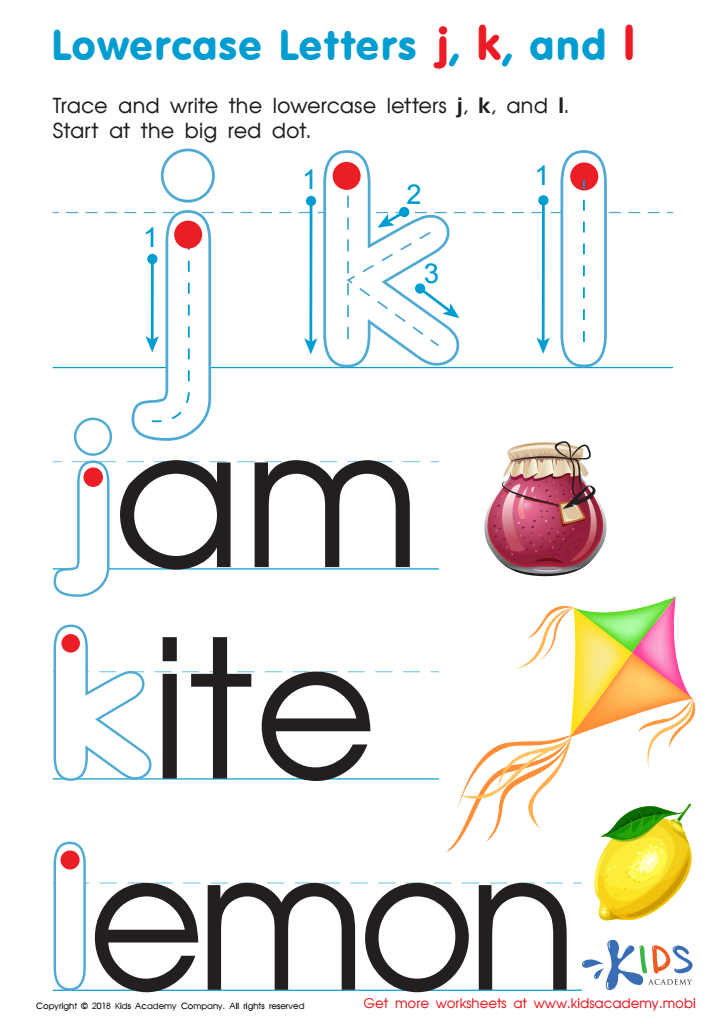
Lowercase Letters j k l Worksheet

Lowercase Letters m n o Worksheet








Parents and teachers should prioritize lowercase letter writing and normal letter recognition for children aged 5-9 because these skills are foundational for literacy development. Mastering lowercase letters is essential, as the majority of written communication in everyday life utilizes them. When children learn to write and recognize lowercase letters, they gain the ability to read and write effectively, thus enhancing their overall literacy skills.
Moreover, recognizing lowercase letters helps children develop phonemic awareness, enabling them to understand how sounds correspond to letters. This skill lays the groundwork for spelling and more complex reading strategies as they grow. Letters are the building blocks for words, and fluency in both identifying and writing them contributes to a child's confidence and enjoyment of reading.
In addition, proficiency in lowercase letter writing supports fine motor skills, which are critical for hand-eye coordination and overall physical development. Regular practice helps children develop a comfortable, efficient grip on writing instruments and encourage the organization and structure of their writing.
Ultimately, investing time in lowercase letter recognition and writing during these formative years equips children with essential tools for academic success and fosters a lifelong love for reading and writing.








