Motor skills development Normal Letter Recognition Worksheets for Ages 5-9
3 filtered results
-
From - To
Enhance your child's motor skills and letter recognition with our engaging worksheets designed for ages 5-9. Our "Motor Skills Development Normal Letter Recognition Worksheets" offer a fun and interactive approach to learning the alphabet. Each worksheet is crafted to improve fine motor skills while helping kids recognize and identify letters. Activities include coloring, tracing, and matching letters, making learning enjoyable and effective. Ideal for preschool and early primary education settings, our worksheets support diverse learning styles and promote confidence in young learners. Explore our collection and watch your child's skills blossom as they master letter recognition in a playful setting.

Letter H Tracing Page
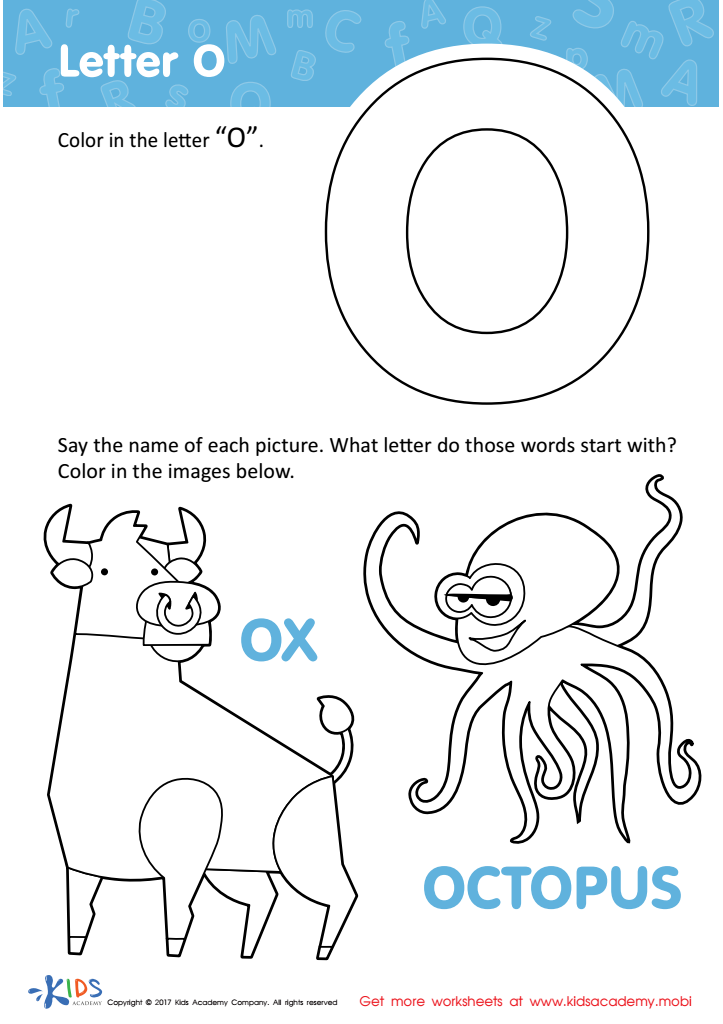
Letter O Coloring Sheet
 Assign to My Students
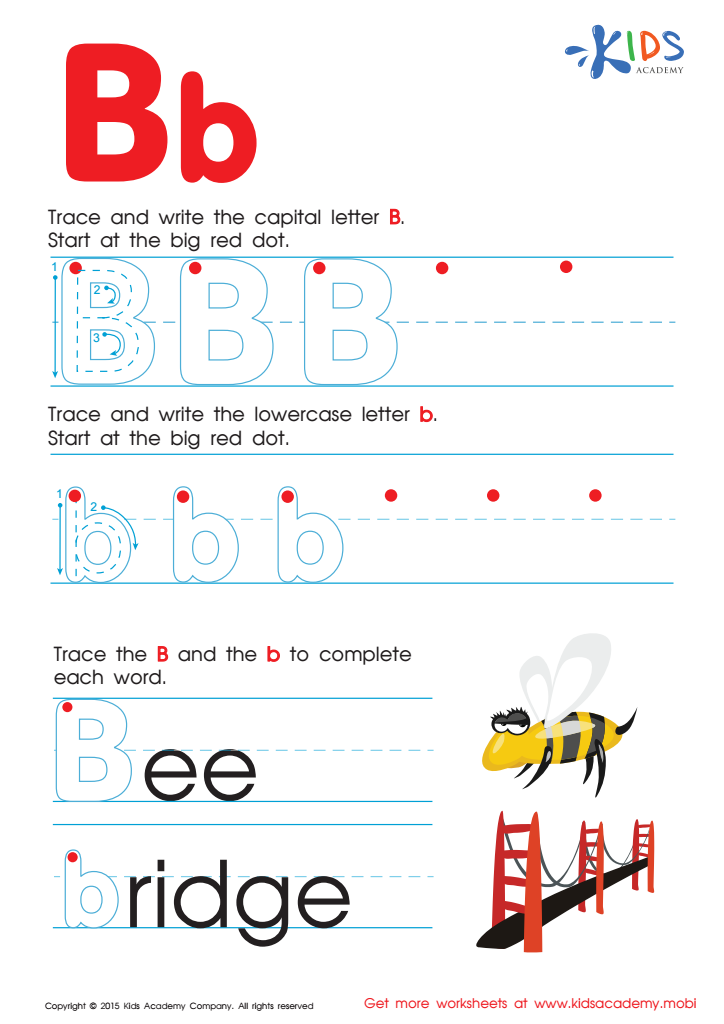
Letter B Tracing Page








Motor skills development and letter recognition are crucial components of early childhood education for children ages 5 to 9. As children begin their educational journey, they rely heavily on both fine and gross motor skills to successfully access information and engage with learning materials. Fine motor skills, which include tasks like grasping pencils or using scissors, directly affect a child’s ability to write letters, draw, and complete other academic tasks. Furthermore, mastery of letter recognition is integral for reading development, vocabulary building, and overall literacy skills.
Parents and teachers should prioritize these areas; strong motor skills enable children to express themselves creatively and academically, ultimately setting a solid foundation for lifelong learning. Additionally, as children recognize letters, they build confidence in their reading abilities, which enhances their motivation to participate in school activities and discussions.
Early intervention is key; identifying and supporting children who struggle with these skills can prevent future learning challenges. When parents and teachers work together to foster these essential skills, they contribute to the child's overall cognitive and social development. In summary, supporting motor skills and letter recognition from ages 5 to 9 lays the foundation for successful learning and academic achievement.








