Phonics recognition Normal Letter Sounds Worksheets for Ages 5-9
5 filtered results
-
From - To
Enhance your child's reading skills with our Phonics Recognition Normal Letter Sounds Worksheets, specially designed for ages 5-9! These engaging worksheets focus on helping young learners identify and pronounce letter sounds effectively, laying a strong foundation for reading success. With fun activities and colorful illustrations, children will enjoy interactive learning while mastering phonics recognition. Each worksheet targets essential phonetic principles, ensuring your child gains confidence in reading and spelling. Ideal for both classroom settings and home practice, our worksheets provide a vital resource for early educators and parents aiming to support literacy development. Start your learning adventure today!
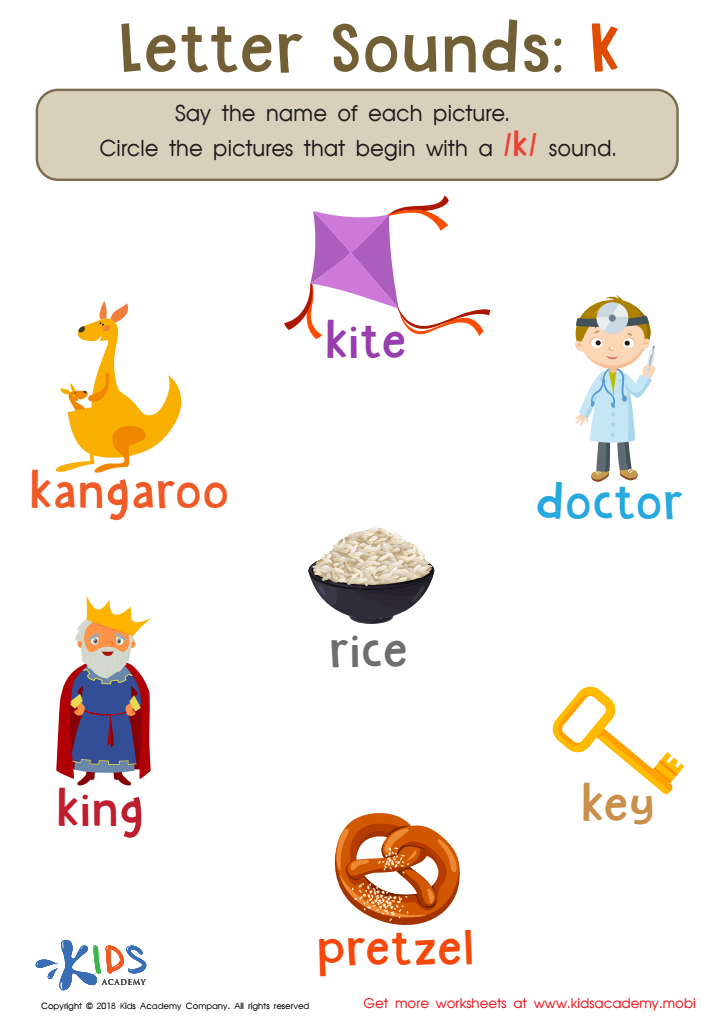
Letter K Sounds Worksheet
 Assign to My Students
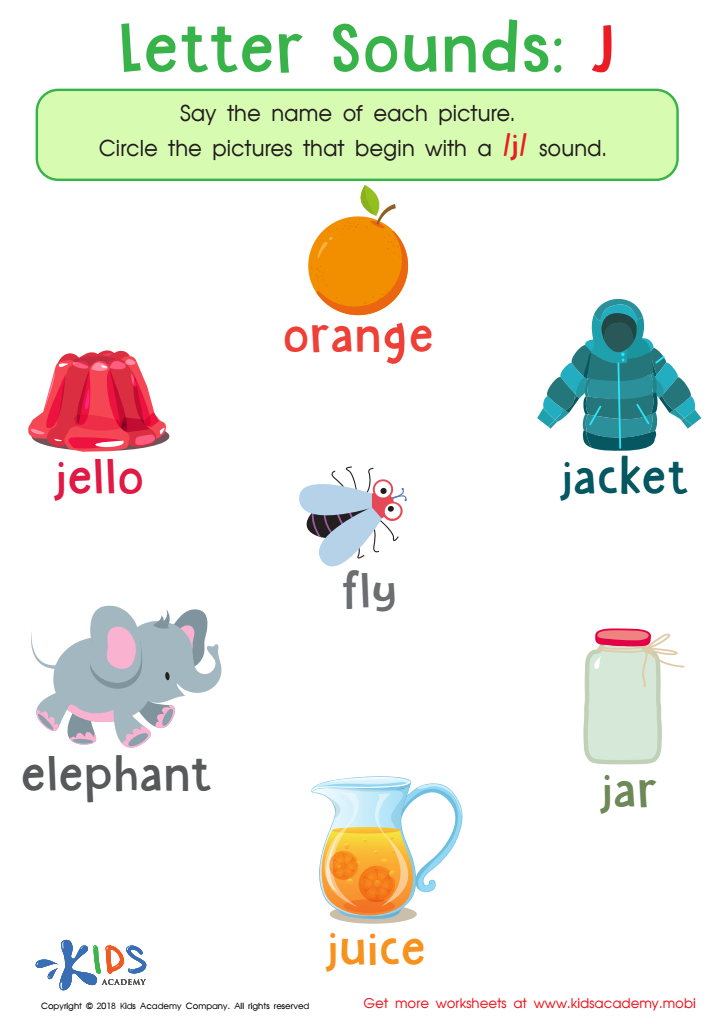
Letter Sounds: J Printable Worksheet
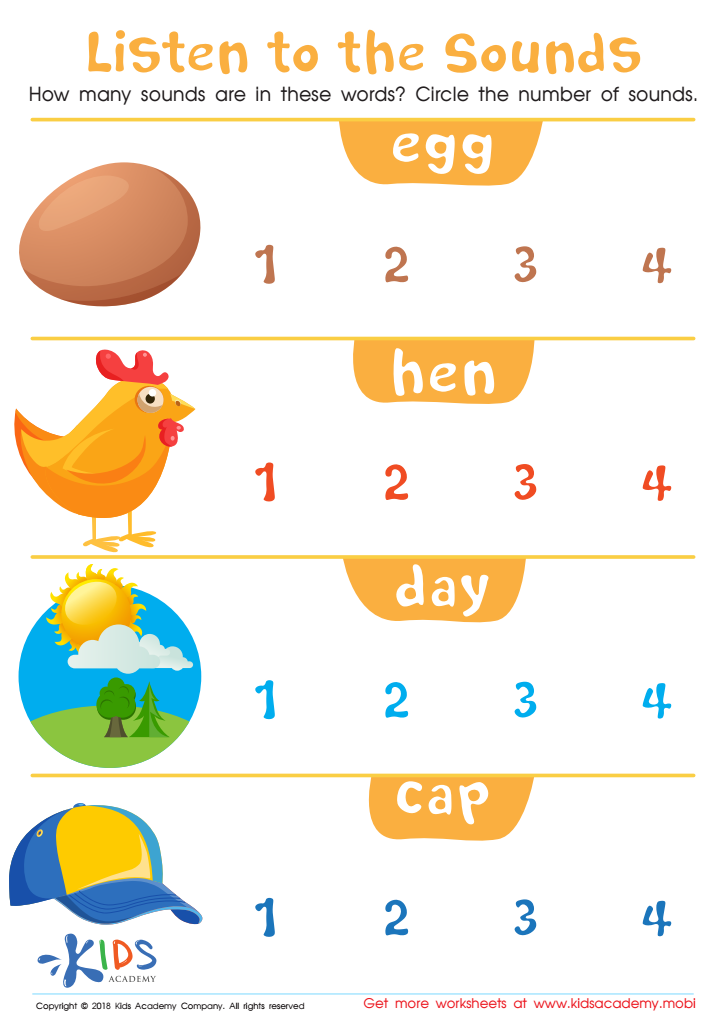
Listen to the Sounds Worksheet
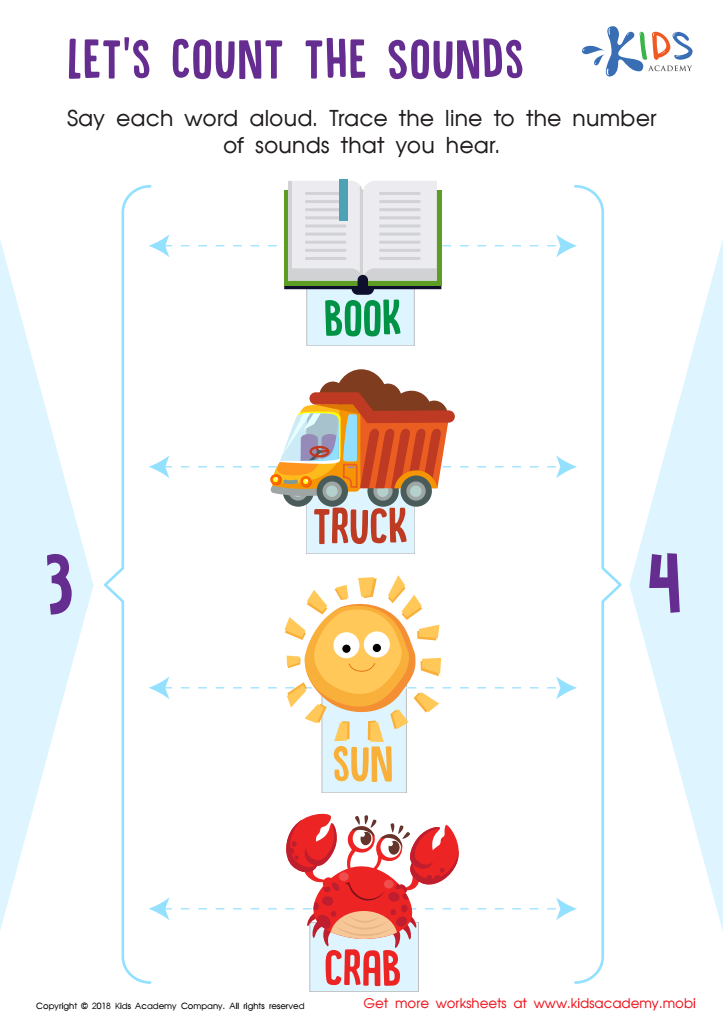
Let's Count the Sounds Worksheet
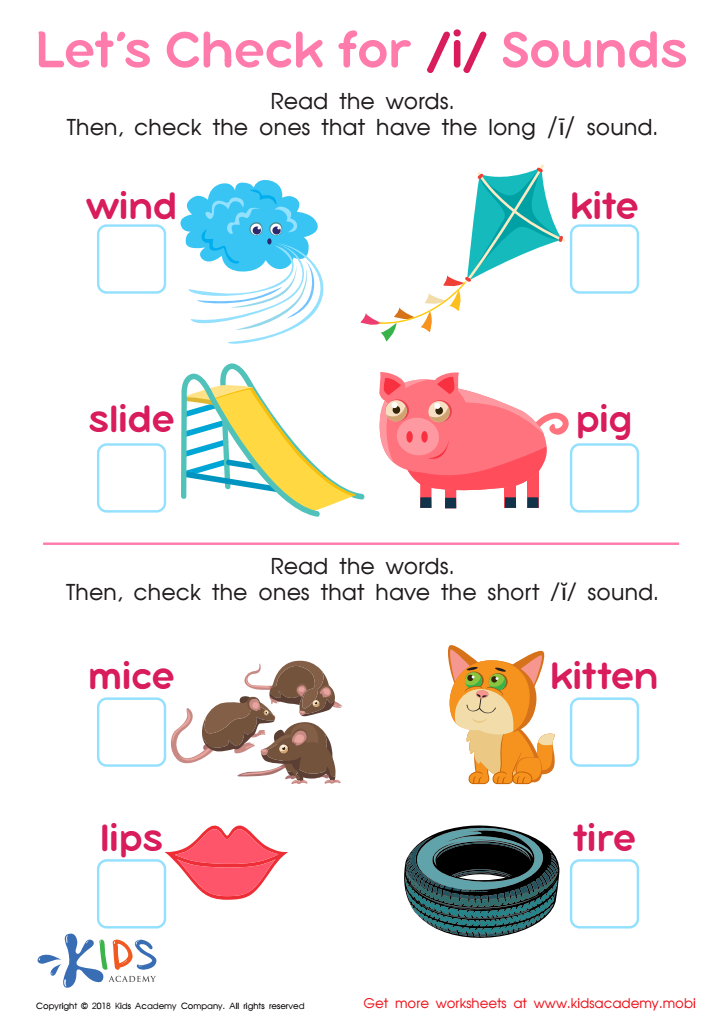
Let's Check for «i» Sounds Worksheet








Phonics recognition of normal letter sounds is crucial for children ages 5-9 as it forms the foundation for successful reading and writing. Understanding letter sounds empowers children to decode words, enabling them to read independently and comprehend texts more effectively. This skill is essential not only for academic achievement but also for boosting a child's confidence and engagement in learning.
Moreover, phonics instruction is correlated with better literacy outcomes. Research shows that children who grasp letter sounds tend to score higher on reading assessments and can transition from learning to read to reading to learn more smoothly. For teachers, incorporating phonics into the curriculum is vital for addressing diverse learning needs and helping all students progress at their own pace, providing targeted support to those who struggle.
Parents play a significant role too; their involvement in reinforcing phonics at home fosters a supportive learning environment. Practicing letter sounds during everyday activities, such as reading together or playing letter games, strengthens a child's phonemic awareness and understanding. Both parents and teachers should prioritize phonics recognition, as it lays the groundwork for lifelong literacy skills, promoting not just academic success but a love for reading that can last a lifetime.






