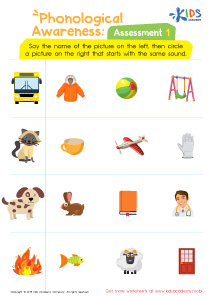
Vocabulary expansion Normal Rhyming Worksheets for Ages 5-9
3 filtered results
-
From - To
Enhance your child's vocabulary with our engaging "Normal Rhyming Worksheets" designed for ages 5-9! These worksheets provide a fun and interactive way for young learners to explore new words through the power of rhymes. Each activity encourages creativity and critical thinking, helping children connect sounds and meanings while boosting their language skills. Perfect for classroom or home learning, our worksheets cater to early learners, making vocabulary expansion enjoyable and effective. Watch your child's confidence grow as they master rhyming words and reinforce their understanding of language fundamentals. Get ready for an exciting journey of words and rhymes!
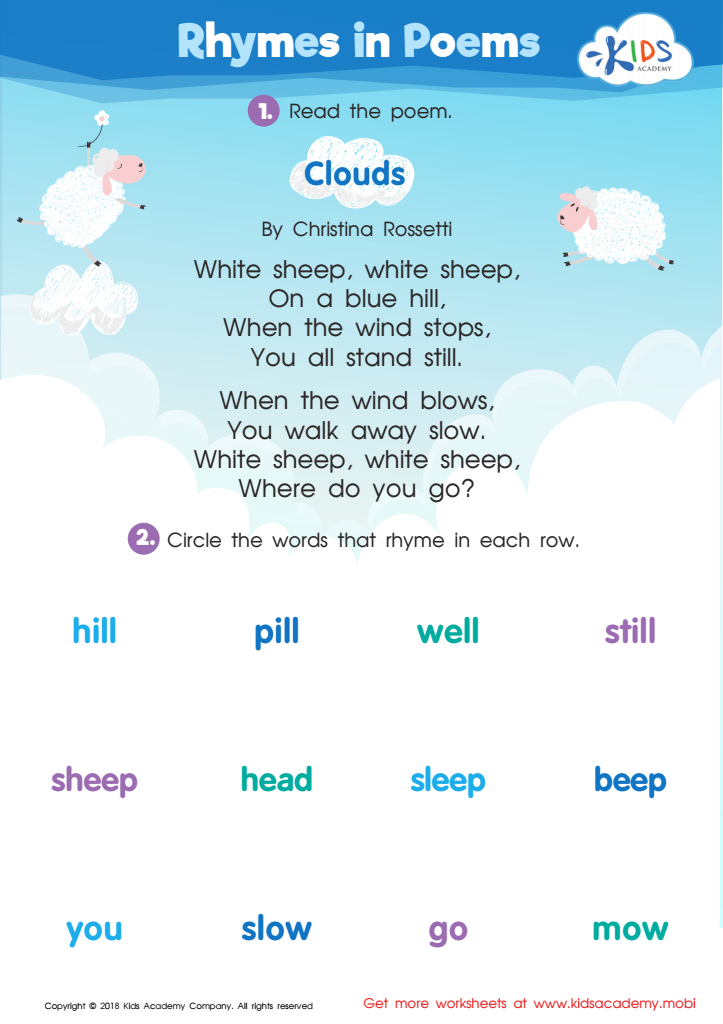
Rhymes in Poems Worksheet
 Assign to My Students
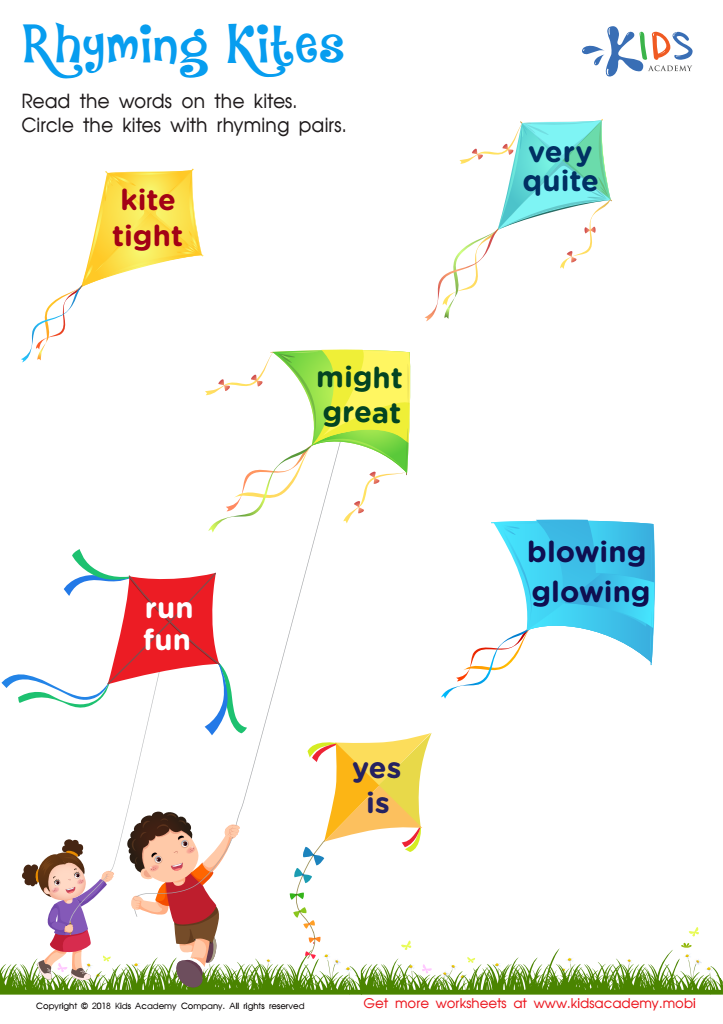
Rhyming Kites Worksheet
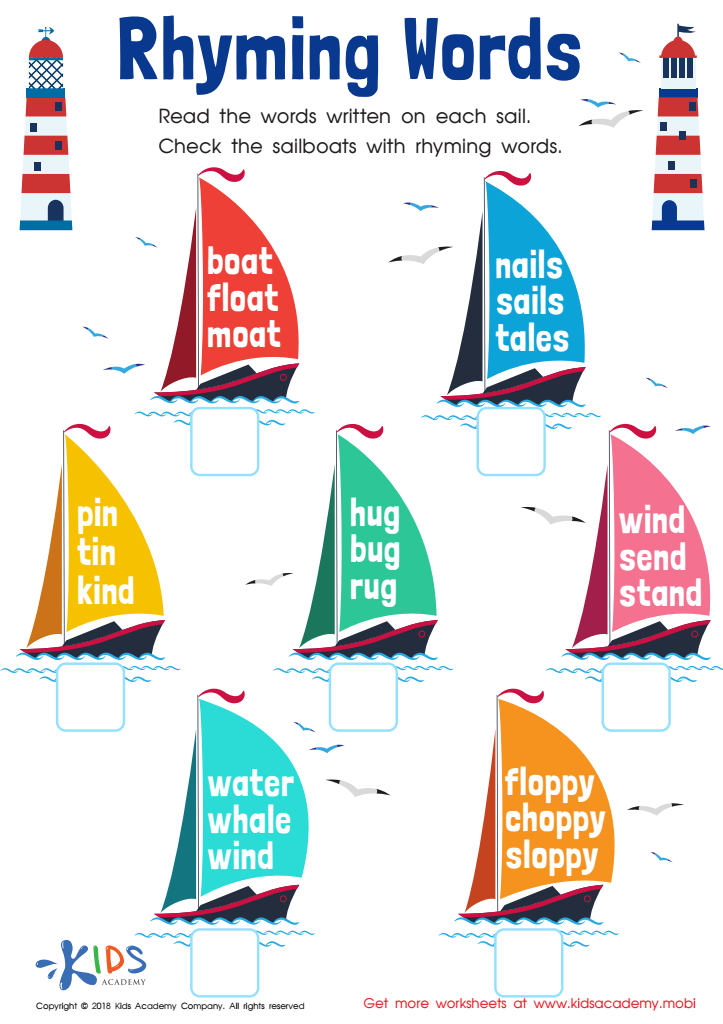
Rhyming Words Worksheet








Vocabulary expansion through normal rhyming is crucial for children aged 5-9 for several reasons. Firstly, rhyming activities enhance phonemic awareness, which is the ability to hear, identify, and manipulate sounds in spoken words. This foundational skill is vital for effective reading and writing, as it helps children decode words and understand the structure of language.
Secondly, engaging with rhymes fosters cognitive development and memory skills. The repetitive and melodic nature of rhymes makes it easier for children to remember new vocabulary, expanding their language skills more effectively. A larger vocabulary not only supports reading comprehension but also improves communication abilities, allowing children to express their thoughts and ideas clearly and creatively.
Additionally, rhyming enhances social skills and emotional bonding when done in group settings, such as classrooms or family reading sessions. Shared experiences around rhymes can cultivate a love for reading and storytelling, creating lifelong learners.
Overall, prioritizing vocabulary expansion through normal rhyming can substantially contribute to a child's literacy development, critical thinking, and emotional intelligence, making it an essential focus for parents and educators alike.