
Fine motor skills development Normal Upper & Lowercase Letters Worksheets for Ages 5-9
3 filtered results
Difficulty Level
Grade
Age
-
From - To
Subject
Activity
Standards
Explore our "Fine Motor Skills Development Normal Upper & Lowercase Letters Worksheets" designed for children ages 5-9. These engaging printables are perfect for young learners to master alphabet tracing while boosting their fine motor skills. Each worksheet offers captivating activities that reinforce letter recognition, handwriting fluency, and hand-eye coordination. Lovingly crafted to fit current educational standards, they provide fun-filled and educational practice for your little ones. Ideal for home or school use, our worksheets support your child’s academic readiness and confidence in writing. Visit Kids Academy today to download and start learning through play!
Favorites
With answer key
Interactive
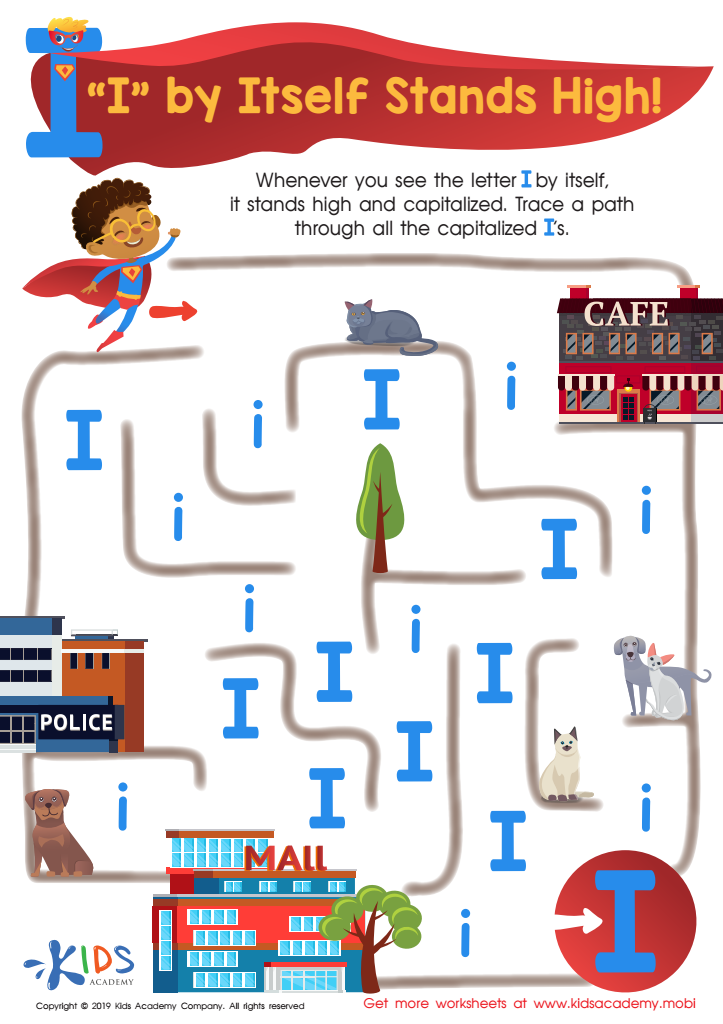
I Stands High Worksheet
Kids can use their imagination to help a superhero find the uppercase 'I's on the 'I By Itself Stands High' worksheet. This helps children learn capitalization, and they can join the superhero in flying over a city of cats, dogs and buildings to locate the needed letters.
 Assign to My Students
I Stands High Worksheet
Worksheet









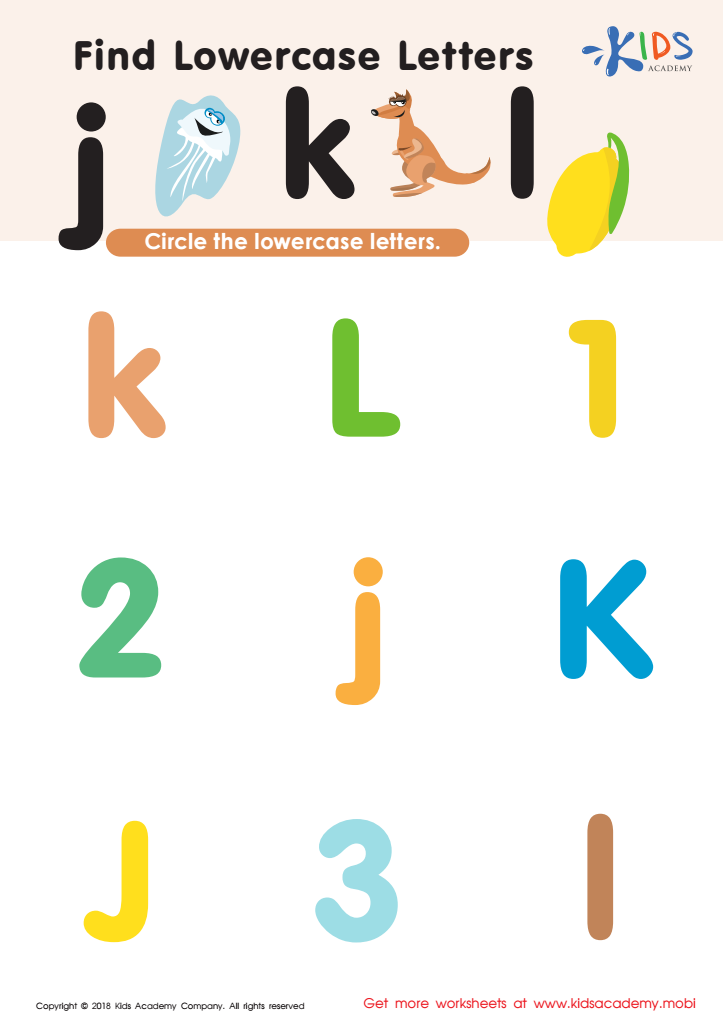
Find Lowercase Letters j k l Worksheet
Help your child's brain develop and have fun at the same time! Find and circle the lowercase letters jkl in the worksheet full of uppercase letters and numbers. Colorful drawings and bright colors make this an engaging learning activity.
Find Lowercase Letters j k l Worksheet
Worksheet
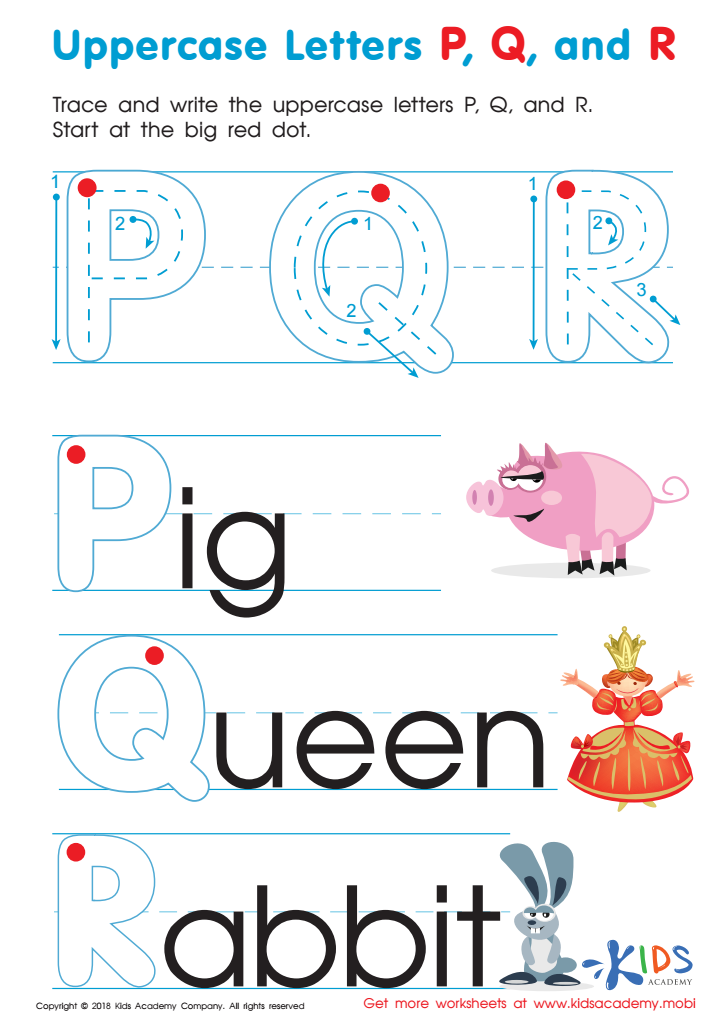
Uppercase Letters P, Q, and R Worksheet
Cute images of a pig, queen and rabbit make it fun to learn letter sounds. Follow the arrows to learn the strokes, then trace each letter from the big red dot. Perfect for kids to learn how to read and write P, Q, and R!
Uppercase Letters P, Q, and R Worksheet
Worksheet
Join Kids Academy for Free
Who is primarily going to use this learning content?






Fine motor skills development is crucial for children aged 5-9 because it lays the foundation for many essential activities of daily living and academic tasks. These skills involve the coordination of small muscles, especially in the hands and fingers, which children use in writing, cutting, buttoning clothes, and manipulating objects. By honing fine motor skills, children gain greater control and precision with their hand movements, leading to clearer and more legible handwriting. This is particularly important as they begin school and are required to write normal upper and lowercase letters.
A strong foundation in fine motor skills also supports cognitive development. Activities that promote fine motor skills, such as drawing, playing with building blocks, or assembling puzzles, require planning, problem-solving, and concentration, which enhance overall learning. Additionally, successful participation in these activities can boost a child's confidence and self-esteem, positively impacting their attitudes towards school and learning in general.
Parents and teachers play a vital role in providing opportunities and encouragement for children to practice these skills. They can introduce a variety of engaging tools and activities like modeling clay, coloring books, and age-appropriate crafts. Early and consistent nurturing of fine motor skills can lead to improved academic performance, smoother daily routines, and a higher level of independence and competence as children grow.







