Lowercase letter writing Normal Upper & Lowercase Letters Worksheets for Ages 5-9
3 filtered results
-
From - To
Explore our engaging Lowercase Letter Writing Worksheets designed for children ages 5-9! Perfect for helping young learners master the nuances of handwriting, these resources emphasize proper letter formation and differentiation between uppercase and lowercase letters. Each worksheet is crafted to make learning fun, with colorful illustrations and interactive activities that encourage letter recognition and writing practice. Ideal for both home and classroom use, our worksheets promote fine motor skills and reinforce foundational literacy skills. Whether your child is just starting or needs a little extra practice, our captivating exercises will boost their confidence and help them become proficient writers in no time!
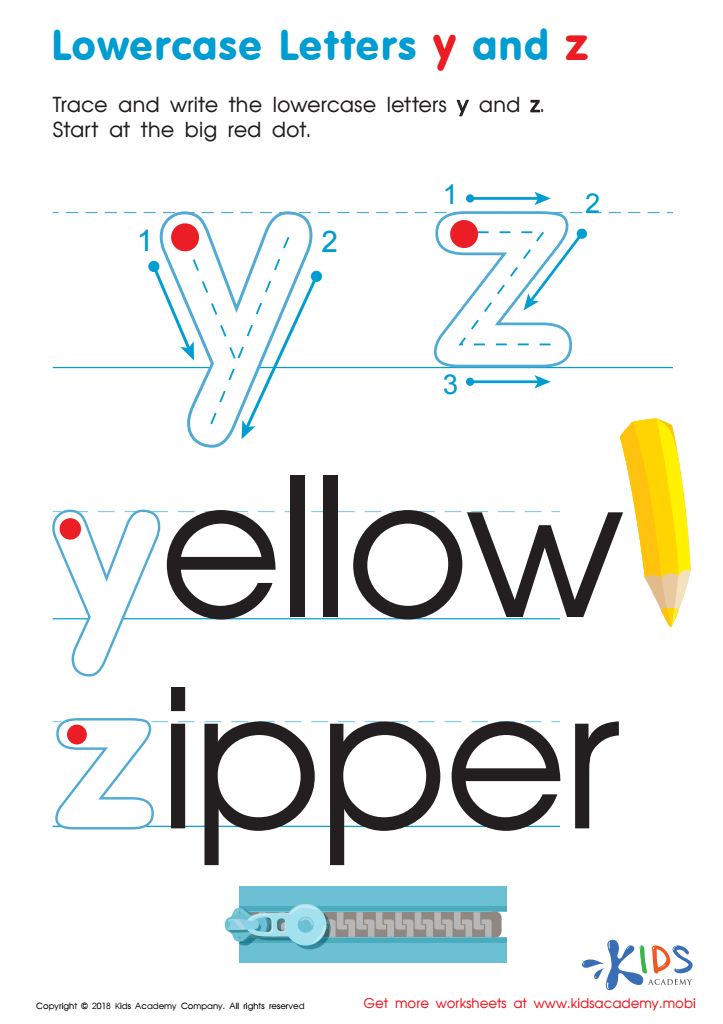
Lowercase Letters y z Worksheet
 Assign to My Students

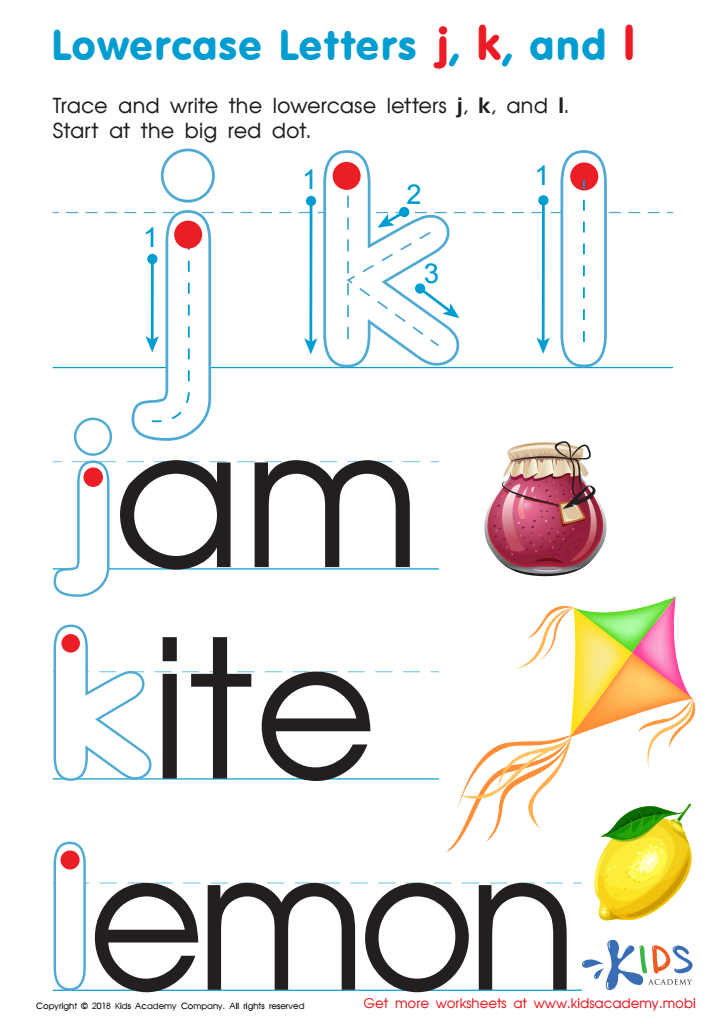
Lowercase Letters j k l Worksheet
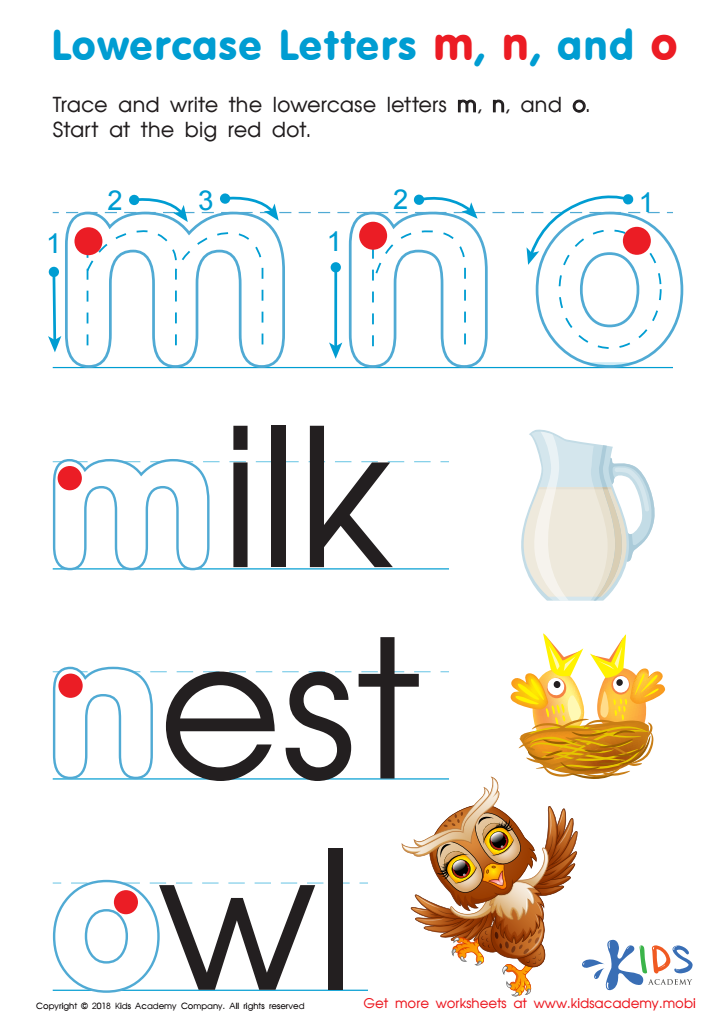
Lowercase Letters m n o Worksheet






Lowercase letter writing is a crucial foundational skill for children aged 5-9, as it significantly contributes to their overall literacy development. Parents and teachers should care about this phase of learning because mastery of lowercase letters enhances children's ability to read and write effectively. In everyday language, most words are written in lowercase, making it essential for children to recognize and produce these letters fluently.
Additionally, practicing lowercase writing helps develop fine motor skills, coordination, and confidence in young learners. By engaging in letter writing activities, children improve their handwriting, leading to better communication and self-expression. The ability to write clearly is not only important for academic success but also for fostering creativity and personal thought.
Moreover, understanding the difference between uppercase and lowercase letters aids in comprehension and establishes a foundation for grammar and punctuation. Between ages 5-9, as children transition from pre-writing to actual writing, parents and teachers can support this journey with targeted activities and resources. Encouraging lowercase letter writing nurtures literacy skills, boosts self-esteem, and prepares children for future educational challenges. Ultimately, investing in this area positively impacts a child's overall academic trajectory and lifelong learning journey.







