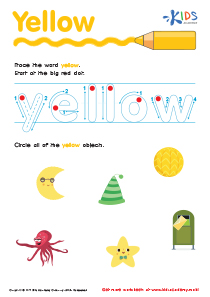
Motor skills development Normal English for Beginners Worksheets for Ages 5-9
3 filtered results
-
From - To
Enhance your child's motor skills with our "Normal English for Beginners Worksheets" designed for ages 5-9. These expertly crafted worksheets focus on improving both fine and gross motor skills through engaging English language exercises. Perfect for ESL learners, these printable resources combine fun activities with essential developmental practices. Help your child improve their handwriting, coordination, and dexterity while building a strong foundation in English. Our approachable, easy-to-understand exercises ensure that young learners remain motivated and confident. Explore our collection today and support your child's journey towards mastering motor skills and English simultaneously.
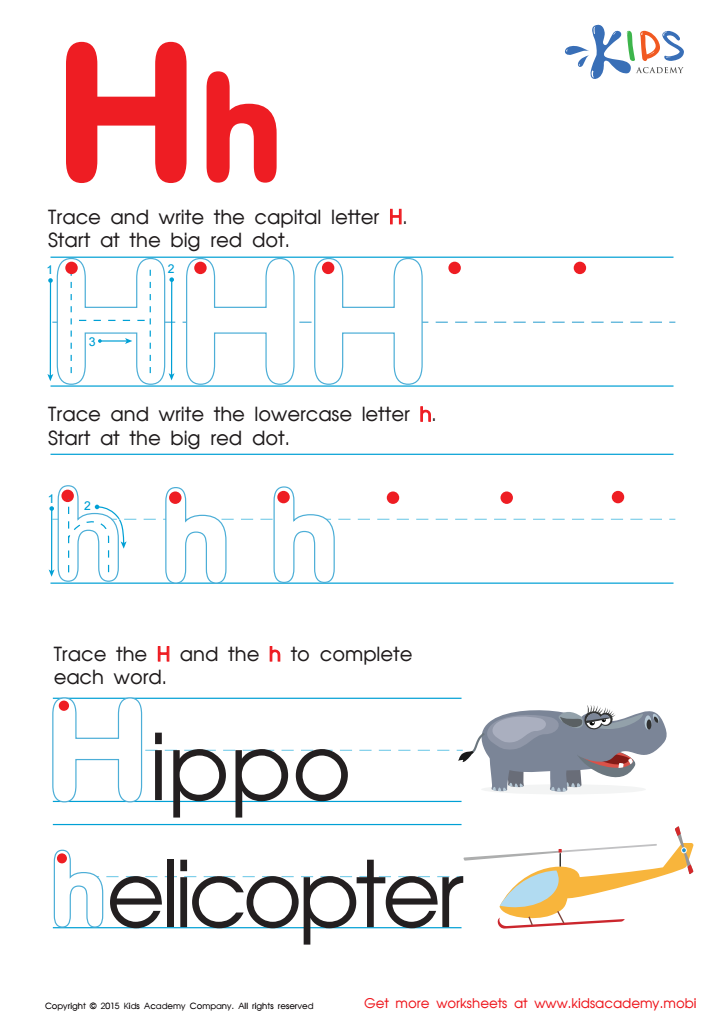
Letter H Tracing Page
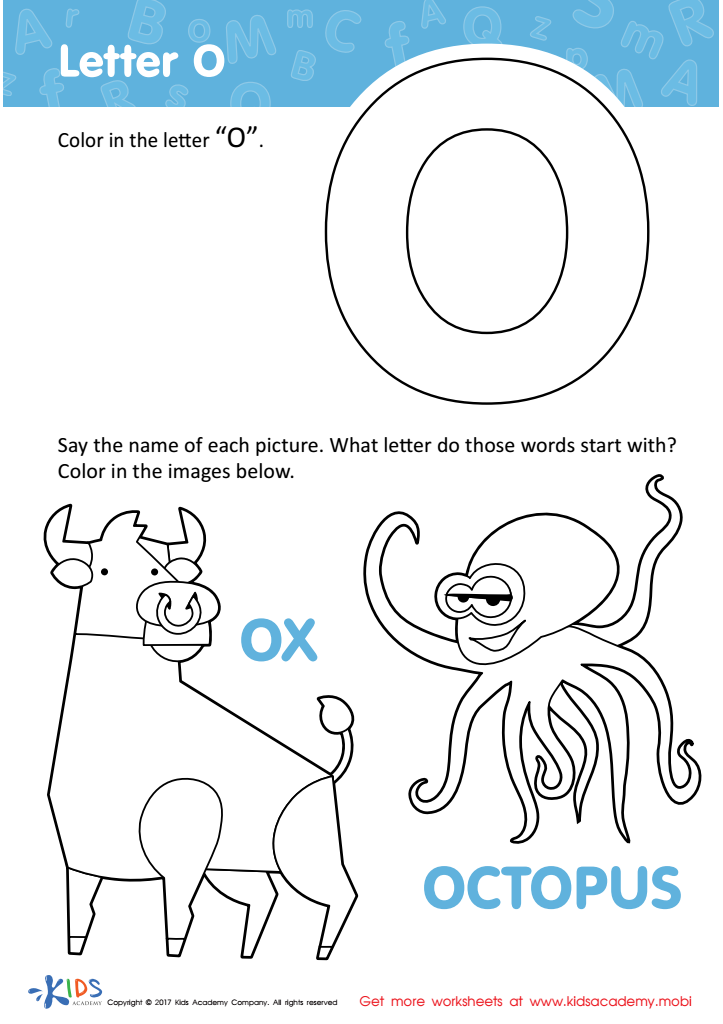
Letter O Coloring Sheet
 Assign to My Students
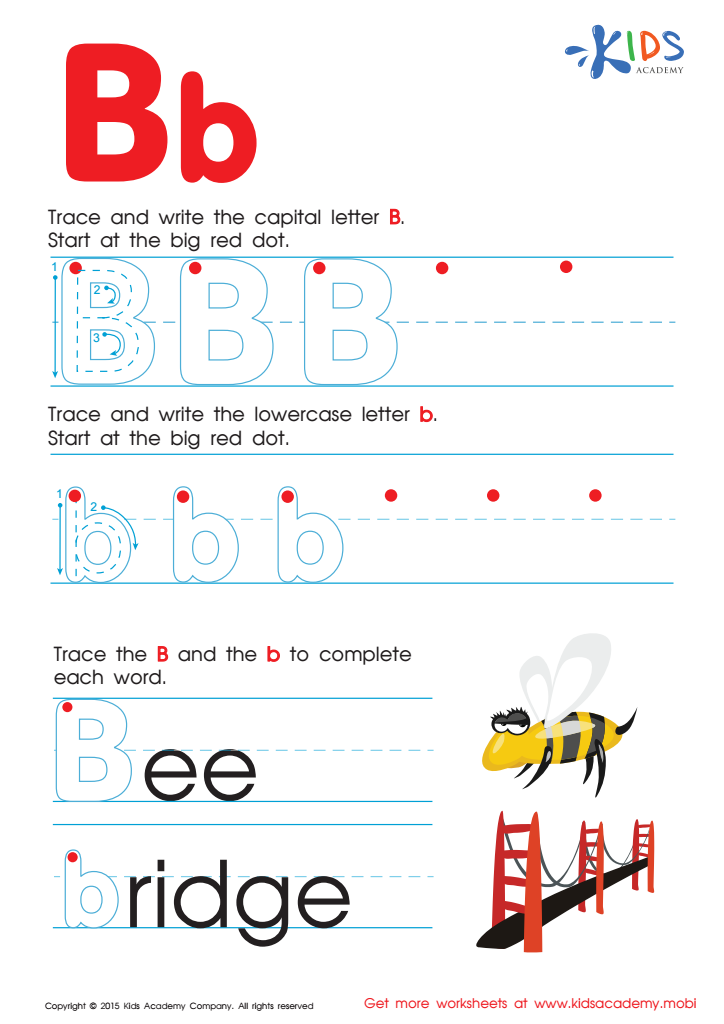
Letter B Tracing Page




Motor skills development is crucial for young children between the ages of 5 and 9 for many reasons. First, it helps them to gain better control over their bodies. This includes fine motor skills, like holding a pencil or using scissors, and gross motor skills, like running or jumping. When children develop these skills, they can participate more in school and play activities, making learning more fun and engaging.
Second, good motor skills are closely linked to a child's overall health. Activities that build motor skills often require physical exercise, which helps to keep kids active and fit. Regular physical activity also helps improve their mood and energy levels.
Lastly, having strong motor skills boosts a child’s confidence. When kids can do things like tie their shoes or ride a bike, they feel proud and capable. This sense of achievement supports their emotional and social development. They become more willing to try new things and develop better social skills while playing with friends.
In summary, focusing on motor skills development helps kids in many ways: it improves their participation in learning and playing, keeps them healthy, and boosts their confidence. That’s why parents and teachers should prioritize motor skill activities.