Moral lesson understanding Normal Building Vocabulary Worksheets for Ages 5-9
3 filtered results
-
From - To
Develop your child's understanding of moral lessons while enhancing vocabulary skills with our engaging worksheets designed for ages 5-9. These resources focus on key moral themes, encouraging young learners to evaluate right from wrong and understand ethical concepts. Each worksheet features captivating illustrations and age-appropriate language, making learning both fun and interactive. Through activities that promote critical thinking and discussion, students will relate moral lessons to everyday situations. Perfect for both classroom use and at-home learning, our worksheets will help children not only build their vocabulary but also grow into empathetic and thoughtful individuals. Explore our collection today!
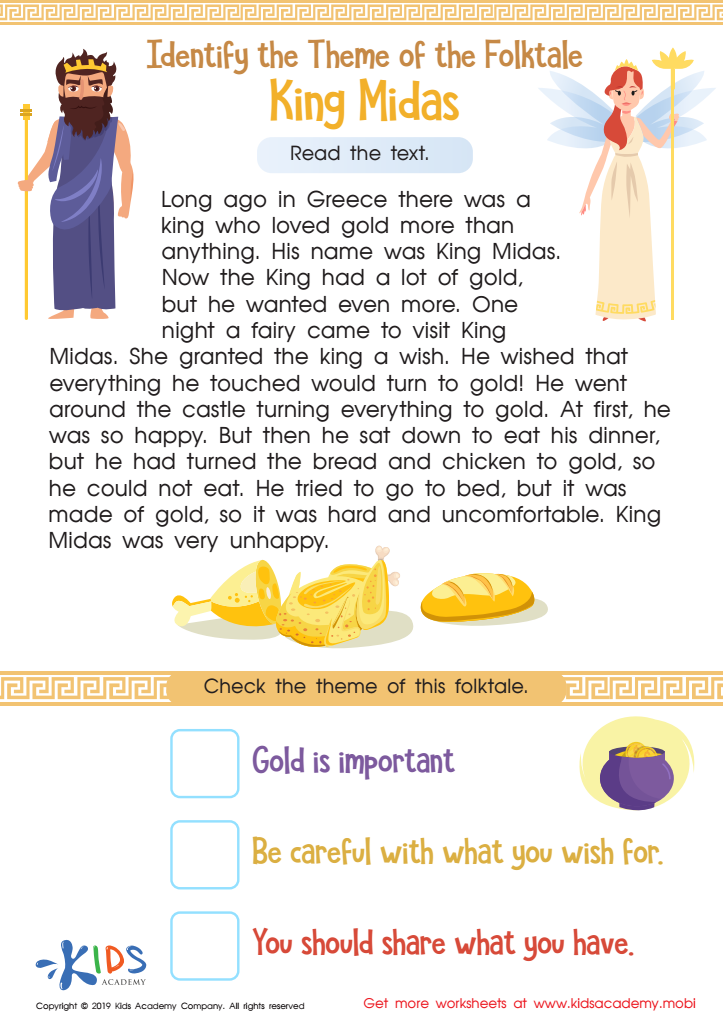
King Midas Worksheet
 Assign to My Students











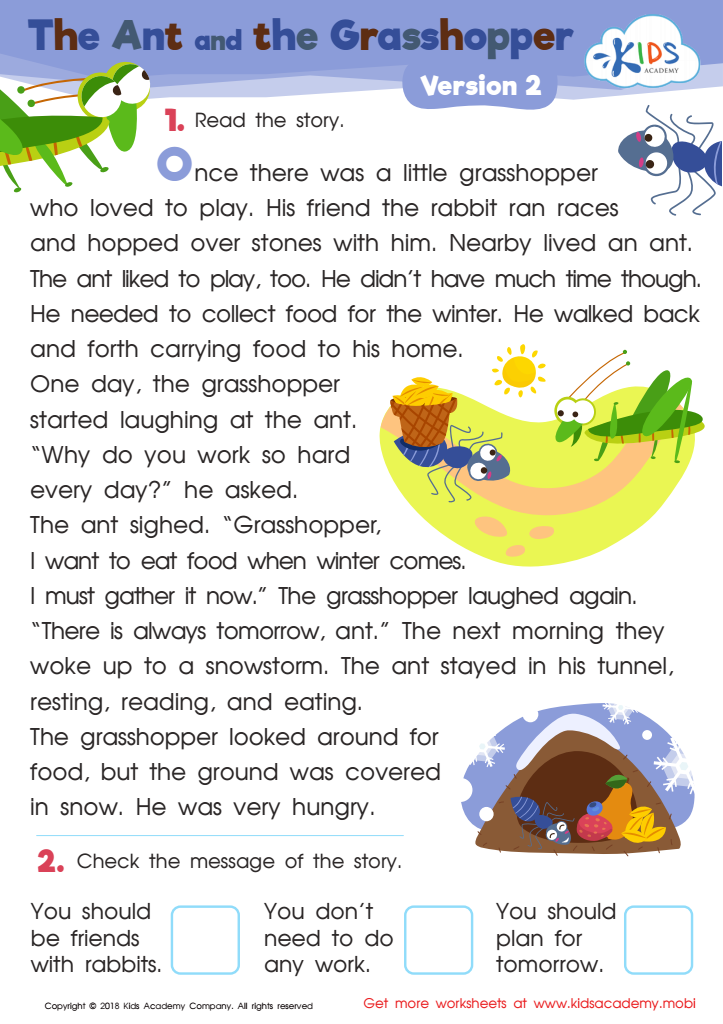
The Ant and The Grasshopper Version 2 Worksheet
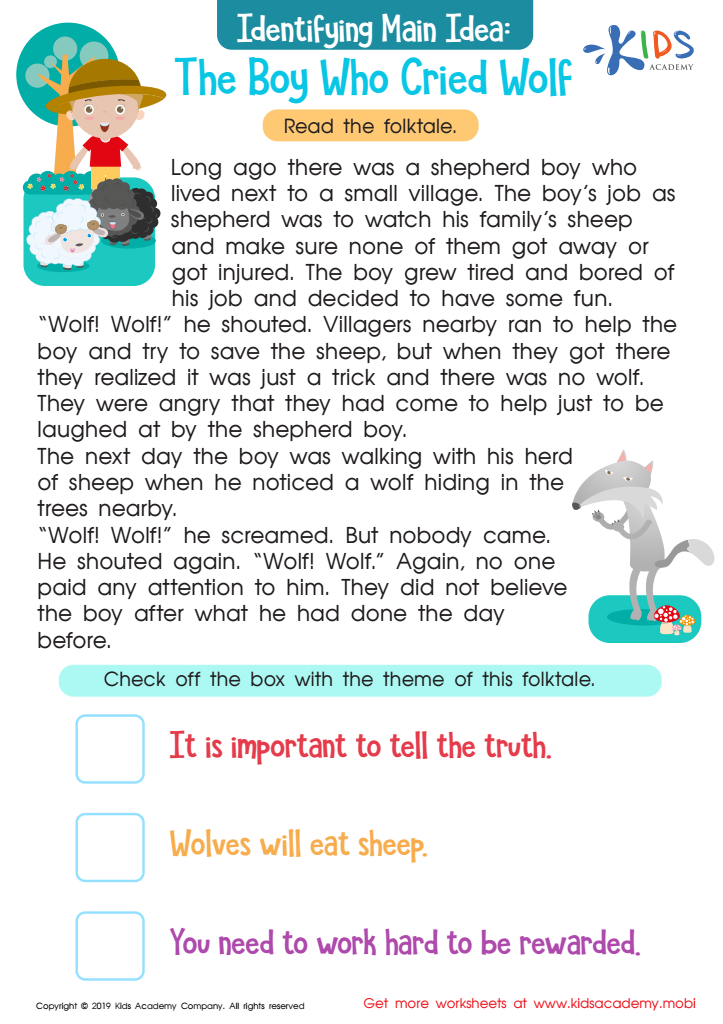
The Boy Who Cried Wolf Part 2 Worksheet





.jpg)

Understanding moral lessons and building vocabulary are crucial components of a child's education, particularly for ages 5 to 9. At this developmental stage, children are not only learning to communicate but are also beginning to understand complex concepts such as empathy, respect, and responsibility. Parents and teachers play a vital role in this process, as the values and vocabulary learned during these formative years lay the groundwork for their emotional and social development.
Moral lessons help children navigate social interactions and dilemmas, fostering critical thinking and decision-making skills. By discussing moral stories, teachers and parents can encourage children to consider different perspectives, promoting empathy and kindness. This also aids in their emotional intelligence, enabling them to better manage their feelings and relationships.
Simultaneously, building vocabulary enhances a child's ability to articulate thoughts and feelings. A rich vocabulary supports their comprehension and expression, making it easier to discuss moral themes and engage in meaningful dialogues. Moreover, strong language skills are crucial for academic success across subjects, cultivating a love for reading and learning.
In summary, the combination of moral understanding and vocabulary development is essential for empowering children to become compassionate, articulate, and well-rounded individuals. Parents and teachers should prioritize these aspects to support children's holistic growth.








