Understanding prefixes Normal Building Vocabulary Worksheets for Ages 5-9
3 filtered results
-
From - To
Our "Understanding Prefixes: Building Vocabulary for Ages 5-9" worksheets are designed to enhance your child's reading and word comprehension skills right from the start. These engaging activities introduce young learners to common prefixes, helping them understand how words are formed and their meanings altered. Perfect for children aged 5-9, the worksheets feature fun exercises that seamlessly blend education with enjoyment. By mastering prefixes, kids can decode unfamiliar words, enriching their vocabulary and fostering confidence in reading. Ideal for both classroom and home learning, our printable sheets provide a solid foundation for lifelong language skills. Start building stronger vocabularies today!
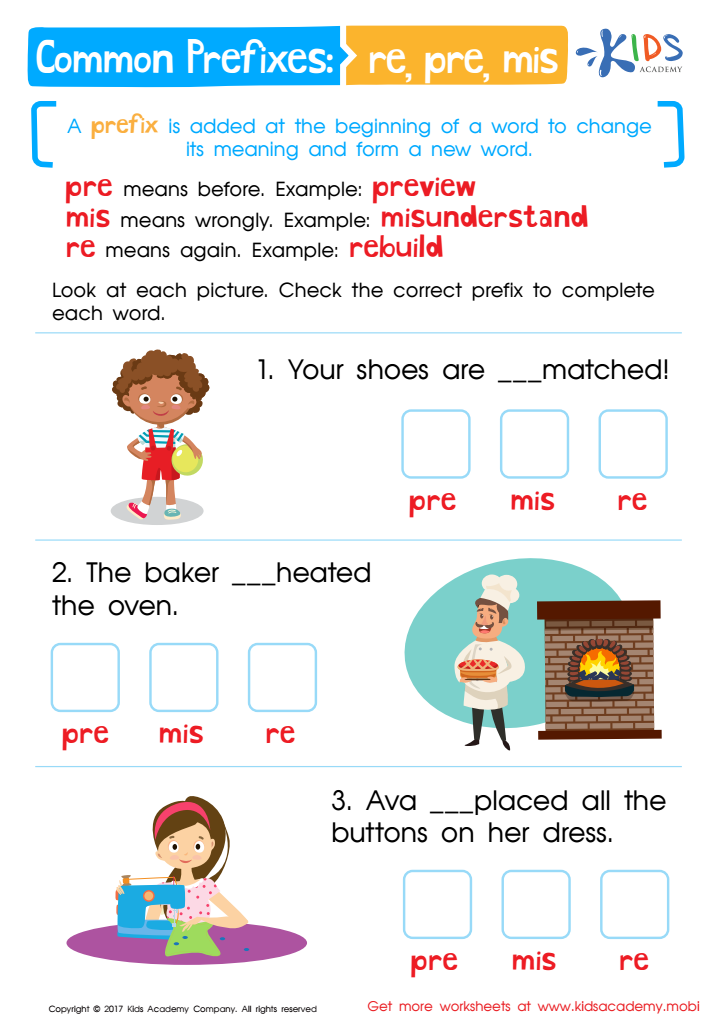
Common Prefixes Worksheet: RE, PRE, MIS
 Assign to My Students











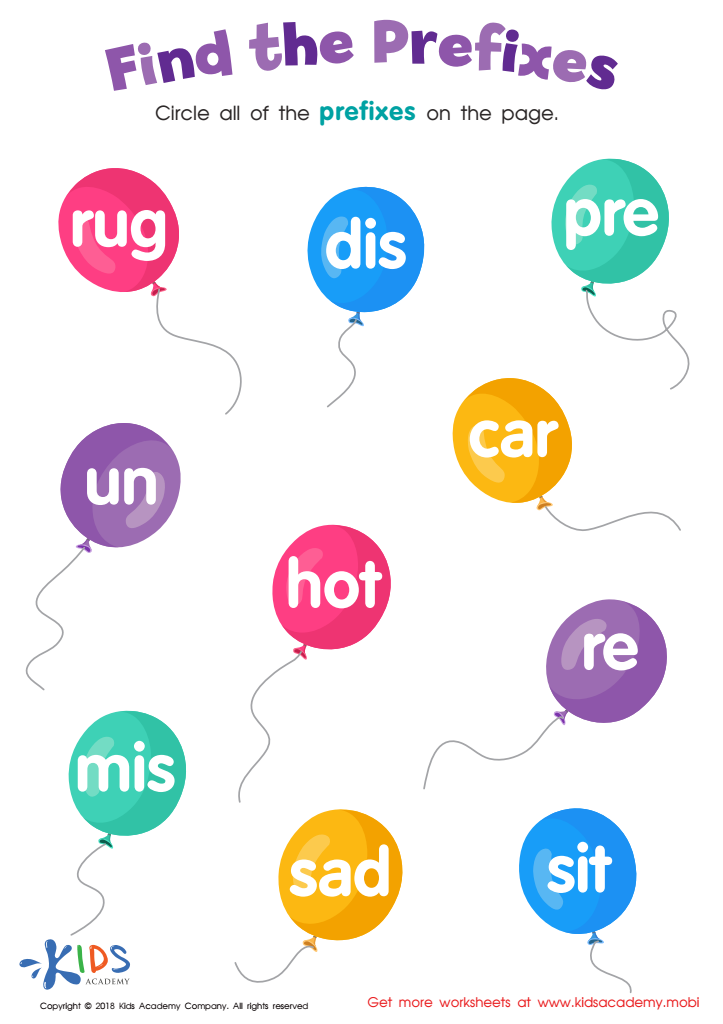
Reading: Find the Prefixes Worksheet
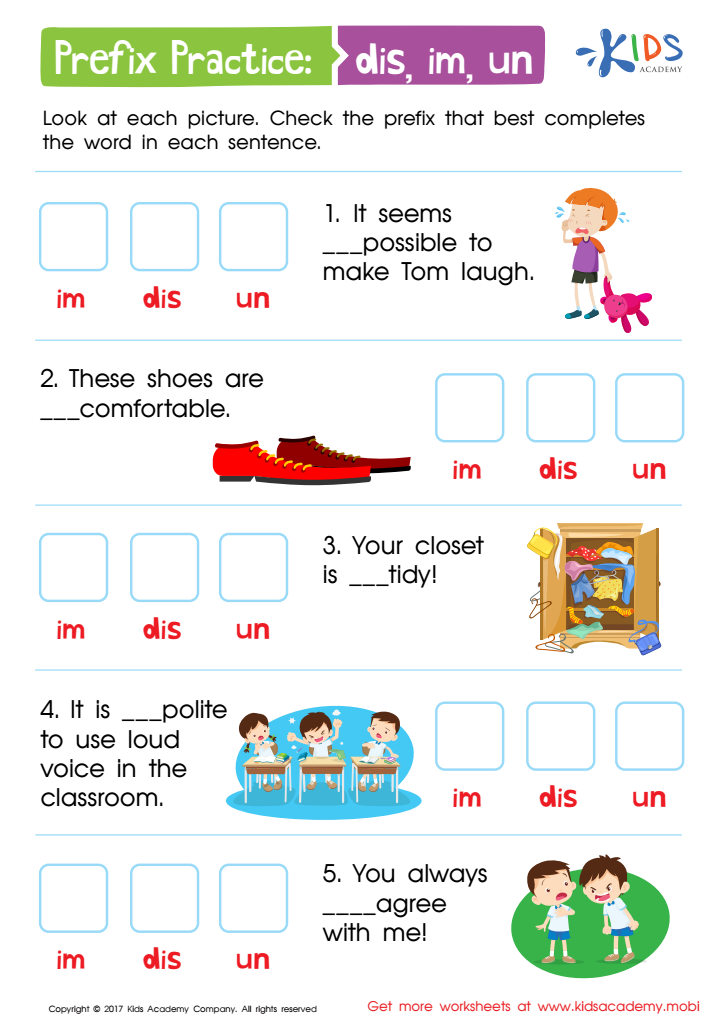
Prefix Practice Worksheet: DIS, IM, UM








Understanding prefixes and building vocabulary from an early age (ages 5-9) is crucial for several reasons. Firstly, vocabulary forms the backbone of a child's ability to communicate effectively. When children learn prefixes, they acquire tools to decipher new words, enhancing their comprehension skills.
Prefixes, such as "un-," "re-," or "pre-," act as building blocks that modify root words, providing clues about word meaning and function. For instance, knowing that "re-" means "again" helps children understand words like "reread" (to read again) or "redo" (to do again). This skill not only boosts reading comprehension but also empowers children to deduce meanings of unfamiliar words autonomously.
Early exposure to vocabulary development through prefixes also fosters greater confidence in young readers. When children recognize and understand these patterns, they are more likely to enjoy reading and feel less intimidated by complex texts. This foundational skill nurtures lifelong readers and learners.
Moreover, a rich vocabulary is linked to improved overall academic performance. It aids in better writing, more precise expression of thoughts, and an enhanced ability to follow instructions. Parents and teachers play a critical role in this process by incorporating prefix lessons into everyday conversations and classroom activities, thereby setting the stage for successful, proficient communication.








