Understanding prefixes Normal Reading Worksheets for Ages 5-9
3 filtered results
-
From - To
Introducing "Understanding Prefixes: Normal Reading Worksheets for Ages 5-9," crafted to help young learners enhance their reading skills by exploring prefixes. These engaging worksheets, designed for children aged 5-9, offer fun and interactive activities to teach the importance of prefixes in word formation and comprehension. With colorful illustrations and simple exercises, kids will expand their vocabulary, improve their reading fluency, and gain confidence in recognizing and understanding new words. Ideal for both classroom and home use, these worksheets are a fantastic resource to support early literacy development. Prepare your child for reading success with our dynamic and educational prefix worksheets!
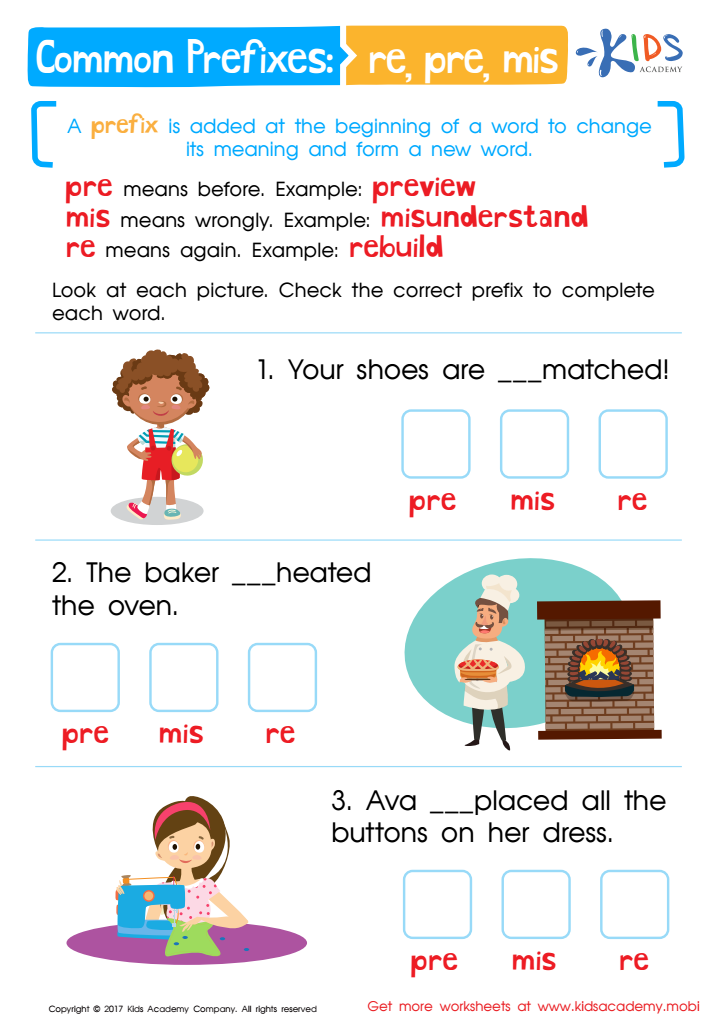
Common Prefixes Worksheet: RE, PRE, MIS
 Assign to My Students
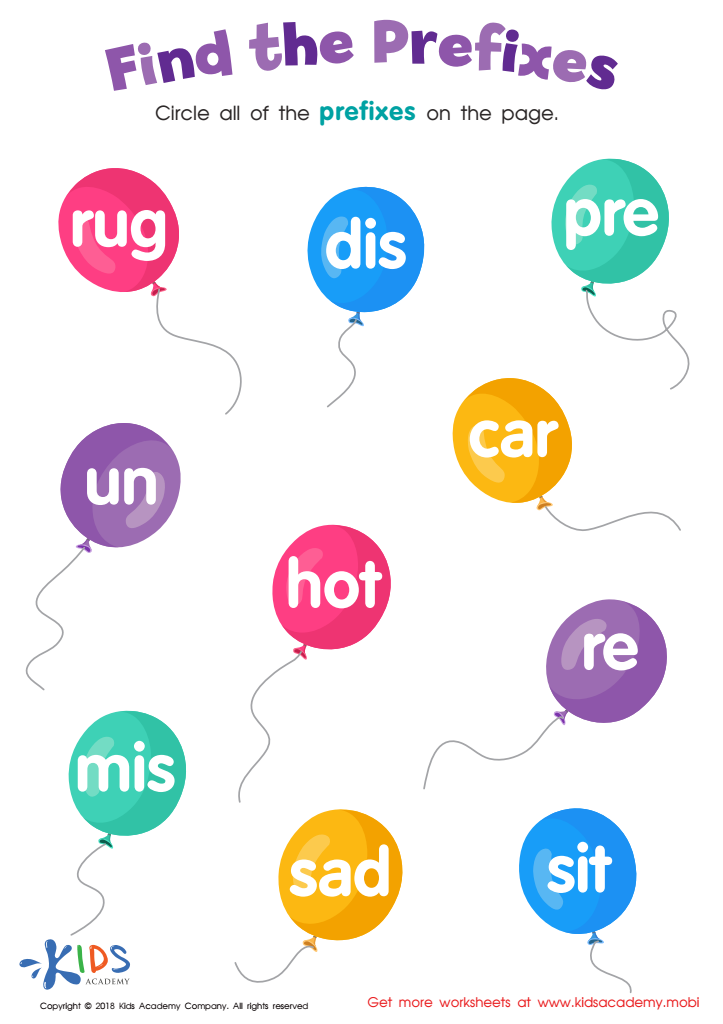
Reading: Find the Prefixes Worksheet
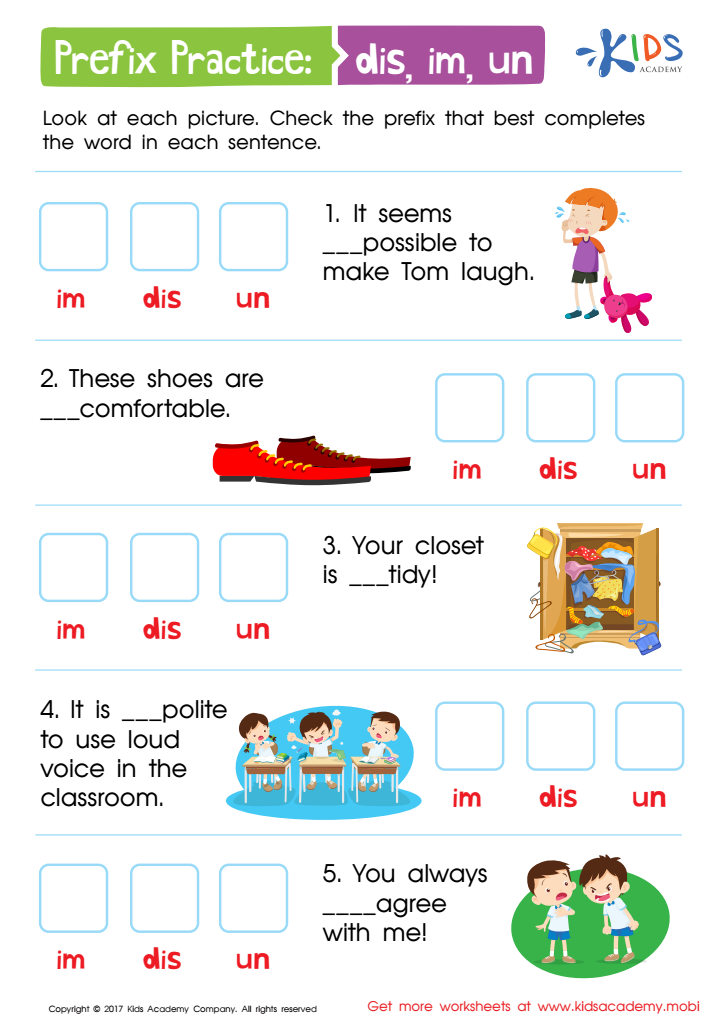
Prefix Practice Worksheet: DIS, IM, UM



.jpg)


Understanding prefixes is integral for early childhood literacy and holds profound importance for children aged 5-9. This is a pivotal period in language acquisition, where kids begin transitioning from basic comprehension to more complex linguistic and reading skills. Prefixes, the beginnings of words that alter their meanings (like "un-" in "unhappy"], offer clues to a word’s overall meaning, thereby enhancing vocabulary, comprehension, and decoding skills.
For instance, a child who understands the prefix "re-" (which means "again"] can infer that "redo" means "do again." This skill not only allows children to grasp the meaning of new words more readily but also builds their confidence in encountering unfamiliar vocabulary. Greater command over language tools like prefixes can significantly aid in boosting reading fluency and analytical thinking.
Moreover, familiarity with prefixes aids children in spelling by breaking down words into more manageable parts, making it easier to remember and use them. It also encourages independent learning, as children realize they can understand and figure out words on their own.
For parents and teachers, emphasizing prefixes in early reading instruction will lay a robust linguistic foundation, making future learning smoother and more effective. It’s an investment in a child's lifelong literacy, empowering them to become confident, eloquent, and resourceful readers.








