Understanding suffixes Normal Reading Worksheets for Ages 5-9
3 filtered results
-
From - To
Explore our "Understanding Suffixes" Normal Reading Worksheets, designed for children ages 5-9. These engaging resources help young learners grasp the concept of suffixes through fun and interactive activities. With easy-to-follow instructions and colorful illustrations, kids will enjoy practicing their reading skills while enhancing their vocabulary. Designed to align with educational standards, these worksheets provide meaningful exercises that boost comprehension and language development. Whether in the classroom or at home, our worksheets are perfect for reinforcing suffix knowledge in an enjoyable and effective way. Start helping your child grow their reading skills today with this invaluable resource!
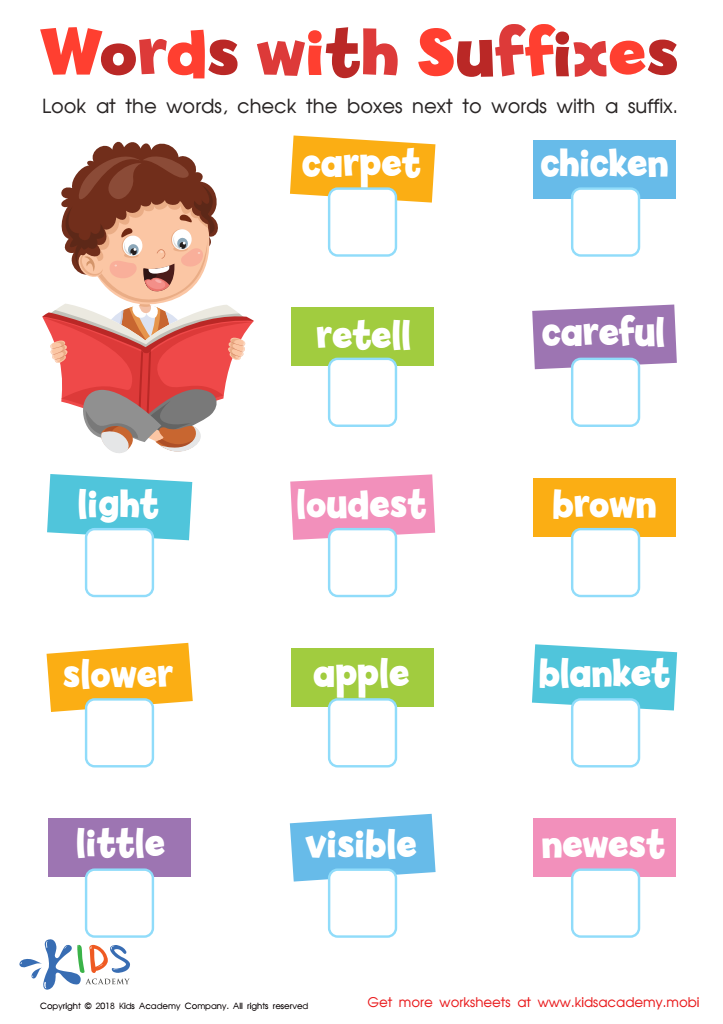
Reading: Words With Suffixes Worksheet
 Assign to My Students
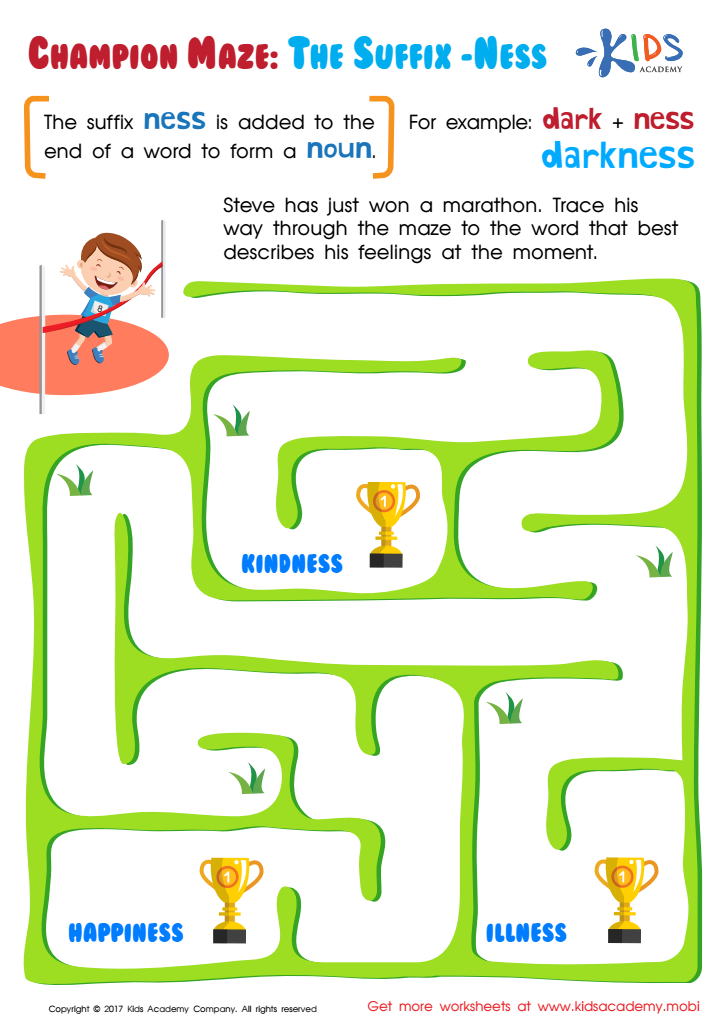
Suffix Ness Worksheet
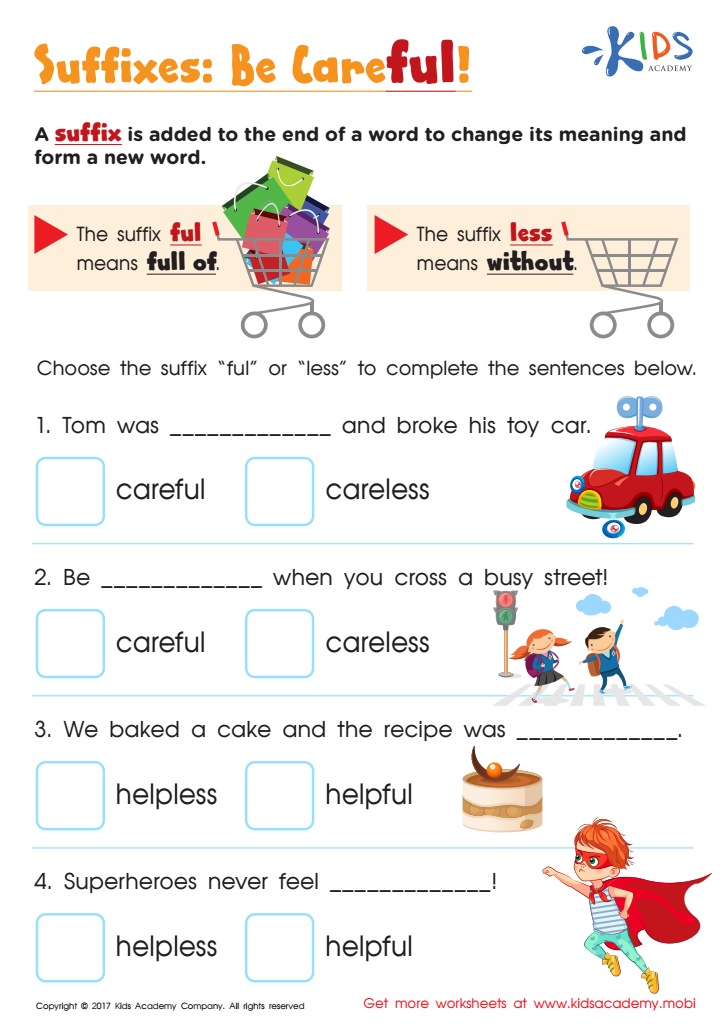
Suffixes Ful and Less Worksheet






Understanding suffixes is crucial for children aged 5-9 as they develop reading and language skills. Suffixes are word endings that modify the meanings of base words, making them fundamental components of vocabulary. When parents and teachers focus on suffixes, they help children comprehend and expand their language abilities, leading to improved reading skills.
Learning suffixes aids in decoding unfamiliar words, as children can apply their understanding of how suffixes alter base words, enhancing their confidence and encouraging independent reading. For example, knowing that “-ed” indicates the past tense allows a child to read and understand words like “jumped” even if they haven't encountered them before.
Additionally, benefiting from suffix understanding enriches students' writing skills. Children can experiment with word formation, helping them express thoughts more creatively. Encouraging exploration of suffixes also supports overall literacy development, leading to increased academic performance in all subjects.
In short, by prioritizing suffix comprehension in early education, parents and teachers equip children with essential tools for linguistic growth, laying the foundation for proficient reading, writing, and communication skills that they will rely on throughout their educational journey.








