Visual interpretation Normal Reading Worksheets for Ages 5-9
5 filtered results
-
From - To
Welcome to our Visual Interpretation Normal Reading Worksheets for Ages 5-9! Designed specifically for young learners, these engaging worksheets help children enhance their reading comprehension skills through visual context clues. Activities focus on interpreting images, understanding comparisons, and making connections between visuals and text, fostering critical thinking and creativity. Our worksheets are perfect for classroom or at-home learning, making reading both fun and informative. Each activity is aligned with educational standards, ensuring comprehensive skill development while keeping kids excited about learning. Download our worksheets today and watch your child thrive as they master visual interpretation skills in reading!
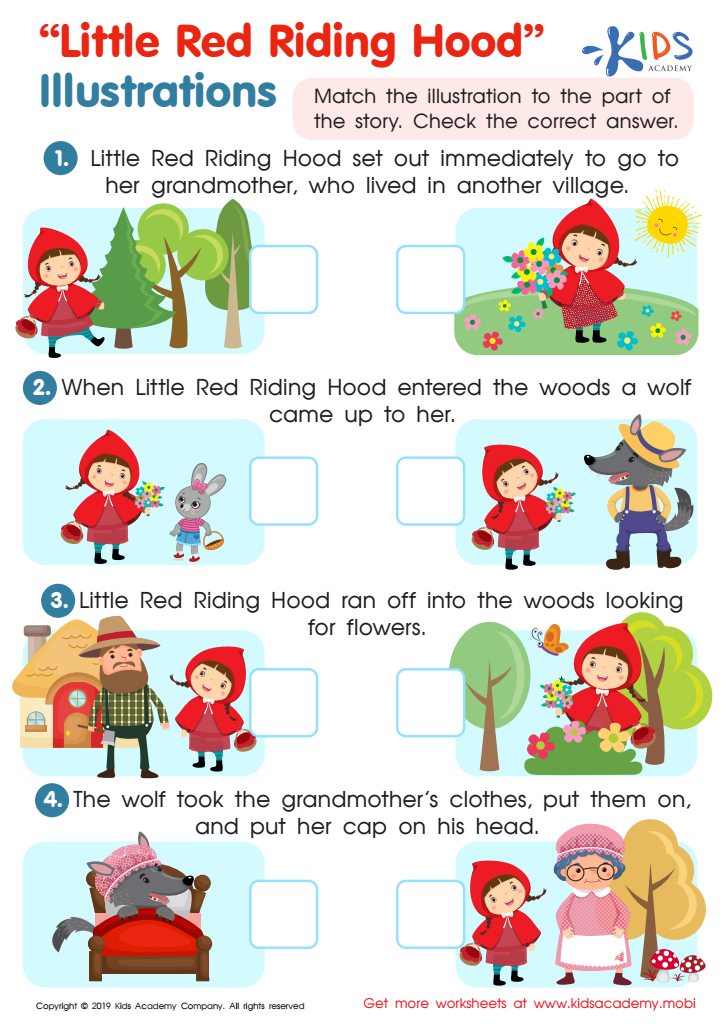
Little Red Riding Hood: Illustrations Worksheet
 Assign to My Students
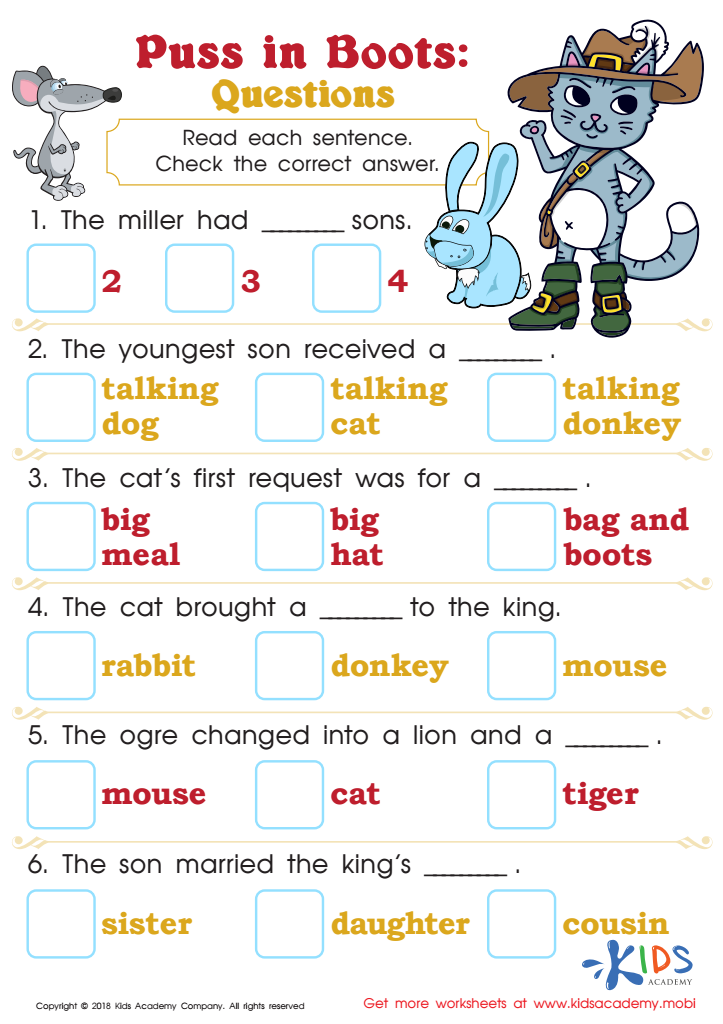
Puss in Boots: Questions Worksheet
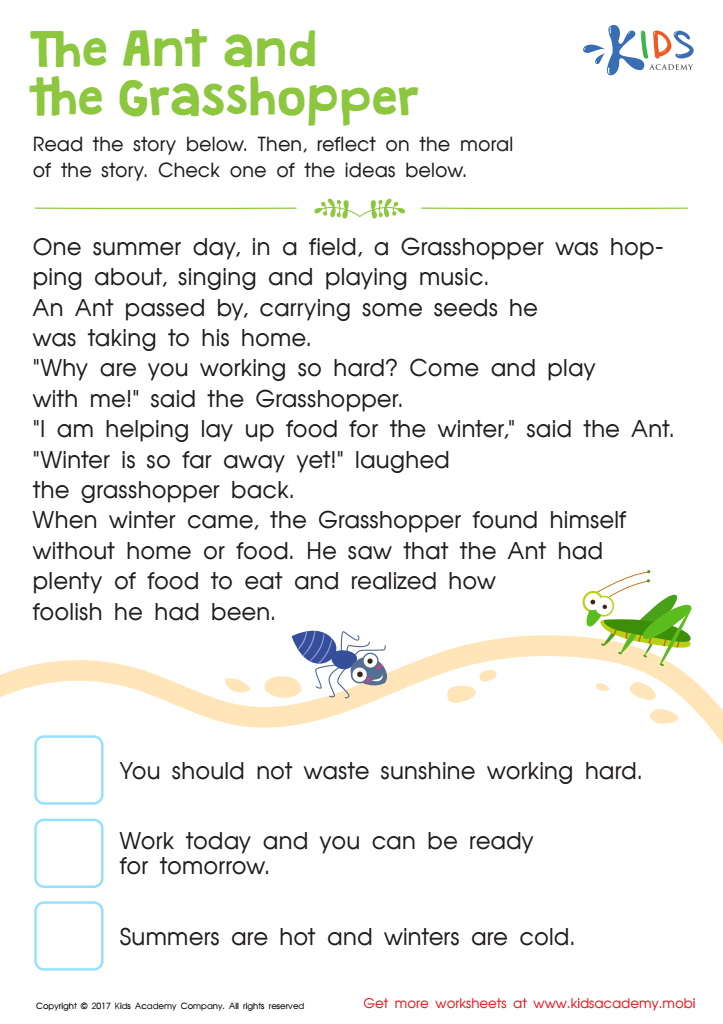
The Ant and The Grasshopper Printable
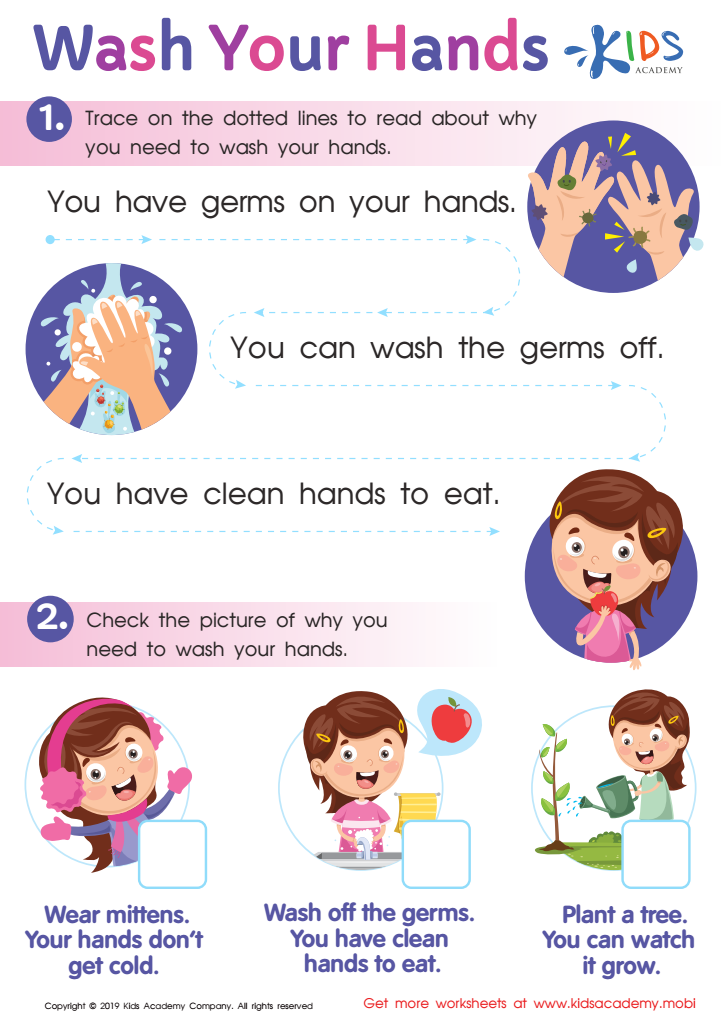
Wash Your Hands Worksheet
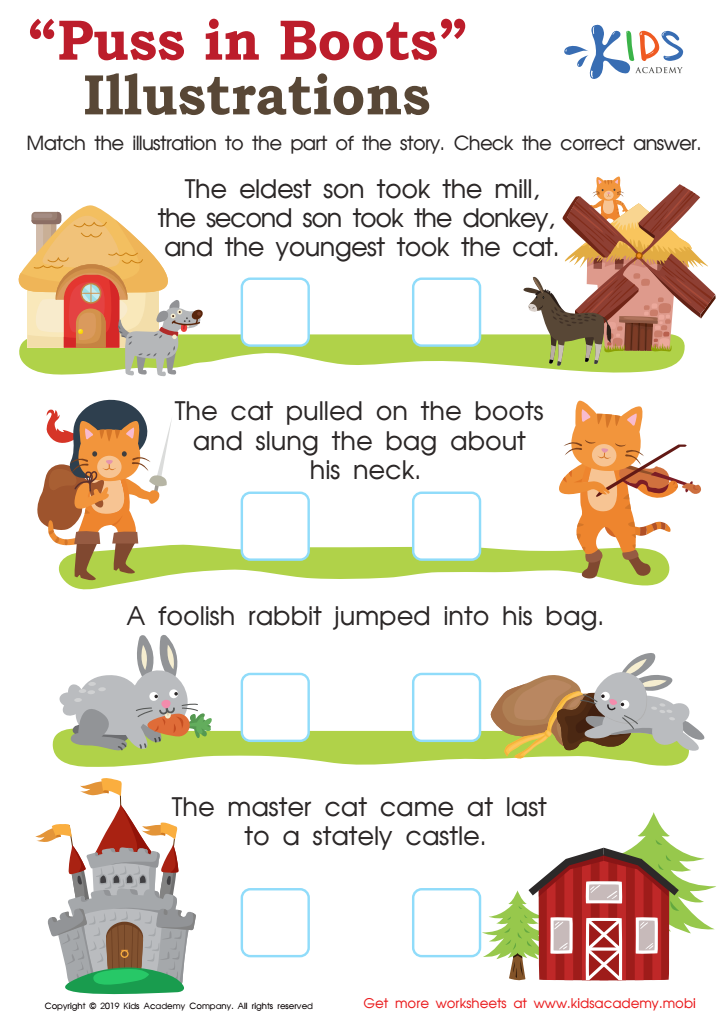
Puss in Boots Illustrations Worksheet







Visual interpretation is a crucial skill for children aged 5-9, as it forms the foundation of their reading development and understanding of the world around them. At this early age, children begin to decode visual cues, symbols, and illustrations that accompany texts. Research shows that strong visual interpretation skills enhance reading comprehension and overall literacy. When children can interpret illustrations effectively, they are better equipped to make connections between what they see and the text they read, leading to a more holistic understanding of stories and concepts.
Parents and teachers should prioritize fostering these skills by encouraging activities such as picture book reading, drawing, and storytelling. By engaging with visual content, children can develop critical thinking skills and improve their ability to infer meaning and context. This not only builds their confidence in reading but also promotes creativity and imagination.
Moreover, in our increasingly visual society, strong visual literacies will be critical for future learning and communication. Supporting children in developing these interpretation skills helps lay the groundwork for academic success and lifelong learning. By nurturing visual interpretation abilities, adults can ensure that children are not just passive consumers of information, but active, engaged learners who understand and connect with the world around them.