Detail identification Normal Reading Comprehension Worksheets for Ages 5-9
3 filtered results
-
From - To
Discover our fun and engaging Detail Identification Normal Reading Comprehension Worksheets designed specifically for children ages 5 to 9! These tailor-made worksheets help young learners enhance their reading skills by focusing on identifying key details within texts. With a variety of age-appropriate activities, students will practice comprehension through interactive exercises that boost critical thinking and analytical abilities. Perfect for classrooms or at-home learning, our worksheets provide instant feedback to guide comprehension improvement. Whether your child is building foundational reading skills or preparing for advanced literacy, these worksheets offer a comprehensive approach to mastering detail identification in reading. Start their learning journey today!
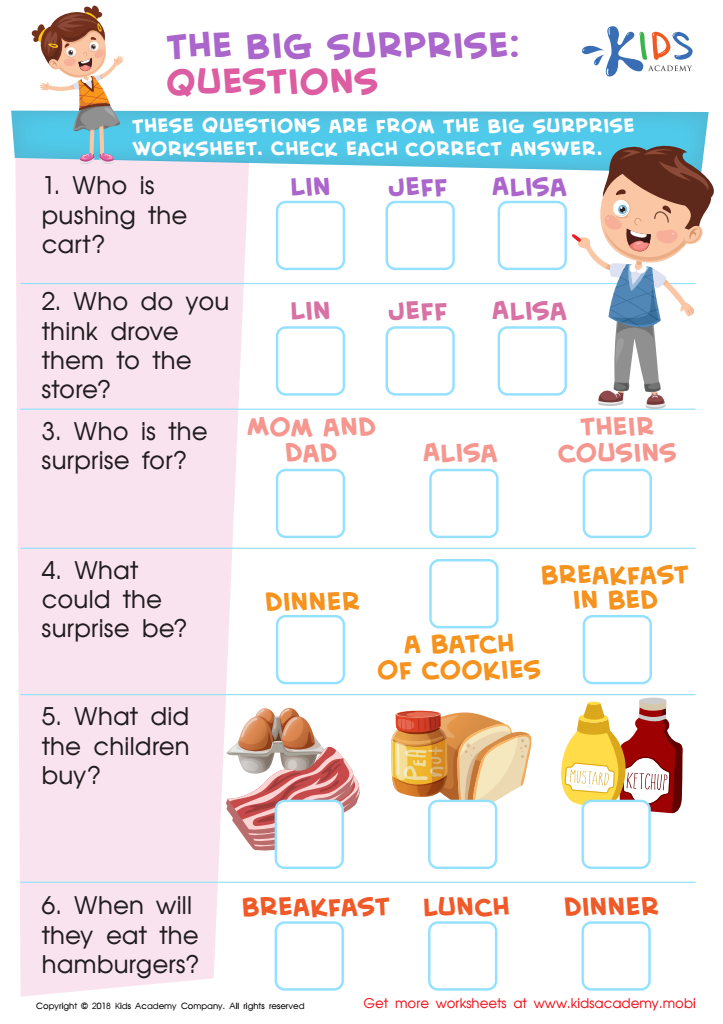
The Big Surprise: Questions Worksheet
 Assign to My Students
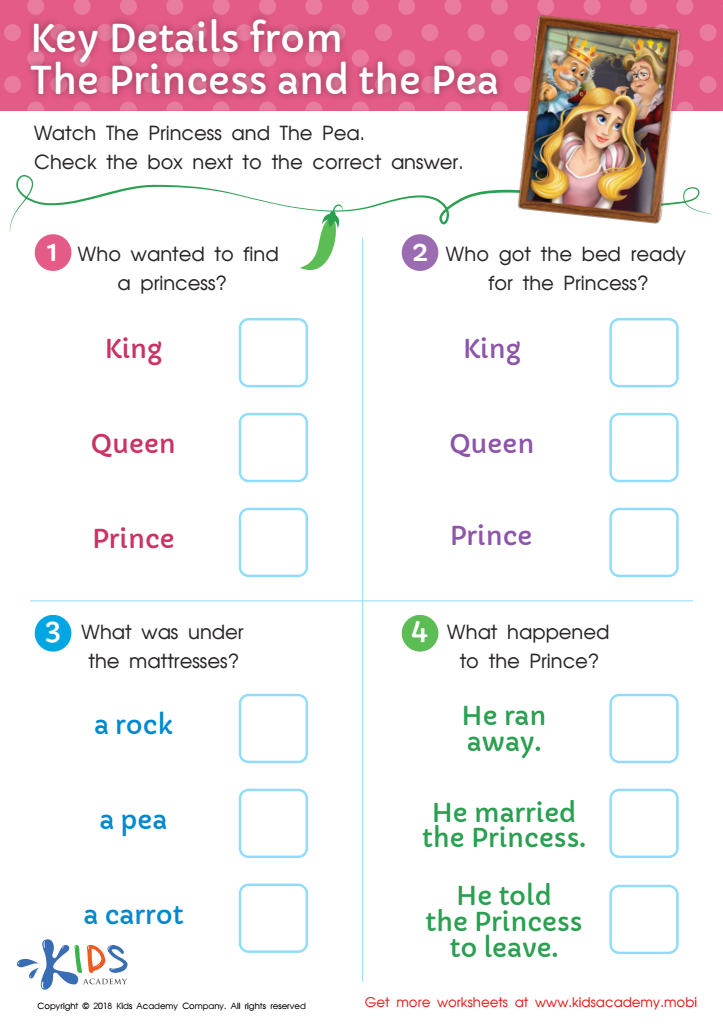
Key Details from the Princess and the Pea Worksheet
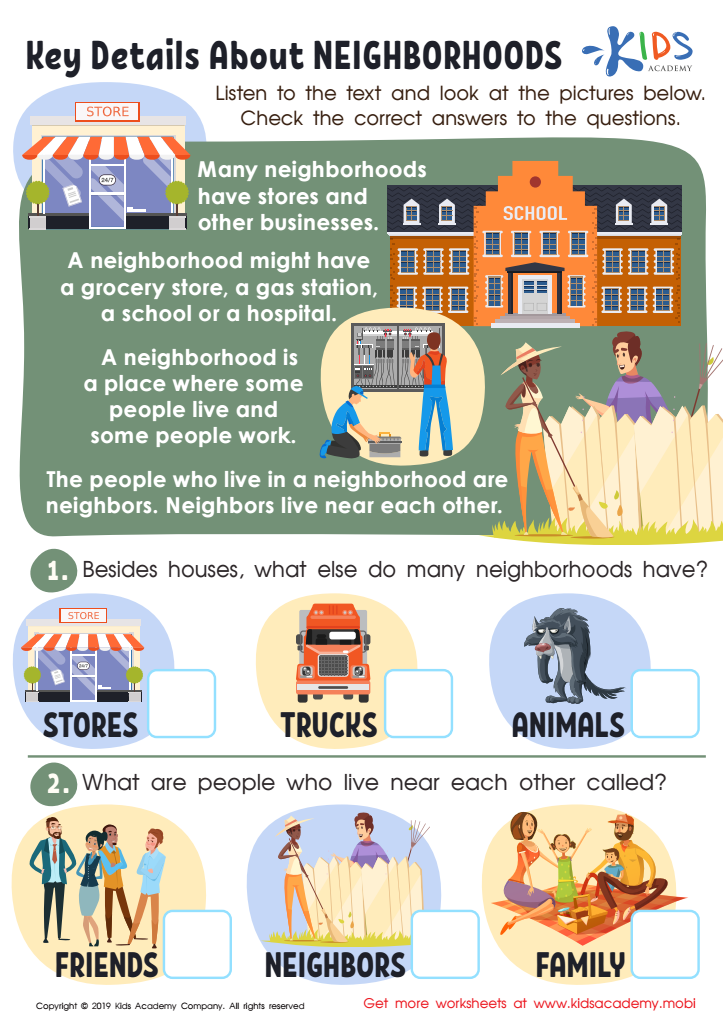
Key Details Neighborhoods Worksheet








Detail identification is crucial in fostering reading comprehension for children aged 5-9, as it lays the foundation for effective learning and critical thinking. During these formative years, children are honing their skills to understand and engage with text. When they can identify key details—such as characters, settings, and main events—they develop a deeper connection to the material.
Parents and teachers should care about detail identification because it enhances cognitive development and boosts academic performance. This skill enables children to summarize information, draw conclusions, and make inferences—abilities essential for success in more advanced learning. Encouraging detail identification involves reading together, asking open-ended questions, and engaging in discussions about the text, which aids in enhancing vocabulary and oral skills.
Moreover, cultivating this skill can foster a love for reading and learning. As children gain confidence in their comprehension abilities, they are more likely to engage with books and other reading materials enthusiastically, contributing to lifelong reading habits. In a wider context, strong reading comprehension skills are foundational for success across all subject areas, making detail identification an essential focus for educators and parents alike.








