Understanding directions Normal Science Worksheets for Ages 5-9
4 filtered results
-
From - To
"Understanding Directions Normal Science Worksheets for Ages 5-9" by Kids Academy are designed to build foundational navigation and reasoning skills in young learners. Ideal for children aged 5 to 9, these engaging and educational worksheets use science-based exercises to introduce basic concepts of following directions, recognizing patterns, and making sensible connections. By combining fun activities with educational goals, these worksheets help enhance children's comprehension, critical thinking, and problem-solving abilities. Perfect for homeschoolers, teachers, or parents, these resources make learning directions an exciting adventure that enriches early science lessons and everyday experiences.
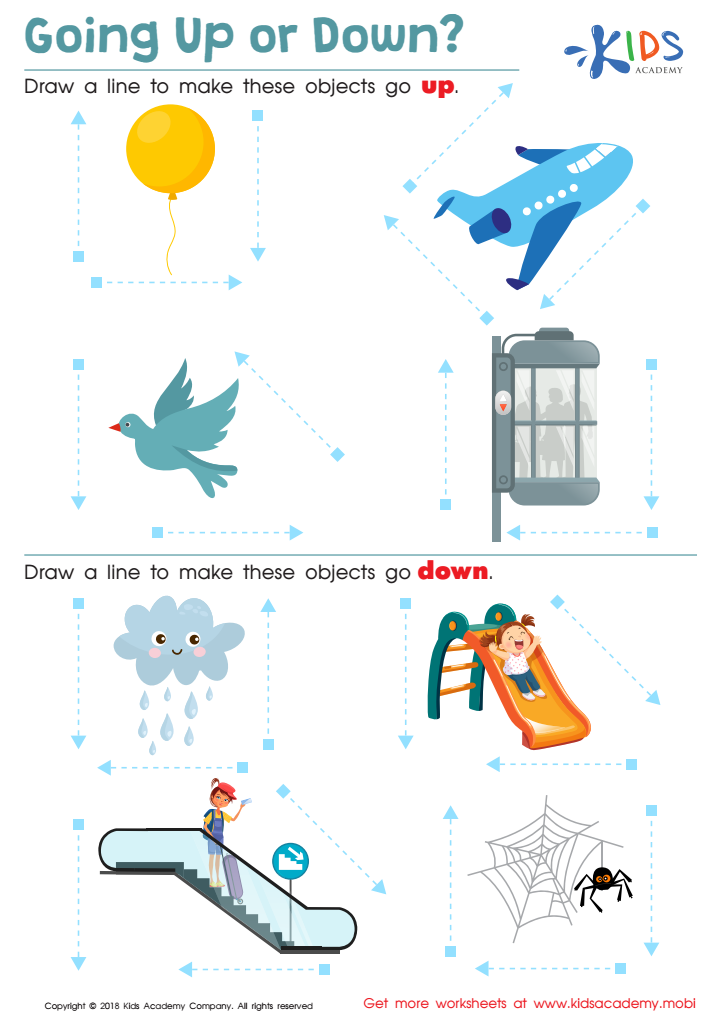
Going up or Down? Worksheet
 Assign to My Students
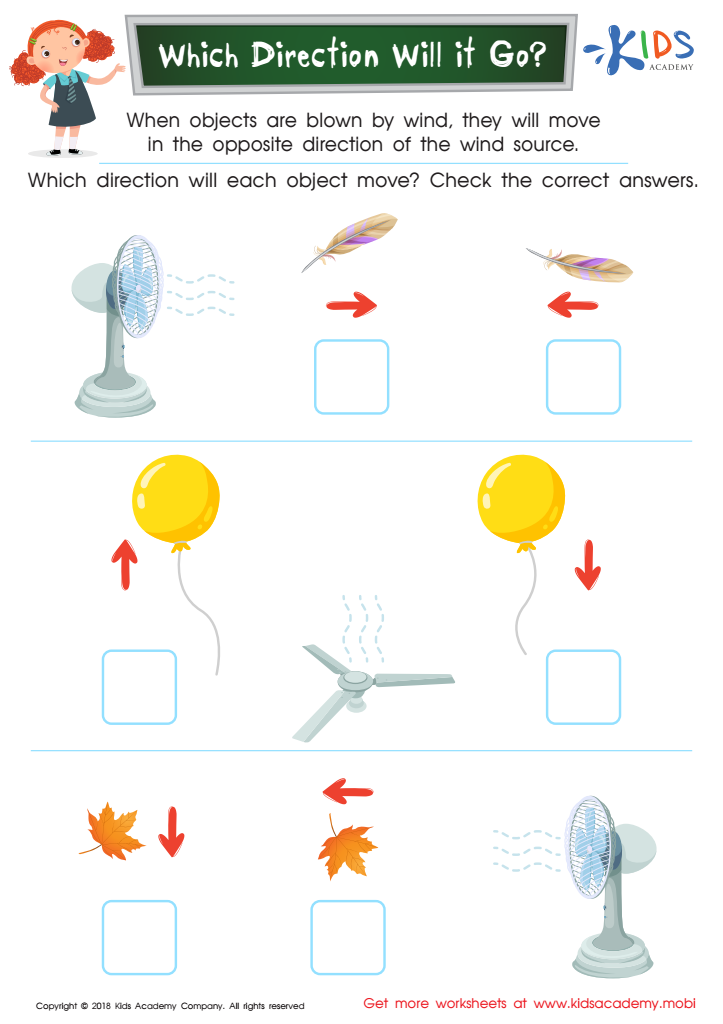
Which Direction Will it Go? Worksheet
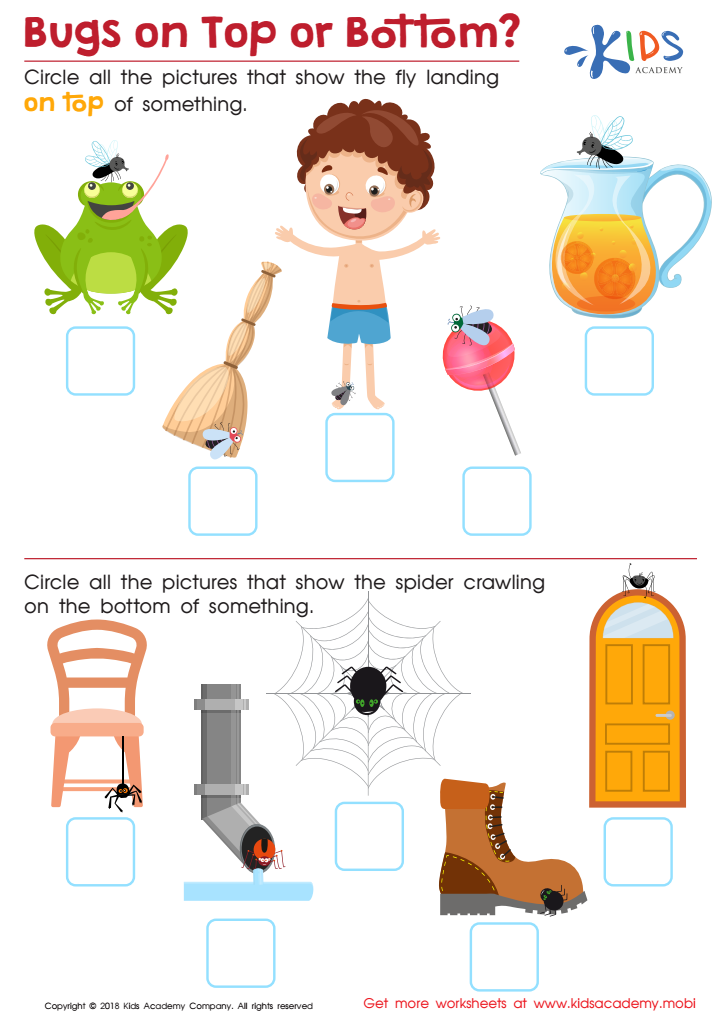
Bugs on Top or Bottom? Worksheet
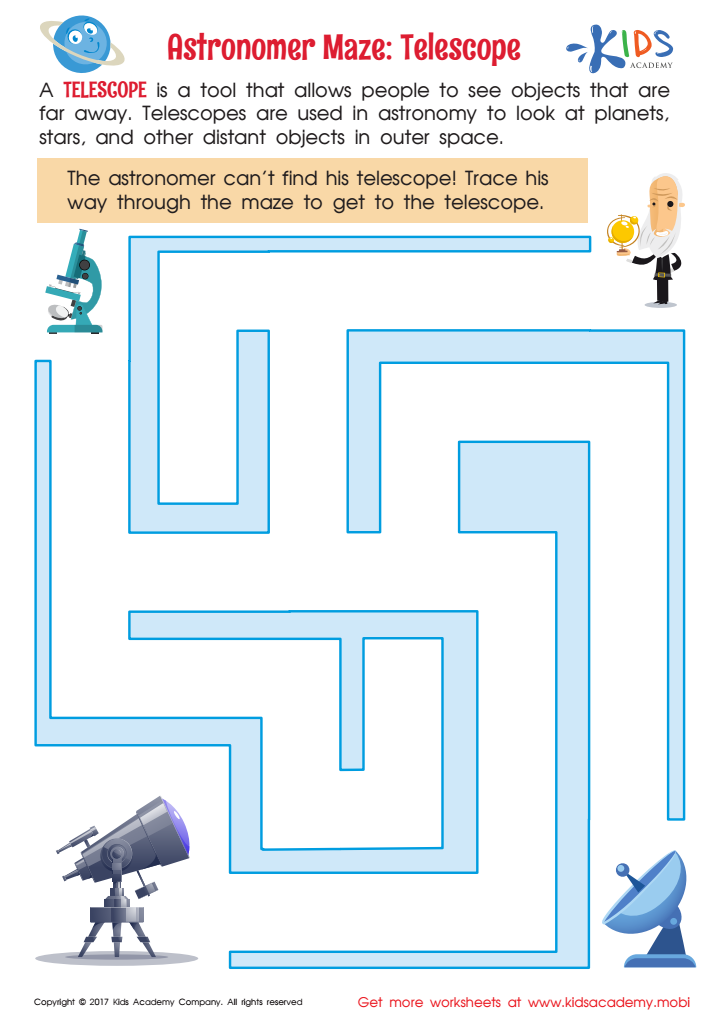
Astronomer Maze: Telescope Worksheet








Understanding directions in early science education is crucial for children aged 5-9, as it lays the foundation for critical thinking, problem-solving, and comprehending the world around them. Parents and teachers should prioritize this aspect because it cultivates curiosity and a love for learning at a tender age. When children are clear about the directions and procedures in their science activities or experiments, it fosters a sense of accomplishment and boosts their confidence.
Proper guidance allows young learners to follow safety protocols, reducing the risk of accidents and creating a secure learning environment. It also encourages the development of essential life skills, such as listening, following sequential steps, and paying attention to detail. These skills are transferrable and valuable across all subjects and in daily life.
Moreover, understanding directions helps children to engage more deeply with the content, improving their grasp of scientific concepts and principles. It enables teachers and parents to assess children's learning effectively and provide targeted support where needed. Additionally, this understanding nurtures collaboration, as children often work in groups and need to communicate effectively to accomplish tasks together.
By investing time in ensuring that children understand directions in science, parents and teachers contribute to their overall cognitive and emotional development, laying the groundwork for future academic success and lifelong learning habits.







